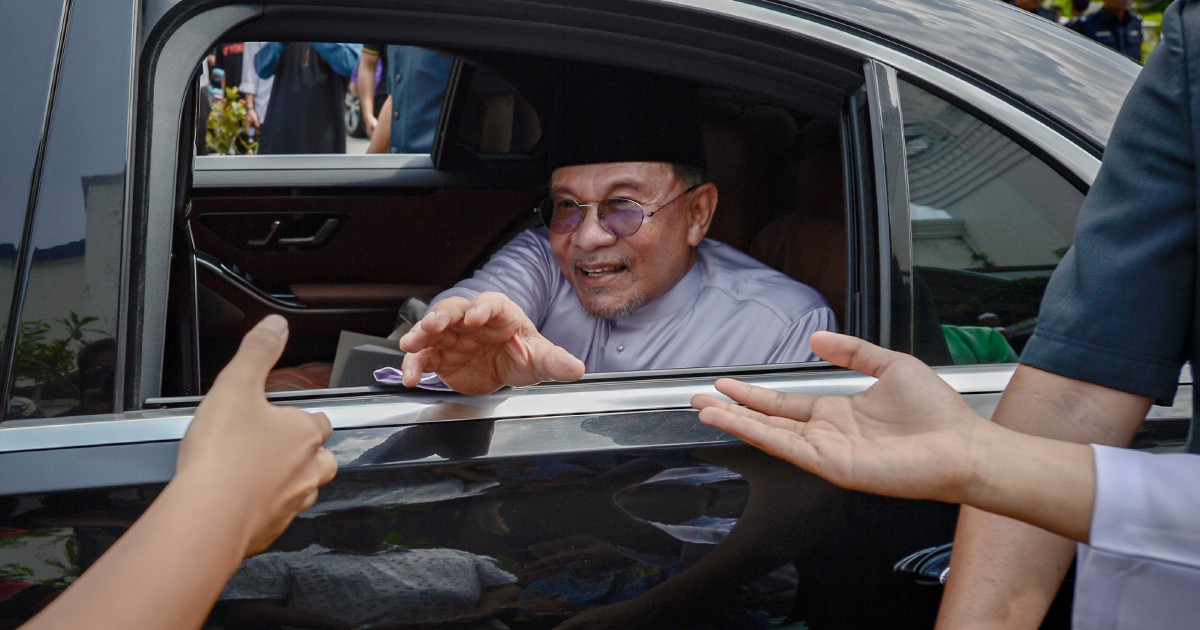
Prime Minister Datuk Seri Anwar Ibrahim is taking his campaign efforts to Negri Sembilan to reinforce Pakatan Harapan's push during the state election campaign, underscoring the federal government's commitment to electoral success at the state level. The move reflects a broader strategy where the national leadership actively participates in local contests, recognizing that state-level victories can amplify the coalition's political capital and influence policy directions across the country.
Anwar's personal involvement in the Negri Sembilan campaign carries significant symbolic weight, as the presence of a sitting prime minister typically energizes party workers and signals to voters that the election is viewed as consequential at the highest levels of government. The timing of such visits is strategically important, often deployed at critical junctures in the campaign calendar to build momentum when enthusiasm among supporters can translate into tangible electoral gains.
Negri Sembilan has historically been a competitive battleground where multiple political coalitions have claimed victories across different electoral cycles. The state's political landscape reflects broader Malaysian dynamics, with urban and rural constituencies presenting distinct voter preferences and concerns. Understanding the demographic composition and historical voting patterns of the state's districts helps explain why national leaders prioritize personal campaign appearances in such regions.
Pakatan Harapan's strategy of deploying its senior figures for ground campaigns addresses the practical challenges of modern electoral politics. Direct engagement with voters through rallies, community visits, and public addresses allows the leadership to articulate policy positions, respond to local concerns, and counter opposition narratives in real time. These interactions also provide valuable feedback to the central leadership about voter sentiment and emerging issues that may not be evident from polling data alone.
The decision to concentrate campaign resources on Negri Sembilan at this stage suggests that internal assessments indicate the state remains genuinely competitive. Rather than writing off constituencies or regions, the coalition's approach involves active engagement where contests appear uncertain. This reflects lessons learned from previous electoral cycles, where assumed safe seats sometimes shifted due to complacency or local grievances that were not adequately addressed during campaigning.
For Malaysian observers, the intensity of campaign activity by federal leadership in state elections underscores how interconnected national and subnational politics have become. A state government led by Pakatan Harapan would complement the federal administration's policy agenda, facilitate coordination on development projects, and strengthen the coalition's institutional footprint across the country. Conversely, opposition victories in state contests can create political complications for the federal government and embolden rival coalitions ahead of the next general election.
Campaign effectiveness increasingly depends on sophisticated voter targeting and message tailoring to specific constituencies. Prime ministerial visits, while symbolically powerful, typically reach only a fraction of the electorate directly. The broader impact often manifests through media coverage, social media amplification, and word-of-mouth effects among party supporters who then disseminate messages through their networks. The coordination between local party organizations, state campaigns, and federal leadership determines how effectively such visits translate into electoral advantage.
Negri Sembilan's economic profile, including its role in regional commerce and manufacturing, means that bread-and-butter issues around employment, cost of living, and infrastructure development feature prominently in local campaign messaging. Anwar's visit provides an opportunity to connect national economic policies with state-level priorities, demonstrating how federal programs and initiatives directly benefit residents. This linkage is particularly important in an era where voters increasingly judge governments on tangible improvements in their daily lives rather than abstract political promises.
The state election campaign also reflects internal dynamics within Pakatan Harapan itself. Coalition partners must balance maintaining their individual party identities with presenting a unified front to voters. Campaign appearances by national leaders help reinforce coalition cohesion and prevent smaller parties from being overshadowed, which is essential for maintaining the alliance's stability both during elections and in subsequent governance.
Opposition parties will undoubtedly match these campaign efforts with their own leadership appearances and ground mobilization. The overall campaign intensity in Negri Sembilan likely indicates that both major political blocs recognize the state as consequential for their broader electoral and political narratives. Election results here may serve as a bellwether for national political trends and could influence campaign strategies in other states holding elections in the near term.
The investment in personal campaign appearances by senior leadership also signals confidence in local party machinery and candidate quality. If problems existed with local organization or candidate viability, national leaders might maintain distance to avoid being tainted by potential losses. Instead, Anwar's active participation suggests Pakatan Harapan believes it has constructed a competitive campaign organization capable of converting voter engagement into electoral success.
As Negri Sembilan moves closer to polling day, the frequency and intensity of such high-level campaign visits typically increases across all political parties. These final weeks of campaigning often determine voter mobilization rates and final preference shifts. The state has become a focal point where national political stakes, regional interests, and local concerns converge, making it representative of the complex electoral landscape Malaysian voters navigate.

