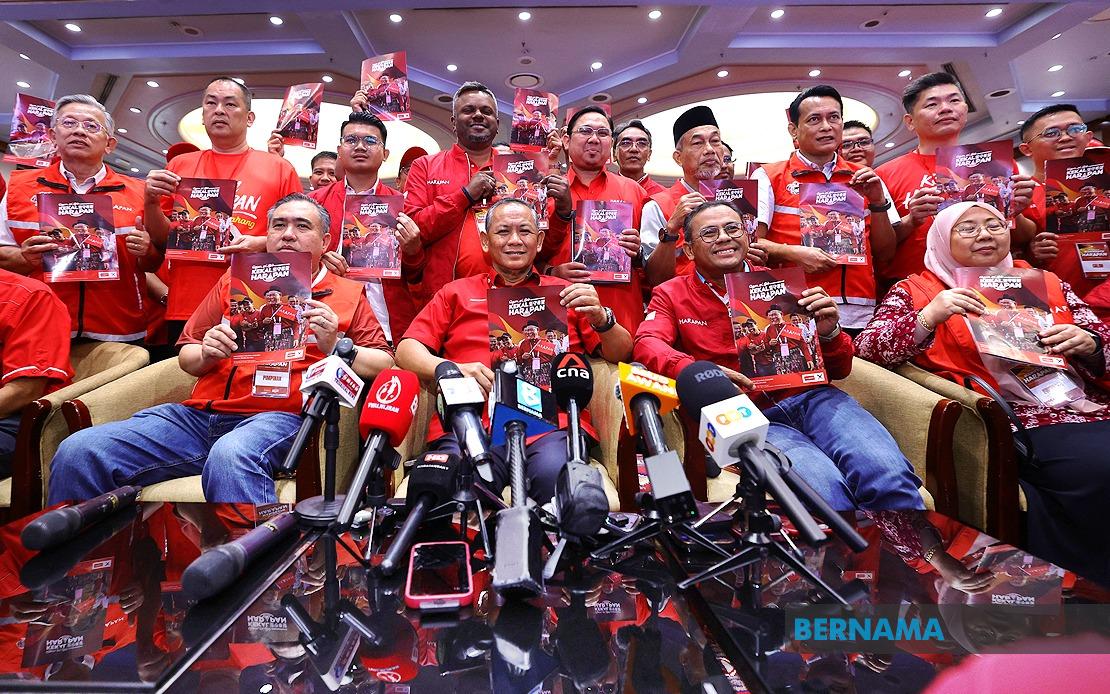
Prime Minister Datuk Seri Anwar Ibrahim is set to hit the campaign trail in Negeri Sembilan this Wednesday, joining Pakatan Harapan's push for the upcoming 16th state election. The announcement came from PH Negeri Sembilan chairman Datuk Seri Aminuddin Harun, who confirmed that the party leader will participate in several key campaign events across Sikamat and Paroi alongside senior party officials and ground machinery.
Amiruddin's confirmation came after Pakatan Harapan's manifesto launch in Seremban on Sunday, an event notably absent the Prime Minister's physical presence. However, the Linggi seat candidate stressed that Anwar's scheduled participation this week demonstrates the coalition's determination to mobilise its top leadership for the crucial campaign period. The timing of his visit underscores the strategic importance Pakatan Harapan places on Negeri Sembilan, a state with historical significance in Malaysian politics and crucial for the coalition's broader electoral ambitions.
The manifesto unveiled by PH encompasses an expansive policy platform addressing multiple dimensions of state governance and development. Beyond conventional economic growth metrics, the coalition's blueprint prioritises administrative transparency and stability—critical pledges in an environment where voters increasingly scrutinise government performance and institutional credibility. The manifesto's emphasis on people's welfare reflects Pakatan Harapan's recognition that bread-and-butter issues remain paramount for ordinary Negeri Sembilan residents navigating rising living costs and economic uncertainties.
Education and housing initiatives featured prominently in the coalition's platform, addressing two perennial concerns that consistently influence voting behaviour in Malaysian state elections. Negeri Sembilan's demographic profile—encompassing both urban centres and rural communities—necessitates a balanced approach to infrastructure development and social services. The manifesto's inclusion of strategic infrastructure commitments signals PH's intent to position the state as an economic hub within the broader Klang Valley region, capitalising on its geographic proximity to Kuala Lumpur and Selangor.
The coalition's policy framework also extends to agricultural modernisation and customary heritage preservation, dimensions reflecting the state's mixed economy and diverse cultural composition. These planks carry particular resonance in constituencies with significant Orang Asli populations and traditional agricultural communities. Additionally, the emphasis on women's empowerment and youth development addresses demographic segments whose electoral participation patterns have shifted considerably in recent election cycles, particularly following heightened engagement during the 2018 and 2022 general elections.
Tourism and social cohesion rounded out the manifesto's priorities, positioning Negeri Sembilan as a destination balancing cultural authenticity with modern amenities. In an era marked by considerable intercommunal sensitivities, explicit commitment to social unity represents more than rhetorical positioning—it signals understanding that electoral success depends on coalition-building across diverse communities and demographic groups.
The manifesto launch drew significant representation from Pakatan Harapan's constituent parties, with DAP secretary-general and Chennah candidate Anthony Loke, PKR secretary-general Datuk Dr Fuziah Salleh, and Amanah vice-president Datuk Dr Mohd Hatta Md Ramli all present. This visible party unity carries importance given occasional tensions within the coalition apparatus. Selangor Menteri Besar Datuk Seri Amirudin Shari's attendance in his capacity as PH election director reinforced the narrative of institutional coordination and experience transfer from successful Selangor governance to Negeri Sembilan's electoral campaign.
Amiruddin's assertion that manifesto presentation demonstrates concrete preparatory work speaks to PH's response to scrutiny regarding campaign readiness and governance planning. The explicit framing around converting manifesto commitments into actual service delivery acknowledges voter scepticism about unfulfilled electoral promises—a concern that has plagued Malaysian politics across the political spectrum. This rhetorical positioning, coupled with invocation of Islamic sentiment through reference to "insya-Allah," reflects the cultural and religious context within which electoral competition unfolds in Malaysia.
The electoral calendar itself carries strategic implications for campaigning intensity and voter mobilisation. Early voting on July 28 followed by general polling on August 1 creates a compressed timeline demanding efficient resource deployment. For Negeri Sembilan specifically, this schedule occurs against the backdrop of broader political calculations affecting federal governance and Pakatan Harapan's national positioning. State-level victories strengthen the coalition's national narrative and provide crucial momentum for grassroots organisation heading toward potential future federal contests.
For Malaysian voters and Southeast Asian observers monitoring coalition dynamics, Anwar's active campaign participation signals his engagement with sub-federal political contests despite prime ministerial responsibilities. His presence across multiple states in election seasons reinforces centralised party leadership while creating opportunities for direct voter interaction and local issue acknowledgment. This engagement pattern mirrors practices across Southeast Asian democracies where national executives routinely prioritise state and provincial campaigns as essential to maintaining party cohesion and electoral success.
The Negeri Sembilan election itself operates within Malaysia's federal structure where state governments retain significant autonomy over land, agriculture, and certain developmental matters. Electoral outcomes therefore carry implications extending beyond ceremonial representation, potentially reshaping governance approaches to economic diversification and social service provision within the state framework.

