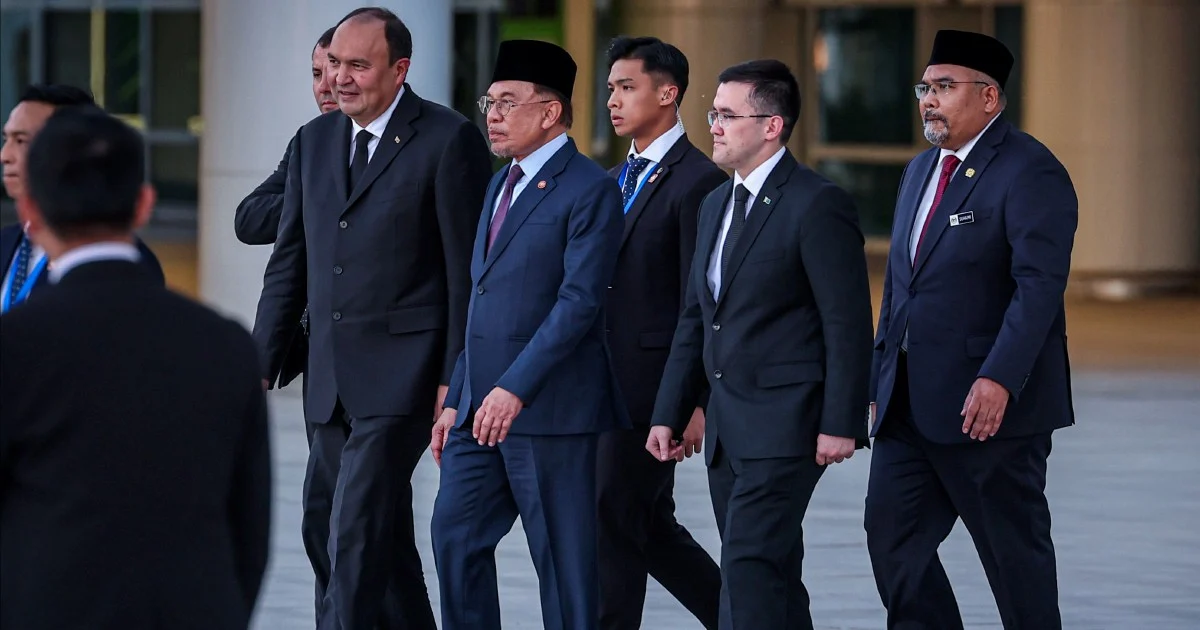
Prime Minister Datuk Seri Anwar Ibrahim is set to conclude his official visit to Turkmenistan with an intensive round of diplomatic engagements, marking the second and final day of a mission aimed at fostering closer economic relations between Malaysia and the Central Asian state. The timing and scope of these talks reflect Kuala Lumpur's broader strategic interest in diversifying its international partnerships beyond traditional markets, particularly as the region continues to evolve economically and geopolitically.
Turkmenistan occupies a strategically significant position along the eastern shoreline of the Caspian Sea, a body of water that has become increasingly important for regional energy, trade, and infrastructure development. The nation's geographic location provides both Malaysian and other Asian business interests with potential access to broader Central Asian markets, while also positioning Turkmenistan as a gateway for resource flows and investment opportunities. For Malaysia, a country with established expertise in trading and capital investment across diverse sectors, understanding and strengthening ties with Central Asian nations represents a logical extension of its regional economic diplomacy.
The visit underscores a deliberate strategic recalibration by Malaysia's government to build relationships across Asia's lesser-developed corridors. While Malaysia maintains deep connections with Southeast Asian neighbours and traditional trading partners, engagement with Central Asia has historically received less diplomatic attention. This initiative suggests a recognition that long-term Malaysian prosperity requires cultivating opportunities in emerging markets where competition from other Asian nations may be less intense than in more established partnerships.
Bilateral trade discussions between Malaysia and Turkmenistan are expected to focus on sectors where both nations possess complementary strengths. Malaysia's established capabilities in petroleum refining, petrochemical processing, financial services, and manufacturing could align with Turkmenistan's abundant energy resources and developmental infrastructure needs. Conversely, Turkmenistan's natural gas reserves and mineral wealth present potential sources of raw materials and energy that could support Malaysian industrial growth or be re-exported through Malaysian trading hubs to markets throughout East and Southeast Asia.
Investment frameworks figure prominently in this diplomatic engagement. Malaysian investors and state-linked enterprises have demonstrated capacity and willingness to undertake significant infrastructure projects across Asia, and Turkmenistan's ongoing modernisation efforts may present suitable venues for such capital deployment. Joint ventures in energy production, logistics, telecommunications, and manufacturing could create mutually beneficial arrangements that strengthen economic interdependence between the two nations.
The diplomatic architecture surrounding Anwar's visit also carries broader implications for Malaysia's positioning within Asia. By engaging systematically with Central Asian governments, Malaysia reinforces its identity as a pan-Asian player rather than a purely Southeast Asian one. This approach complements existing multilateral engagements through organisations like the Asian Cooperation Dialogue and various regional forums, positioning Malaysia as a credible bridge between East and West Asia.
From Turkmenistan's perspective, deeper engagement with Malaysia offers access to established Asian trading networks, financial expertise, and investment capital. Malaysia's maturity as a developing economy with sophisticated institutions provides a model and potential partnership vehicle for Turkmenistan's own modernisation ambitions. Additionally, building relationships with diverse Asian partners reduces Turkmenistan's reliance on traditional partnerships with Russia and China, allowing greater strategic autonomy in its foreign and economic policies.
The emphasis on high-level talks during Anwar's visit reflects the Malaysian government's commitment to ensuring these discussions occur at decision-making levels where commitments can be genuinely negotiated and subsequently implemented. Direct engagement between prime ministerial and presidential offices typically accelerates the establishment of policy frameworks and facilitates faster implementation of bilateral agreements compared to lower-level bureaucratic negotiations.
Regional observers note that Malaysia's Central Asian engagement strategy may serve as a model for other Southeast Asian nations seeking to diversify their international partnerships. As global supply chains continue to reorganise and new opportunities emerge across Asia, nations that successfully cultivate relationships across multiple Asian regions are likely to secure disproportionate economic and diplomatic advantages. Malaysia's proactive approach to Central Asia positioning could yield substantial returns across coming decades.
The investment and trade dimensions of this visit will likely generate tangible outcomes in the form of signed agreements, memoranda of understanding, or joint commission frameworks designed to facilitate ongoing bilateral engagement. Such formal instruments provide roadmaps for businesses in both countries seeking to explore partnership opportunities and reduce uncertainties associated with cross-border commercial activities. The institutional structures created through such frameworks often prove more durable and productive than one-off commercial transactions.
Looking forward, this visit establishes a foundation upon which Malaysia and Turkmenistan can build sustained diplomatic and economic relationships. The Central Asian nation's strategic position, resource endowments, and developmental trajectory make it a potentially valuable long-term partner for Malaysian enterprises and investors. Success in this engagement would validate Malaysia's broader strategy of positioning itself as a connector across Asia's diverse regions and markets.

%22%2F%3E%3C%2Fpattern%3E%3C%2Fdefs%3E%3Crect%20width%3D%22100%25%22%20height%3D%22100%25%22%20fill%3D%22url(%23phy0vqg)%22%2F%3E%3Crect%20width%3D%22100%25%22%20height%3D%22100%25%22%20fill%3D%22url(%23phy0vqp)%22%2F%3E%3Ctext%20x%3D%2250%25%22%20y%3D%2250%25%22%20text-anchor%3D%22middle%22%20dominant-baseline%3D%22central%22%20fill%3D%22rgba(255%2C255%2C255%2C0.95)%22%20font-family%3D%22Georgia%2C%20'Times%20New%20Roman'%2C%20serif%22%20font-weight%3D%22700%22%20font-size%3D%22170%22%20letter-spacing%3D%22-0.02em%22%3EMalaysia%3C%2Ftext%3E%3C%2Fsvg%3E)