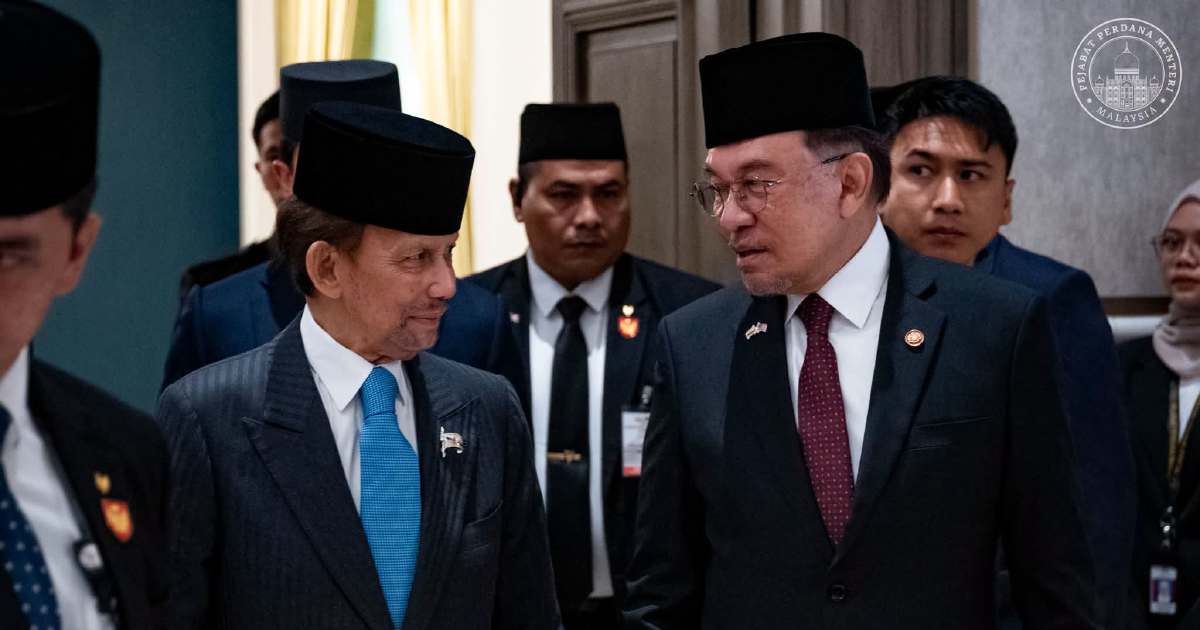
Prime Minister Datuk Seri Anwar Ibrahim will make an official visit to Brunei next week to participate in the 27th Annual Leaders' Consultation (ALC) with Brunei's Sultan Hassanal Bolkiah in Bandar Seri Begawan, marking the continuation of a quadrant-spanning dialogue mechanism between the two neighbouring Southeast Asian nations.
The bi-annual summit represents a cornerstone of Malaysia-Brunei relations, serving as the primary platform through which the two governments address strategic matters, economic cooperation, and regional concerns at the highest political level. The persistence of this institutional framework across 27 iterations underscores the stability and maturity of the bilateral relationship, which has evolved substantially since Malaysia and Brunei established formal diplomatic ties.
These annual consultations have historically provided opportunities for the prime ministers and sultanate leadership to align on economic priorities, security matters, and cultural exchanges. Given the geographic proximity of the two nations and their shared maritime boundaries in the South China Sea, bilateral discussions invariably touch upon regional geopolitics and transnational challenges including maritime security, resource management, and counter-terrorism cooperation.
For Malaysia, the engagement carries particular significance within the broader context of ASEAN diplomacy and intra-regional relations. Brunei, despite its small population and economy, holds considerable diplomatic influence within the regional bloc as a long-standing member and has maintained a prominent voice on critical issues including the South China Sea and the Code of Conduct negotiations. Malaysian leadership's regular engagement with the sultanate reinforces the broader architecture of Southeast Asian cooperation.
The economic dimension of the relationship has seen progressive expansion over recent decades. Trade between Malaysia and Brunei encompasses diverse sectors ranging from petroleum and natural gas to manufacturing and services. Regular high-level consultations serve to identify new avenues for commercial integration and address any impediments to cross-border commerce or investment. Malaysian companies maintain significant interests in Brunei's energy sector, while Bruneian capital has similarly found opportunities within Malaysia's larger economy.
Security cooperation constitutes another pillar of the bilateral framework. Both nations face shared challenges including maritime piracy in the Sulu and Celebes Seas, human trafficking, and transnational organised crime. The consultations provide formal mechanisms through which intelligence sharing, joint patrols, and coordinated enforcement efforts can be structured and reinforced. This collaboration extends to intelligence agencies and defence establishments, though such discussions typically remain confidential.
Cultural and educational exchanges have equally strengthened ties between the two populations. Malaysian students study at Brunei's institutions while Bruneian nationals pursue higher education in Malaysia. Professional networks spanning both nations remain vibrant, particularly among academics, businesspeople, and civil servants who traverse the border regularly for work and professional development.
The timing and regularity of the ALC reflect the two governments' commitment to preventative diplomacy and the resolution of any outstanding issues through structured dialogue rather than escalation. By institutionalising high-level engagement, Malaysia and Brunei have essentially insulated their bilateral relationship from the kind of sudden shocks or diplomatic friction that periodically affect other regional pairings.
Regional observers typically view Malaysia-Brunei summits within the context of ASEAN's internal cohesion and effectiveness. As ASEAN navigates complex external pressures from major powers and grapples with internal disagreements on matters including Myanmar and South China Sea governance, the strength of bilateral relationships among smaller and medium-sized members becomes increasingly important. Strong Malaysia-Brunei ties contribute to ASEAN's overall resilience.
The 27th ALC also occurs against a backdrop of evolving regional architecture. The emergence of frameworks such as the AUKUS alliance and renewed great power competition in Southeast Asia means that bilateral consultations between ASEAN members have acquired additional strategic weight. Malaysia and Brunei's discussions likely encompass not only their direct relationship but also their coordinated approach to regional security dynamics and the evolving balance of power.
Anwar Ibrahim's visit will likely include ceremonial elements alongside substantive negotiations, with both leaders addressing media following their formal consultation. Such occasions typically yield joint statements articulating shared positions on regional matters and renewed commitment to bilateral cooperation across specified sectors. These public statements serve both domestic audiences within each nation and the broader international community monitoring ASEAN activities.

