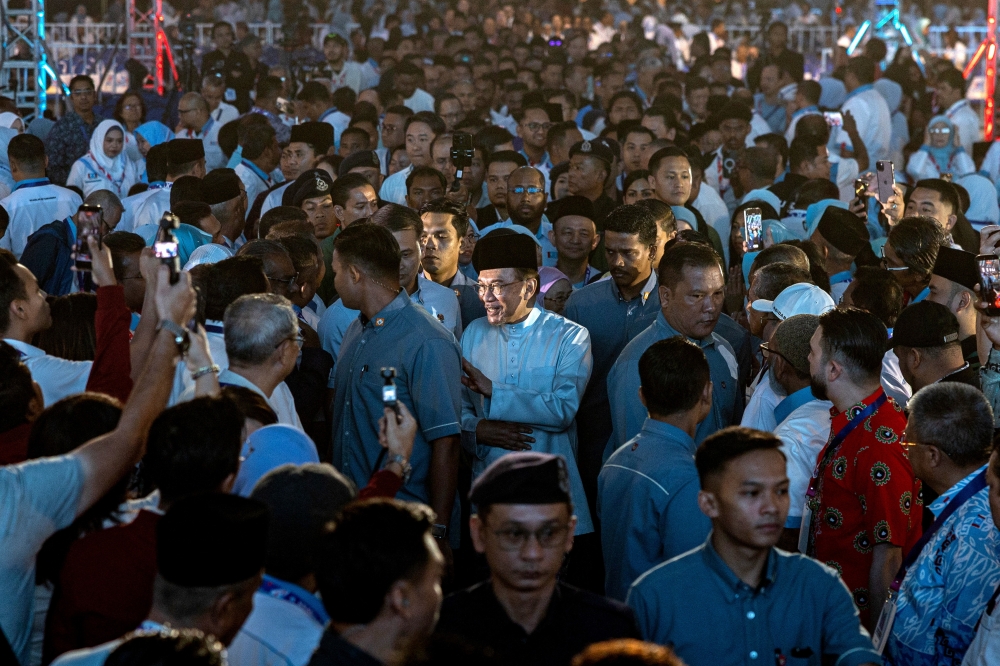
Prime Minister Datuk Seri Anwar Ibrahim has confirmed that his administration will bring a proposal to repeal the Universities and University Colleges Act (UUCA) to the Cabinet for consideration imminently, representing a significant step towards reshaping Malaysia's higher education governance framework. Speaking in Ayer Keroh, Anwar indicated that the Cabinet discussion would take place within the coming week, signalling momentum behind efforts to fundamentally overhaul how the nation's public universities operate and the degree of freedom they exercise in institutional and academic matters.
The UUCA, which has governed Malaysia's university sector for decades, has long been criticised by academics, student activists, and education advocates as an overly restrictive statute that constrains institutional autonomy and limits academic discourse on politically sensitive subjects. University leaders, particularly vice-chancellors of prominent institutions, have increasingly voiced frustration with provisions they argue stifle research independence and inhibit international academic collaboration. The act's provisions governing student activism and campus speech have drawn particular scrutiny from civil society organisations concerned about the stifling of intellectual pluralism within educational institutions.
Anwar's willingness to champion the repeal reflects a broader policy direction his administration has pursued since taking office, centring on democratic renewal and the gradual dismantling of what critics characterise as authoritarian holdovers from previous governance eras. The Prime Minister has positioned the move as essential to enabling Malaysian universities to compete globally and attract world-class researchers and institutions into partnership arrangements that might otherwise view the regulatory environment as inhospitable. This positioning aligns with the government's broader aspirations to elevate Malaysia's standing in international education rankings and foster innovation-driven economic growth.
The implications of such a repeal would be sweeping. Universities would likely gain substantially greater latitude in determining their own governance structures, employment practices, and research agendas without the same degree of ministerial oversight currently embedded in existing legislation. This transformation could enable institutions to operate with models more analogous to autonomous international research universities, potentially attracting higher-calibre international faculty and fostering more robust collaboration with overseas academic partners who have historically exhibited hesitation engaging with Malaysian universities operating under restrictive legislative frameworks.
Students would presumably benefit from expanded freedoms of expression and association on campus, though the precise contours of any replacement regulatory framework remain unclear. The proposal does not necessarily imply the absence of all governance oversight; rather, it suggests a recalibration of the relationship between state authority and institutional autonomy, potentially introducing a lighter-touch regulatory model that preserves institutional accountability mechanisms while expanding operational discretion. Several neighbouring Southeast Asian nations have already embarked upon similar liberalisation trajectories, and Malaysia's higher education sector has increasingly lamented competitive disadvantage relative to universities in Thailand, Indonesia, and Singapore operating under less restrictive enabling legislation.
Politically, the proposal carries implications beyond the education sector itself. For Anwar's broader reform agenda, it represents a test case of his government's capacity to implement transformative legislative change despite potential resistance from conservative constituencies. Some academic traditionalists and certain religious groups have expressed concern that expanded institutional autonomy might precipitate ideological shifts within universities, though such concerns remain largely anecdotal rather than constituting organised political opposition. The government appears confident in proceeding, suggesting either that internal polling indicates public receptiveness or that the administration judges the policy sufficiently important to warrant pushing forward despite potential headwinds.
The timing of the Cabinet presentation carries political significance as well. By moving expeditiously to formalise the proposal at the ministerial level, Anwar demonstrates resolve in pursuing a manifesto commitment that resonates particularly strongly with younger voters and urban middle-class constituencies—demographics that form core support for his coalition. The move also signals continuity with Pakatan Harapan's pre-2018 election platform, which included university autonomy expansion, lending credibility to claims that the current administration remains committed to reform pledges made during earlier political cycles.
International education observers have closely monitored Malaysia's higher education trajectory, and a successful UUCA repeal would constitute a major liberalising shift in the region's governance landscape. University rankings agencies frequently cite governance autonomy as an evaluation criterion, and reduced legislative constraints could theoretically improve Malaysia's standing across major international metrics. Furthermore, enhanced institutional independence might stimulate greater philanthropic investment and alumni engagement, as graduates often prove more willing to financially support institutions they perceive as operating with genuine autonomy and progressive governance frameworks.
The Cabinet discussion anticipated for next week will likely involve detailed scrutiny of the proposal's mechanics, including questions regarding implementation timelines, transitional provisions, and the substance of any replacement regulatory architecture. Ministers from the education portfolio will presumably present technical recommendations, while colleagues from other ministries assess budgetary implications and potential institutional disruptions. The discussion may also address political economy questions regarding how rapid change might be managed across the university system to minimise operational turbulence.
Successful Cabinet approval would constitute merely the first step in a lengthy legislative process requiring parliamentary passage, but Anwar's government commands a working majority in the Dewan Rakyat, making eventual enactment substantially probable absent significant unforeseen political complications. The broader significance extends beyond institutional mechanics; the repeal proposal encapsulates a generational debate about Malaysia's governance model and the extent to which the state should liberate civil society institutions from restrictive regulatory frameworks to enable greater social dynamism and competitive positioning in an increasingly knowledge-driven global economy.

