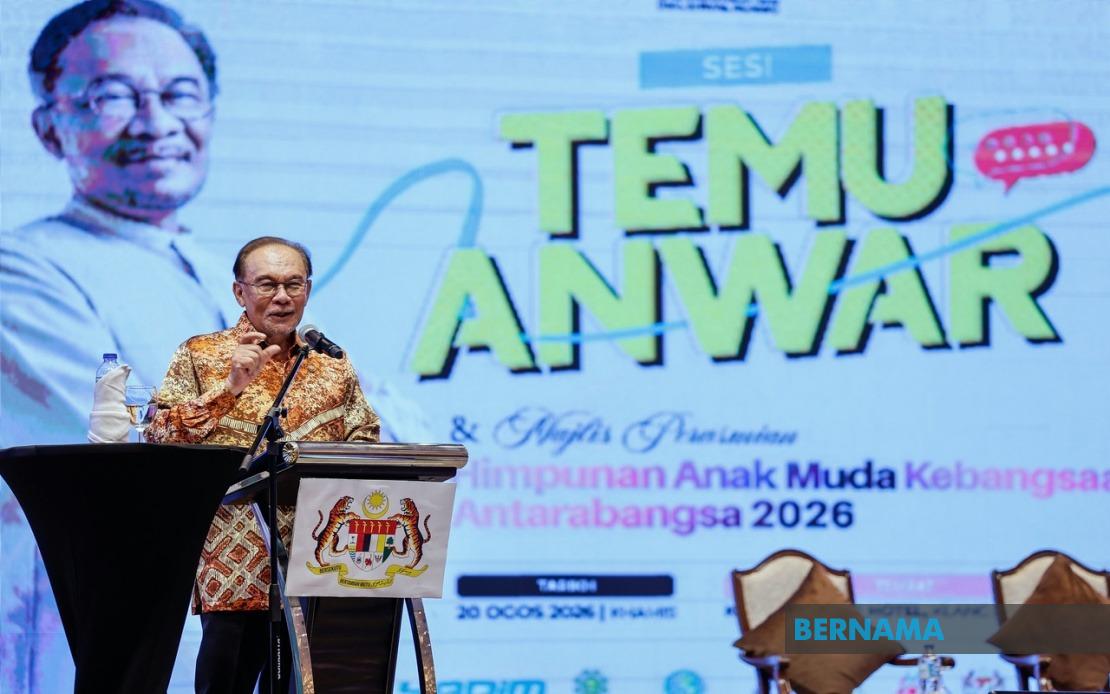
Prime Minister Datuk Seri Anwar Ibrahim has signalled that three significant policy announcements are forthcoming in the coming weeks, with major pronouncements scheduled around Malaysia's key national celebrations and the upcoming Budget presentation. Speaking at a youth engagement session in Klang on August 20, Anwar indicated that the first announcement would come on the eve of National Day on August 30, followed by another during Malaysia Day celebrations in Kuching on September 16, and a third during the tabling of the Budget in early October. The Prime Minister's deliberate staggering of these announcements suggests an intention to maintain momentum on policy reform throughout the remainder of the year while capitalising on symbolic national occasions to underline their importance.
While Anwar declined to reveal specifics about the forthcoming announcements, the timing and context of his remarks at the Himpunan Anak Muda Antarabangsa youth gathering provide meaningful insight into the government's immediate policy priorities. His decision to address these matters during a gathering focused on young people signals that youth-related initiatives will feature prominently in at least some of the upcoming announcements. The sequencing of the announcements—bookending the festive national period and leading directly into Budget season—reflects strategic consideration about how to embed reform initiatives into the national conversation at moments of heightened civic attention.
The genesis of these announcements appears rooted in direct dialogue between the government and young Malaysians. A student participant at the Klang event posed a specific question about government efforts to protect the welfare and financial security of youth engaged in gig economy work, a sector that has expanded substantially across Malaysia in recent years but remains inadequately regulated and supported. This question evidently prompted Anwar to outline the government's existing framework and signal impending enhancements, suggesting that the administration is responding to genuine grievances and policy gaps identified by the youth constituency.
Currently, the government is advancing protections for gig economy workers through two principal mechanisms. The Malaysian Gig Economy Commission (SEGiM) represents a dedicated institutional response to the sector's distinctive challenges, while a forthcoming legislative initiative addressing small business regulation aims to provide clearer operational parameters. However, Anwar acknowledged that considerable sentiment exists within both the gig economy workforce and advocacy circles that these existing measures remain inadequate. This candid recognition of the gap between current provision and actual need signals that government thinking on this issue is in active evolution, with the august announcements likely to include enhanced protections or expanded support mechanisms.
Beyond gig economy considerations, Anwar outlined emerging government thinking on youth entrepreneurship and access to financing. The administration plans to expand mechanisms through which recent graduates can access capital to establish their own enterprises, with the National Entrepreneurial Group Economic Fund (TEKUN) identified as a principal conduit for such support. However, a significant structural impediment currently constrains the effectiveness of these programmes: TEKUN and similar schemes traditionally require applicants to demonstrate prior business experience before approving financing, a requirement that effectively excludes inexperienced graduates despite their educational qualifications and entrepreneurial ambitions.
Recognising this constraint, Anwar signalled that the government is actively reviewing whether such experience requirements remain appropriate or should be modified to reflect contemporary economic realities. He emphasised that the traditional employment landscape—where university graduates anticipated stable long-term positions with single employers—has fundamentally transformed, and government financing criteria should evolve accordingly. This recalibration would acknowledge that younger Malaysians increasingly regard self-employment and business creation as viable and even preferable alternatives to conventional employment, rather than fallback options pursued only after traditional career paths have been exhausted.
The Prime Minister's approach to these matters reflects a consultative methodology that, while sometimes frustrating to those seeking immediate concrete commitments, demonstrates responsiveness to diverse stakeholder perspectives. He explicitly committed to listening to alternative viewpoints and considering implementation feasibility within existing budgetary and institutional constraints. This measured stance suggests that the forthcoming announcements will represent carefully calibrated reforms rather than sweeping transformations—adjustments informed by both government capacity and substantive engagement with affected constituencies.
For Malaysian youth, particularly those navigating the precarious gig economy or contemplating entrepreneurial ventures, these signals carry material significance. The government is signalling recognition that existing support frameworks, while establishing important foundational principles, have not adequately addressed the pace and nature of economic change. The sequential announcements across late August and September create opportunity for the administration to embed youth-oriented reforms into the national discourse at moments when public attention is elevated by festive occasions, potentially increasing buy-in for policy changes and enhancing their perceived legitimacy.
The broader Southeast Asian context adds further significance to Malaysia's approach to gig economy regulation and youth financing. Across the region, governments are grappling with how to extend labour protections and social security to rapidly expanding informal sectors while maintaining the flexibility and dynamism that make these sectors economically attractive. Malaysia's evolving approach, particularly if the forthcoming announcements include meaningful enhancements to worker protections and financing accessibility, could establish a potential model for regional emulation or adaptation.
For now, Anwar has essentially called for patience, promising that detailed policy substance will emerge once consultations conclude and government machinery has completed necessary preparations. The coming weeks will determine whether these announcements represent genuine systemic reform capable of materially improving circumstances for young Malaysians, or whether they constitute incremental adjustments that, while welcome, fall short of addressing the fundamental structural challenges confronting youth employment and entrepreneurship in contemporary Malaysia.

