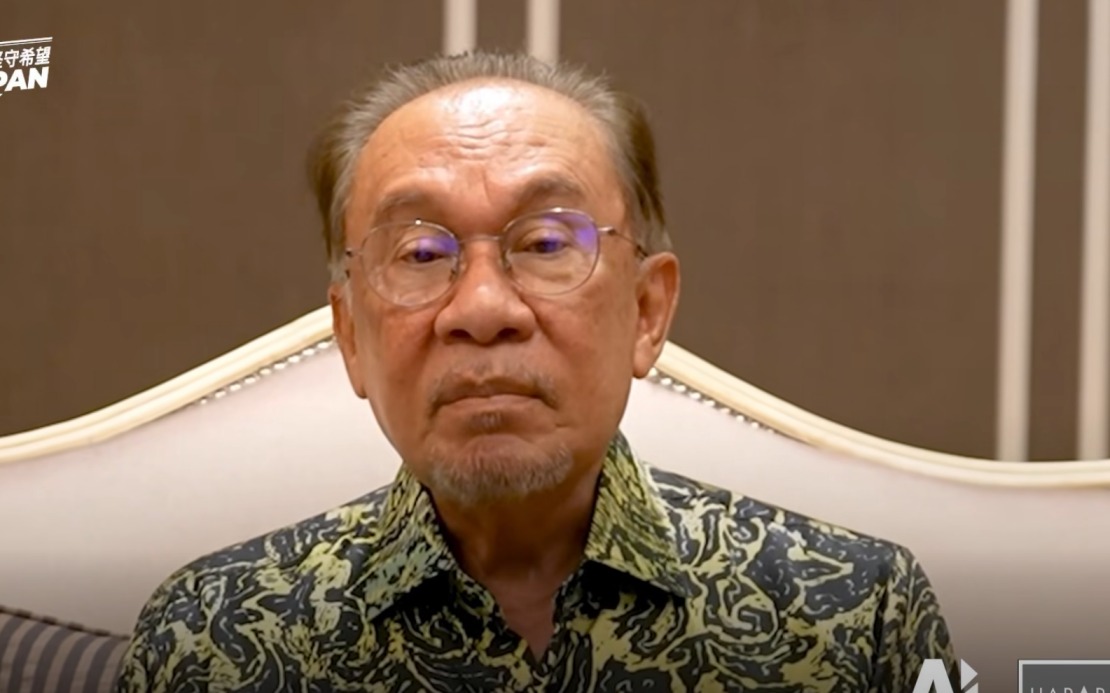
Prime Minister Datuk Seri Anwar Ibrahim has made a direct appeal to members of the Malaysian Armed Forces (ATM) and Royal Malaysia Police (PDRM), along with their spouses, to cast their votes for Pakatan Harapan candidates in Tuesday's early polling for the 16th Negeri Sembilan State Election. Through a Facebook video released in Seremban, Anwar framed the election as an opportunity for security personnel to demonstrate confidence in the coalition's stewardship of their interests and those of their families.
The Prime Minister's outreach to uniformed personnel represents a strategic effort by the ruling coalition to consolidate support among a crucial voting bloc with concentrated early voting arrangements. Beginning this week, approximately 22,339 eligible security force members—comprising 16,884 military personnel and their families alongside 5,455 police officers—will participate in advance polling at 38 dedicated centres throughout Negeri Sembilan. This structured early voting mechanism reflects the government's acknowledgment of the operational demands placed on security personnel who may be unavailable for standard polling day procedures.
Central to Anwar's messaging was a catalogue of welfare improvements that his administration claims to have implemented for ATM and PDRM members. Beyond standard salary considerations, the Prime Minister highlighted enhancements across multiple dimensions affecting quality of life: basic infrastructure provisions, housing accessibility, educational pathways for dependents, and healthcare coverage extending to parents. Additionally, he referenced targeted cash assistance programmes including Sumbangan Tunai Rahmah and Sumbangan Asas Rakmah, positioning these as tangible manifestations of government commitment to alleviating financial pressures on security families.
Yet Anwar's rhetoric acknowledged existing limitations in these arrangements. By stating that his Cabinet believed "there was still room for improvement," the Prime Minister tacitly conceded that current welfare provisions remain insufficient by his own assessment. This calibrated messaging—simultaneously celebrating achievements while recognizing gaps—appears designed to frame continued PH governance not as the culmination of reform but as an ongoing process requiring renewed electoral endorsement. The implicit argument suggests that discontinuity in government could imperil momentum in these welfare initiatives.
The appeal carries particular weight given regional electoral dynamics. Negeri Sembilan has traditionally maintained competitive multi-party contests, and security personnel represent a demographically distinct voting segment with distinct material interests. Unlike the broader urban or rural constituencies, ATM and PDRM voters constitute an organized, geographically dispersed group whose voting patterns can influence marginal contests. By mobilizing this demographic early and consolidating their support around welfare-centric messaging, the coalition seeks to establish psychological momentum before general polling on August 1.
Anwar's invocation of "service and sacrifice" operates on multiple registers simultaneously. At the explicit level, it acknowledges the hazards and commitments inherent to security work. At the implicit level, it establishes a reciprocal framework—suggesting that electoral support represents an appropriate response to government recognition of these sacrifices. This transactional framing, though common in electoral campaigning, carries particular resonance with military and police establishments accustomed to hierarchical authority structures and collective decision-making frameworks.
For Malaysia's broader political landscape, this appeal underscores the coalition's awareness that electoral viability depends substantially on retaining support from state institutions and their personnel. Unlike general populations that may prioritize diverse policy concerns, uniformed voters frequently concentrate on sectoral welfare, remuneration transparency, and institutional autonomy. By frontloading welfare messaging in security force-directed communications, PH signals that institutional interests remain within its governing framework.
The timing of this appeal also reflects tactical considerations surrounding the broader electoral calendar. Negeri Sembilan polls precede no other significant state elections in the immediate term, yet they occur within a broader context of continued scrutiny of Anwar's government. Successfully mobilizing security personnel behind PH candidates would demonstrate sustained institutional support and provide a positive narrative heading into potential future electoral contests. Conversely, erosion of security force backing could signal weakening coalition cohesion or dissatisfaction with governance performance among key constituencies.
From a structural perspective, Malaysia's early voting system for uniformed personnel creates distinct voter populations with different levels of exposure to campaign messaging and different decision-making timeframes. Security force voters cast ballots before the general electorate, potentially establishing bandwagon effects or alternatively creating disconnects between early results and final outcomes. Anwar's early and direct engagement with this segment reflects understanding that these voters cannot be reached through conventional campaign infrastructure that activates closer to general polling day.
The welfare-focused framing also positions PH responses against potential opposition criticisms regarding security force conditions. By proactively highlighting initiatives addressing salary, housing, and healthcare, the coalition preempts opposition narratives that might emphasize unfulfilled demands or systemic deficiencies. Whether these welfare improvements sufficiently address grievances within security establishments remains contestable, but the strategic deployment of these claims represents an attempt to dominate the narrative space among this voting segment.
Looking beyond the immediate Negeri Sembilan context, Anwar's direct appeal to security personnel reflects broader recognition that coalition electoral fortunes depend significantly on maintaining support among state institutions. Unlike opposition parties that might mobilize grassroots constituencies through ideological appeals, ruling coalitions typically derive substantial electoral weight from institutional loyalty and material patronage networks. By emphasizing welfare improvements and institutional appreciation, the Prime Minister attempts to bind security personnel to continued coalition governance through both material interest and symbolic recognition.
The August 1 general polling date for Negeri Sembilan represents the culmination of this early voting process, yet the dynamics established through security force engagement may already substantially influence final outcomes. If PH successfully consolidates support among uniformed voters through welfare-focused messaging, the coalition gains both material votes and potential psychological advantage heading into general polling. The challenge for opposition forces lies in competing for these votes through alternative messages—whether emphasizing institutional autonomy, superior welfare proposals, or broader governance critiques—while working within compressed timeframes and limited direct access to organized voter cohorts.

