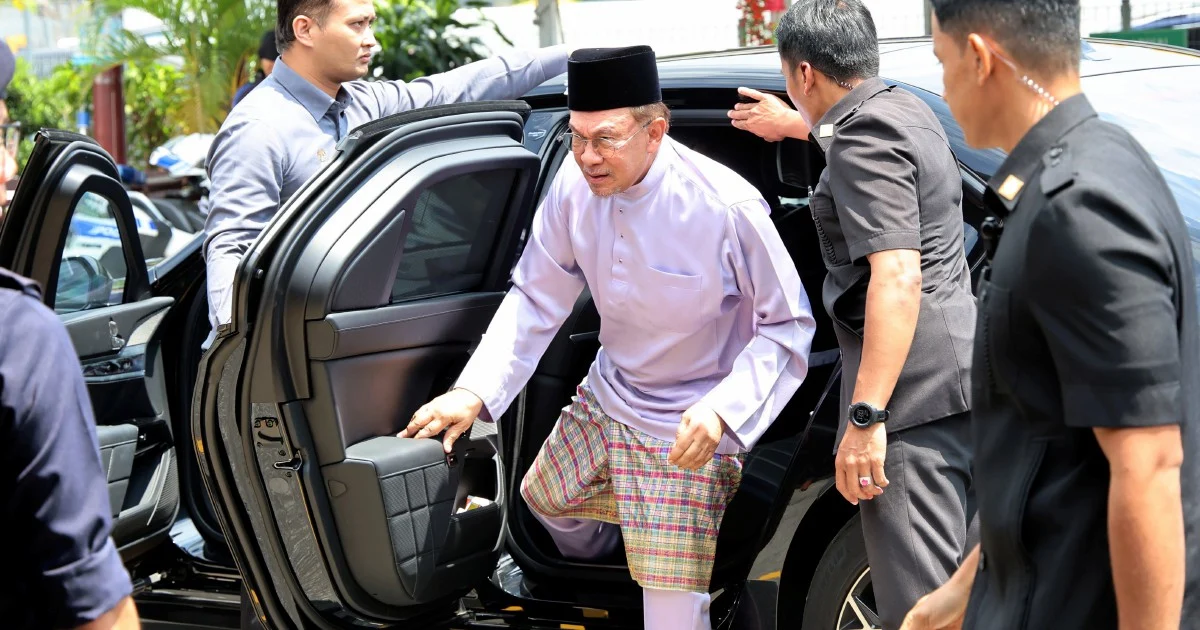
Prime Minister Datuk Seri Anwar Ibrahim has issued a direct appeal to all political parties involved in the upcoming Johor election to prioritise respectful conduct throughout their campaign activities. Speaking at Dengkil, Anwar stressed the importance of maintaining ethical standards and upholding positive values as parties compete for the trust of voters. His remarks underline growing concerns within the government about the tone of political discourse in the state, particularly as electoral fever intensifies.
The Prime Minister's intervention reflects broader expectations that political competition should remain grounded in dignity and mutual respect. Anwar's emphasis on avoiding arrogant behaviour suggests awareness that overly aggressive or dismissive campaigning tactics can alienate voters and erode confidence in democratic institutions. This measured approach seeks to distinguish legitimate political competition from conduct that prioritises personal or party advantage over the public interest.
Johor's electoral landscape involves multiple parties vying for representation, making the stakes significant for both state-level governance and national political dynamics. The state has historically been a stronghold for certain political movements, and shifts in voter sentiment during this election could reshape parliamentary alignments. By calling for restraint and professionalism, Anwar appears to be signalling that the government expects all participants to maintain standards that reflect maturity in democratic practice.
The timing of the Prime Minister's comments carries particular weight given Malaysia's political history, which has occasionally been marked by heated campaigns and personal attacks. Anwar's appeal for respect and good values serves as a reminder that electoral competition, while inherently adversarial, need not descend into character assassination or the promotion of divisive rhetoric. Such standards are especially important in a diverse society where political messaging can inadvertently inflame communal sensitivities.
For Malaysian voters, the Prime Minister's message carries an implicit assurance that the electoral process will be conducted within boundaries that preserve democratic norms. When political leaders set expectations about decorum, they establish baselines for acceptable behaviour that influence how campaigns unfold at grassroots level. This top-down messaging can discourage lower-ranking party operatives from resorting to tactics that undermine the legitimacy of election outcomes.
The emphasis on avoiding arrogance also reflects concerns about power dynamics within political contests. When parties compete from positions of perceived dominance, there is natural risk that they may discount opposition views or treat smaller contenders dismissively. Anwar's reminder that all participants should maintain humility suggests an effort to level the rhetorical playing field and ensure that every party's message receives fair hearing from voters.
Johor's significance extends beyond state boundaries, as outcomes there often serve as barometers for broader national sentiment. If this election proceeds with the respectful tone Anwar has advocated, it could establish precedents for how future campaigns are conducted elsewhere in Malaysia. Conversely, if parties ignore his guidance and resort to aggressive or demeaning tactics, the reputational damage to Malaysian democracy could resonate across the region.
The Prime Minister's intervention also acknowledges the responsibility of political parties to uphold institutional integrity. Elections are not merely contests for power but occasions when democratic legitimacy is renewed. Campaigns conducted with integrity and respect strengthen public confidence in election outcomes, whereas those marred by arrogance and disrespect can leave lasting doubts about the legitimacy of results, even when they are technically valid.
For opposition parties, Anwar's call for respectful campaigning may be heard as an invitation to compete vigorously but fairly. This allows them to challenge government policies and present alternative visions without needing to resort to personal attacks or inflammatory language. Such an approach can help opposition movements strengthen their platforms on substance while maintaining moral authority.
The backdrop to these comments includes increasing scrutiny of political discourse across Southeast Asia, where democratic institutions in several countries face pressure from polarisation and misinformation. Malaysia's standing as a relatively stable democracy depends partly on maintaining confidence in electoral processes and the professionalism of political actors. By publicly calling for respectful campaigns, Anwar positions Malaysia as committed to upholding democratic standards even amid intense electoral competition.
Implementing the Prime Minister's guidance will require commitment from all political parties, including mechanisms for self-regulation and accountability. Party leadership must communicate expectations to candidates and campaign workers, establishing consequences for those who breach standards. Without such enforcement mechanisms, appeals for respectful behaviour risk becoming aspirational rather than prescriptive.
Ultimately, Anwar's message reflects recognition that elections are foundational to democratic legitimacy and should be conducted in ways that strengthen rather than undermine public institutions. The Johor election presents an opportunity for Malaysian political parties to demonstrate that competition and respect are compatible, and that contesting for power need not require abandoning the values that hold society together.

