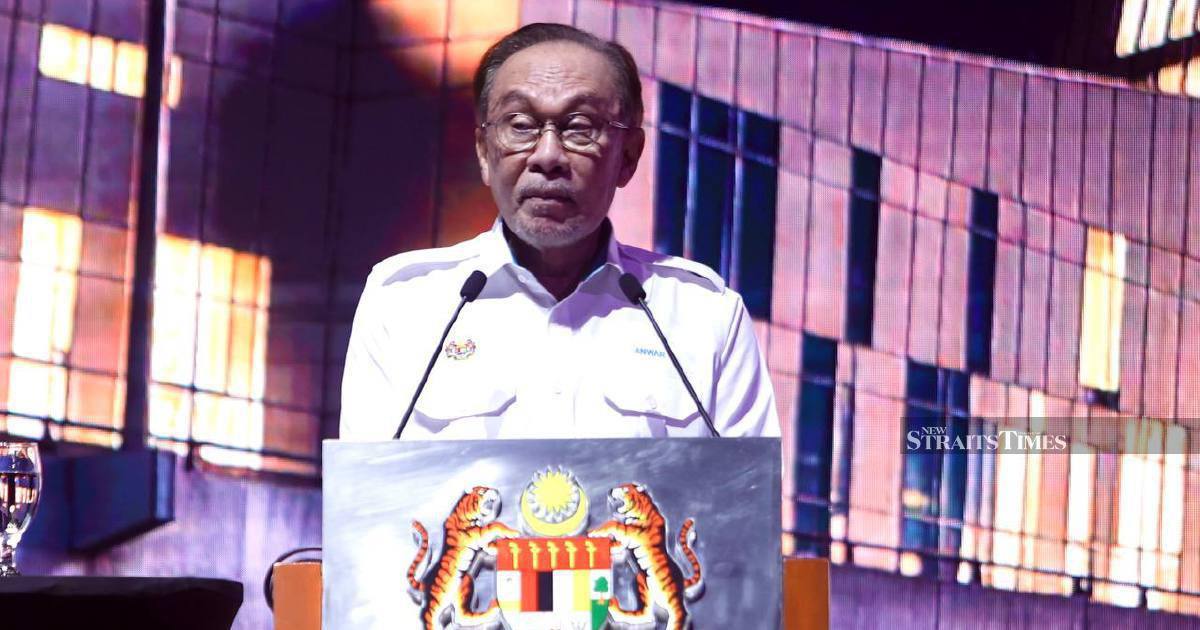
Prime Minister Datuk Seri Anwar Ibrahim has articulated a vision for Malaysian cinema that balances artistic liberation with cultural responsibility, framing the debate around creative expression as essential to the nation's cultural maturity and international competitiveness.
Speaking in Petaling Jaya, Anwar positioned expanded freedoms for filmmakers within a framework that acknowledges Malaysia's unique cultural and moral landscape. His remarks reflect a broader push within government circles to recalibrate how the country approaches artistic regulation, recognising that restrictive policies may handicap local cinema in an increasingly globalised entertainment marketplace where audiences demand authentic, diverse storytelling.
The Prime Minister's intervention signals a potential shift in how policymakers view film censorship and creative constraints. Malaysia's current regulatory environment has long been criticised by filmmakers and cultural observers who argue that stringent content guidelines limit the industry's ability to produce works that resonate internationally or tackle complex social themes. By lending his voice to this conversation, Anwar is effectively validating concerns raised by creative professionals about overly cautious approval processes.
For the Malaysian film industry, this statement carries substantial weight. Local productions have struggled to gain traction on international platforms, partly due to perceived formulaic storytelling constraints. Directors have privately expressed frustration with censorship boards that flag ambiguous content, forcing revisions that dilute narrative impact. Anwar's framing suggests the government may be reconsidering whether such protective measures genuinely serve Malaysia's cultural interests or instead handicap domestic talent competing globally.
The emphasis on grounding creative expression in Malaysian values and morality, however, provides important context. This is not a call for completely unrestricted content but rather for a more nuanced, mature approach to what constitutes acceptable artistic boundaries. The statement implies that creators can explore challenging subjects and unconventional perspectives without abandoning cultural sensitivity or ethical moorings—a distinction that matters significantly in Malaysia's multi-religious, multi-ethnic context.
The timing of these remarks suggests alignment with broader government initiatives to promote Malaysia's creative economy. The nation has invested in film infrastructure and incentive schemes, yet these efforts yield limited returns when regulatory frameworks remain perceived as restrictive. International film festivals and streaming platforms increasingly favour productions from countries with reputations for creative permissiveness, potentially disadvantaging Malaysian productions in the global marketplace regardless of artistic merit.
For filmmakers, Anwar's comments provide political cover to pursue bolder storytelling. Knowing that the Prime Minister publicly advocates for greater freedom may embolden directors to challenge censorship decisions or propose scripts that previously would have been self-censored before submission. This trickle-down effect—where political endorsement translates into practical creative courage—often proves more consequential than formal policy changes.
The statement also addresses long-standing tensions within Malaysia's cultural establishment between progressive and conservative voices. By acknowledging both the need for freedom and the importance of cultural grounding, Anwar attempts to find middle ground that appeals across ideological divides. This diplomatic positioning may be necessary to build consensus among various stakeholders—from religious authorities to creative communities—on what expanded artistic latitude might realistically entail.
Practically speaking, this could mean film classification boards becoming more receptive to nuanced content, perhaps reconsidering how certain themes are categorised. It might lead to clearer guidelines that distinguish between artistic merit and gratuitous content, allowing storytellers more latitude when subject matter serves narrative purpose. Industry observers will likely scrutinise the Censorship Board's decisions in coming months for evidence of substantive policy evolution.
For Malaysia's international standing, supporting a more creatively liberated film industry aligns with efforts to position the country as a regional creative hub. Singapore and South Korea have leveraged relatively open cultural environments to build thriving entertainment industries that generate substantial economic returns and soft power influence. Malaysian policymakers are increasingly aware that creative constraint represents an economic cost, not merely a cultural safeguard.
The broader implications extend beyond cinema alone. Anwar's intervention in the filmmaker debate may foreshadow discussions about creative freedoms across other cultural sectors—music, literature, visual arts—where similar tensions exist between regulatory protection and creative autonomy. A more permissive approach to film could create momentum for rethinking restrictions elsewhere.
While the Prime Minister's remarks constitute encouragement rather than specific policy directives, they represent significant symbolic acknowledgment that Malaysia's current regulatory approach warrants reassessment. Whether this translates into concrete changes—revised censorship standards, reformed approval processes, or formal policy revision—remains to be seen. Nevertheless, Anwar's public positioning ensures the conversation about creative freedom in Malaysia has now reached the highest levels of government, where resource allocation and priority-setting ultimately determine whether the nation's filmmakers will genuinely enjoy the greater latitude their international counterparts increasingly take for granted.

