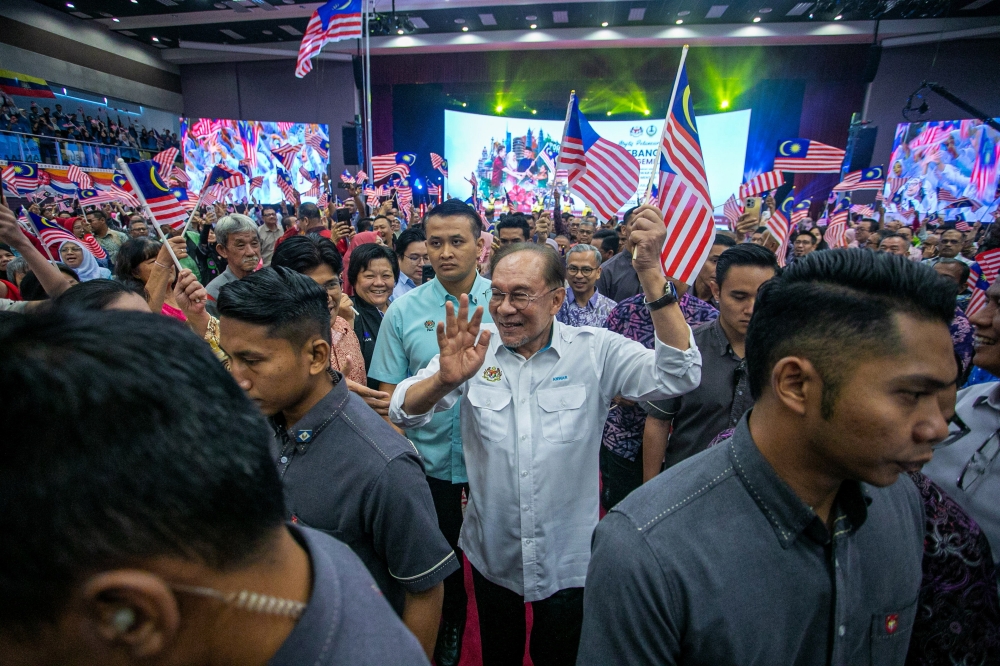
Prime Minister Datuk Seri Anwar Ibrahim has issued a measured directive to members of his cabinet and other government officials, permitting them to engage in election campaigning while simultaneously establishing clear ethical guardrails. Speaking in Ipoh on July 19, Anwar acknowledged the legitimate right of public servants to participate in political activities, a recognition that reflects the democratic principle of allowing individuals to support their preferred parties and candidates. However, his message carried an unmistakable caution: the freedom to campaign must not translate into the abuse of government machinery, resources, or institutional authority.
The Prime Minister's statement arrives during a period when Malaysia faces heightened political activity, with various electoral contests either underway or anticipated across different levels of governance. This timing underscores the recurring challenge that democracies face when distinguishing between permissible political participation and improper exploitation of state apparatus. In many emerging democracies across Southeast Asia, the line between these two activities remains contentious and frequently blurred, making Anwar's articulation of boundaries particularly significant for the region.
Anwar's cautionary words reflect a broader concern within Malaysia's political ecosystem regarding the potential misuse of government positions for partisan advantage. Government ministers and officials occupy positions of considerable influence and typically command access to resources, information, and platforms that ordinary citizens do not possess. The concern, therefore, is not whether these individuals should campaign—a right fundamental to democratic participation—but rather whether they might exploit their official positions to gain unfair electoral advantages. This distinction between legitimate advocacy and institutional abuse represents a core tension in managing elections within systems where the executive branch remains powerful.
The Prime Minister's guidance is particularly relevant given Malaysia's history of governance challenges. Previous administrations have faced accusations of blending government functions with party political activities, occasionally compromising the perceived neutrality of public institutions. By explicitly addressing the matter, Anwar signals an intention to maintain clearer separation between state and party machinery, a principle that strengthens democratic accountability and public trust. This approach also carries implications for how civil servants conduct themselves, establishing expectations that administrative duties must remain distinct from campaign activities.
For Malaysian readers and observers across Southeast Asia, Anwar's statement carries practical implications for the upcoming electoral period. Government officials who understand these boundaries can participate in legitimate political activities without fear of crossing into unethical territory. Conversely, those tempted to leverage state resources for campaign purposes now have explicit warning from the highest political office. This clarity, while not eliminating all grey areas, establishes a baseline expectation for institutional conduct during politically active periods.
The statement also reflects international norms and standards that Malaysia has committed to upholding as a democratic nation. Countries that maintain robust separation between government machinery and political parties generally experience greater electoral integrity, higher public confidence in institutions, and more competitive contests. By articulating these principles publicly, Anwar positions Malaysia within the global community of democracies that take institutional integrity seriously, potentially influencing perceptions of Malaysian governance during international election observation efforts.
Critically, Anwar's remarks acknowledge a reality that often goes unspoken in political discourse: government officials inevitably possess views and political preferences. Rather than attempting the impossible task of enforcing complete political neutrality, his approach accommodates human nature while imposing organisational discipline. Officials may campaign for their parties, but the machinery of government—its resources, personnel, facilities, and authority—must remain neutral. This pragmatic framework represents a mature approach to managing politics within institutional structures.
The implications for Malaysia's broader political landscape are noteworthy. A government that enforces such boundaries demonstrates commitment to electoral fairness regardless of which coalition or party holds power. This becomes particularly important if electoral fortunes shift, as the standards established now will apply to future administrations. By framing ethical conduct as an expectation rather than an optional courtesy, Anwar creates expectations that transcend his current tenure and potentially establish precedent for successors.
Regional context adds further significance to these remarks. Several Southeast Asian nations struggle with the politicisation of government apparatus, creating perceptions of unfair electoral competition and undermining democratic legitimacy. Malaysia, despite its challenges, has maintained mechanisms of institutional independence that many regional peers lack. Anwar's explicit reminder reinforces these mechanisms and signals their continued importance. For international observers and regional peers, such statements matter in maintaining confidence that Malaysia's democratic processes, while imperfect, retain institutional guardrails against the worst forms of electoral manipulation.
Moving forward, the effectiveness of Anwar's directive depends largely on implementation and enforcement. Establishing boundaries requires mechanisms to monitor compliance and consequences for violations. The statement itself serves primarily as an expression of principle and expectation. Whether enforcement structures prove adequate will determine whether this represents genuine institutional strengthening or merely rhetorical positioning. Malaysian civil society organisations and opposition parties will likely monitor government conduct during the campaign period to assess whether the Prime Minister's words translate into actual practice.

