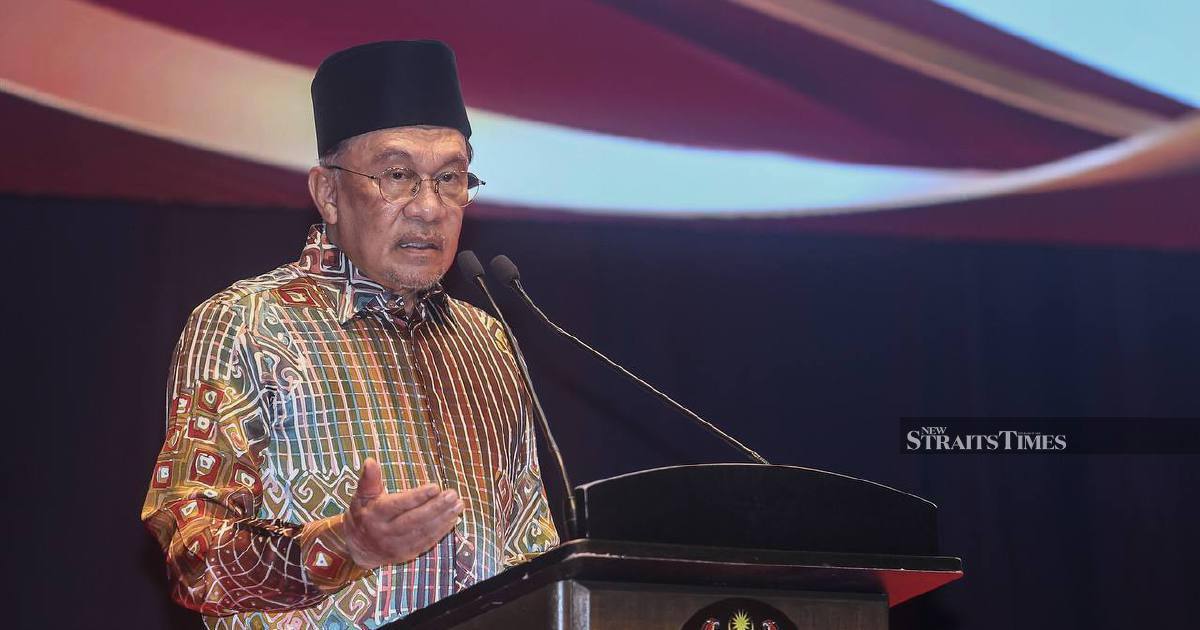
Prime Minister Datuk Seri Anwar Ibrahim has called for Malaysia's Islamic preaching sector to fundamentally shift its approach by integrating contemporary technology with careful theological reasoning, signalling a push towards a more sophisticated engagement strategy with digital-native audiences. Speaking in Kuala Lumpur, the Prime Minister emphasised that the landscape of religious communication has undergone profound transformation, requiring faith leaders and preachers to adapt their methodologies accordingly rather than rely solely on traditional delivery mechanisms that increasingly struggle to capture attention among younger demographics.
The Prime Minister's intervention into this domain reflects growing recognition within government circles that Islamic discourse in Southeast Asia must compete effectively with secular content while maintaining theological rigour and authenticity. Malaysia, as a Muslim-majority nation with significant digital infrastructure penetration, faces the dual challenge of ensuring religious messaging remains accessible to its population whilst simultaneously countering misinformation and extremist narratives that exploit digital platforms for recruitment and radicalisation purposes. Anwar Ibrahim's remarks suggest the government views technological adoption not as a threat to Islamic authenticity but rather as an essential tool for legitimate preachers to strengthen their influence.
The transition towards tech-enabled Islamic preaching carries particular resonance in Malaysia's context, where social media platforms have become primary spaces where theological debates unfold and religious narratives compete for adherents' attention. Online channels have democratised Islamic teaching, allowing voices beyond traditional institutional authorities to gain followings, a shift that creates both opportunities for broader engagement and risks of theological inconsistency or harmful messaging. The Prime Minister's emphasis on combining wisdom with technology suggests official concern that some preachers may lack the discernment necessary to navigate digital communication's unique challenges, including algorithmic amplification, shortened attention spans, and the permanence of online content.
Anwar Ibrahim's framing of this issue as requiring prudent judgment alongside technological competence indicates an understanding that tools alone cannot solve problems rooted in human interpretation and decision-making. Preachers tasked with bringing Islamic teaching to digital audiences must grapple with questions about appropriate tone, content moderation, audience segmentation, and adaptation of complex theological concepts for platform-specific formats. The challenge intensifies when considering that religious discourse increasingly occurs across multiple platforms simultaneously, requiring consistent messaging whilst respecting each channel's distinct communication culture and user expectations.
From a Malaysian perspective, the government's encouragement of tech-enabled Islamic preaching aligns with broader digital economy ambitions and national development strategies that position technology adoption as fundamental to competitive advantage. Religious institutions that embrace digital transformation contribute to perceptions of Islam as compatible with modernity and progress, countering narratives that characterise faith practice and technological advancement as inherently incompatible. This alignment becomes strategically important as Malaysia seeks to position itself as a regional leader in Islamic finance, digital innovation, and moderate Islamic thought.
The Prime Minister's call also addresses concerns about information asymmetry between well-resourced international religious movements and Malaysian Islamic institutions. Without adequate digital capabilities and investment, local preachers may find their voices drowned out by better-funded foreign entities delivering Islamic content through sophisticated multimedia production. Technology adoption thus becomes a matter of cultural sovereignty, ensuring that Malaysian interpretations of Islamic teaching maintain prominence within domestic discourse and regional conversations. This dimension becomes more critical as diasporic communities and transnational Islamic networks exercise increasing influence over younger Muslims' spiritual development.
Implementing Anwar Ibrahim's vision requires substantial infrastructure investment and human capital development within Malaysia's preaching ecosystem. Religious scholars and preachers must receive training not merely in using digital tools but in understanding how digital platforms structure information, influence attention, and shape understanding. Madrasahs, Islamic universities, and religious training centres would need to incorporate digital literacy and contemporary communication strategy into curricula. Without such foundational institutional shifts, exhortations to embrace technology risk remaining aspirational rather than translating into meaningful change.
The initiative also intersects with Malaysia's ongoing efforts to combat religious extremism and misinformation, challenges that have demonstrated the internet's capacity to radicalise vulnerable individuals and spread false theological justifications for violence. Mainstream preachers equipped with digital expertise can more effectively counter extremist narratives, debunk theological distortions, and offer appealing alternative interpretations of Islam that emphasise moderation and coexistence. The government's support for tech-driven preaching therefore serves security objectives alongside religious and cultural goals, presenting Islamic teaching as a bulwark against rather than vector for extremism.
Regionally, Malaysia's approach carries implications for how Southeast Asian nations balance religious tradition with digital modernity. As economies across the region digitalise rapidly, questions about how faith communities adapt become increasingly urgent. Malaysia's push towards wisdom-informed, technology-enabled Islamic preaching offers a model—albeit one still requiring practical development—for how Muslim-majority democracies can leverage digital infrastructure to strengthen rather than undermine religious engagement. The approach assumes that proper integration of technology and theological insight can deepen rather than dilute Islamic teaching's appeal and relevance.
Looking forward, the success of this initiative depends on whether Malaysia's religious institutions genuinely embrace the technological transition or treat it as superficial compliance with official expectations. Digital preaching that merely translates conventional sermon formats onto screens without considering platform dynamics, audience psychology, or interactive possibilities risks disappointing audiences and reinforcing perceptions that religious institutions remain out of touch. Conversely, preachers who thoughtfully combine theological depth with digital sophistication could significantly expand Islam's influence among populations accustomed to obtaining information and meaning-making through digital channels.

