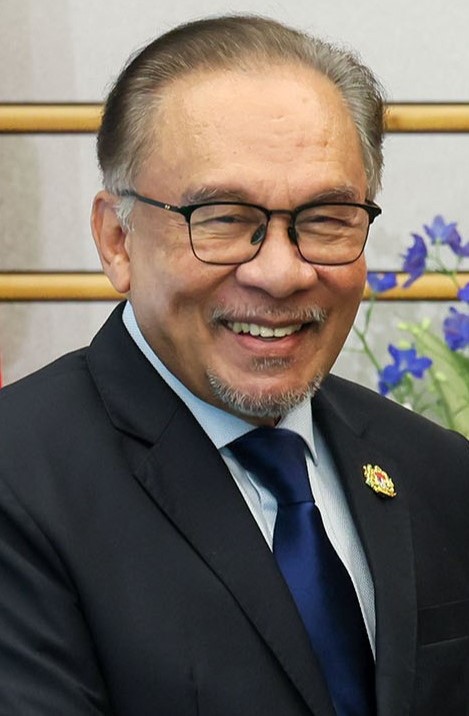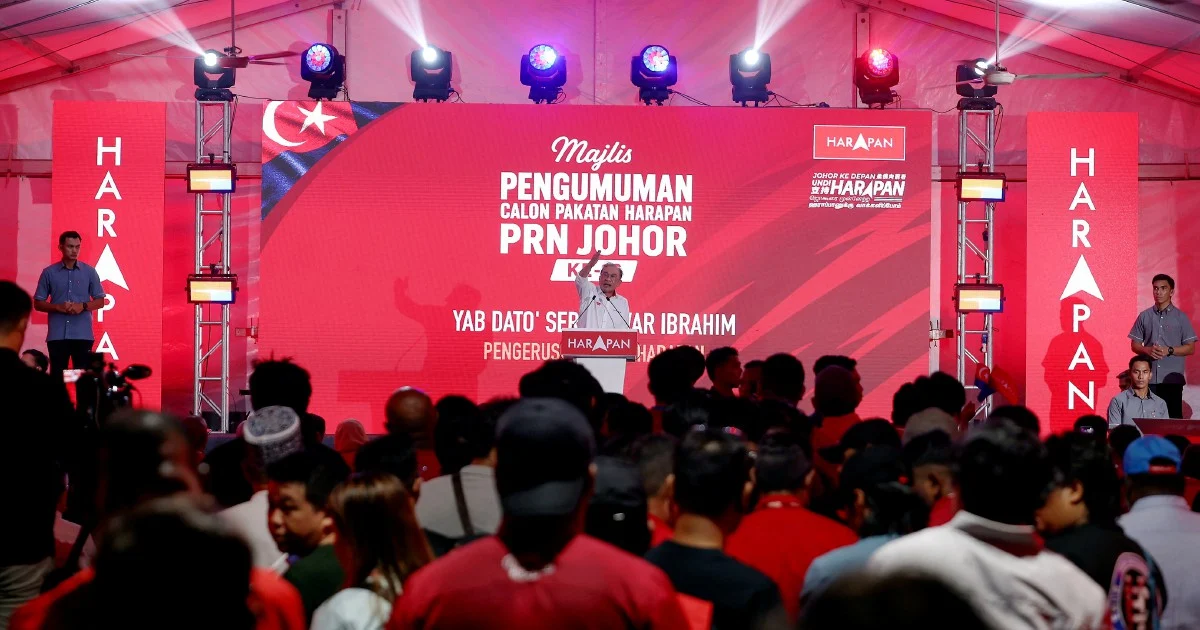
Pakatan Harapan chairman Datuk Seri Anwar Ibrahim has drawn a clear line regarding the parameters for Johor's forthcoming state election, insisting that the contest should unfold exclusively as a political competition without encroachment from Malay Rulers' institutions. The call, made during remarks in Tangkak, underscores growing sensitivities around the separation between political processes and constitutional monarchy institutions ahead of what is expected to be a closely contested electoral battle in the strategically important southern state.
Anwar's intervention reflects broader concerns within the opposition coalition about maintaining institutional boundaries during electoral contests. The statement arrives amid heightened political activity in Johor, where multiple stakeholders have been positioning themselves for what many analysts expect will be a significant test of voter sentiment. By emphasizing that the election should remain strictly within the political domain, the PKR supremo appears to be preemptively cautioning against any scenario where royal patronage or institutional mechanisms could be perceived as influencing the electoral outcome.
The distinction Anwar draws between political competition and royal institution involvement carries particular weight in Malaysia's constitutional framework. Malay Rulers occupy a unique constitutional position, and their perceived alignment with or support for particular political interests can significantly shape public perception of election legitimacy. In Johor specifically, where the state has a Malay-majority population and strong sultanate traditions, such clarifications take on added significance for political contestants seeking to ensure a level playing field.
Johor has historically been a Barisan Nasional stronghold, but the state has witnessed increasing political contestation in recent years. The upcoming election represents an opportunity for Pakatan Harapan to test its electoral machinery in a major state while challenging BN's traditional dominance. Anwar's framing of the election as a purely political matter suggests PH wants to compete on the grounds of policy, performance, and political messaging rather than navigating potentially complicated relationships with royal institutions.
The timing of such statements is also significant given Malaysia's broader political trajectory since the 2022 general election and the various coalition realignments that have followed. Political actors remain sensitive to accusations that elections are being influenced by non-partisan actors or institutions. By making explicit calls for boundaries between electoral politics and institutional involvement, opposition leaders attempt to establish standards of conduct that reduce opportunities for perceived interference from any quarter.
For voters in Johor, Anwar's emphasis suggests a campaign focused on substantive political issues rather than institutional considerations. This approach aligns with PH's broader messaging strategy, which typically emphasizes governance competence, economic policies, and service delivery. The coalition has invested considerable effort in strengthening its organizational presence in Johor, recognizing that substantial gains in the state would significantly enhance its position heading into future federal political contests.
The statement also carries implications for how political actors across the spectrum conduct themselves during the campaign period. By flagging concerns about royal institution involvement, Anwar signals that PH will monitor developments carefully and that any actions perceived as institutional encroachment would draw formal challenge. This represents a form of political positioning that establishes expectations for conduct among all parties involved in the electoral process.
For Malaysia's democratic health, the insistence that elections remain firmly within the political sphere reflects important principles about institutional separation and the primacy of electoral competition. While Malaysia's constitutional monarchy remains deeply respected, ensuring that elections are decided by voters exercising political choice rather than institutional dynamics helps maintain public confidence in democratic processes. This becomes increasingly important as the country navigates an evolving political landscape with multiple coalitions and shifting voter preferences.
The Johor election will likely serve as a significant indicator of political momentum for the various coalitions contesting the 2025 general election cycle. How the campaign unfolds, whether the boundaries Anwar suggests are observed, and the ultimate electoral outcome will provide important signals about voter sentiment and the health of Malaysia's competitive political system. The emphasis on keeping the contest within political channels suggests serious engagement with the fundamentals of electoral competition rather than institutional maneuvering.