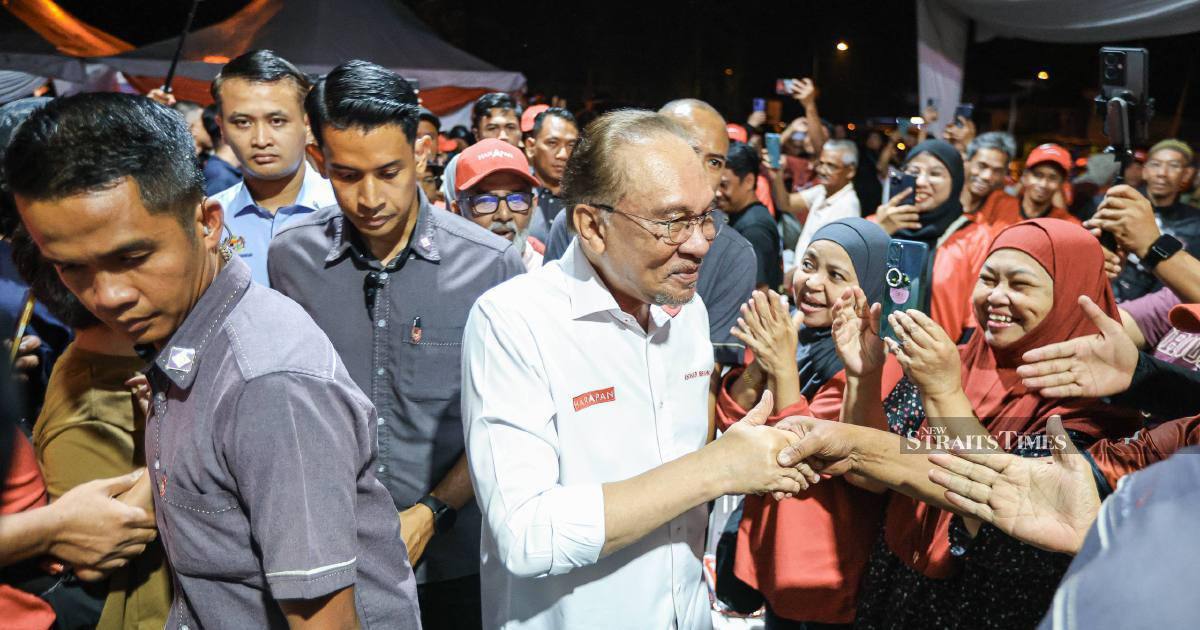
Pakatan Harapan chairman Datuk Seri Anwar Ibrahim has launched a concentrated outreach effort targeting Johor voters who have relocated beyond state boundaries, urging them to travel home for the forthcoming state election scheduled for next Saturday. The appeal underscores the competitive nature of the electoral contest and the strategic importance of mobilising every eligible voter to participate in the democratic process.
The call to Johoreans scattered across the country—particularly those living in the capital and in neighbouring Singapore—reflects broader campaign strategies adopted by major political coalitions as they seek to consolidate their voter bases. Malaysia's federal structure creates interesting dynamics in state-level polls, as internal migration, economic opportunities, and family considerations often draw voters away from their registered constituencies. The proximity of Singapore to Johor makes cross-border residency patterns particularly pronounced, with many Johoreans commuting to or permanently settling in the island nation for employment and business opportunities.
Anwar's message carries particular weight given his position as chairman of Pakatan Harapan, the ruling coalition that has governed Malaysia since the 2018 general election. His personal intervention in mobilising voters suggests the coalition views the Johor contest as consequential for its broader political fortunes. State elections in Malaysia frequently serve as bellwether indicators of national sentiment, and results can either reinforce or challenge a governing coalition's mandate to lead at the federal level.
For voters in Kuala Lumpur, the logistical challenge of returning to Johor to vote represents a significant commitment of time and resources. Though some distance-based voting mechanisms exist in Malaysian electoral law, they remain limited in scope, and most voters who wish to cast their ballots must physically travel to their registered polling stations. This requirement places an implicit burden on voters, particularly those whose work and family commitments in other states or cities may make the journey inconvenient.
The situation reflects deeper questions about civic participation and voter accessibility in Malaysia's electoral system. While the country has made strides in increasing voter registration and turnout, logistical barriers continue to affect certain demographic groups. Young professionals, migrant workers, and those pursuing higher education or career advancement outside their home states face genuine difficulties in exercising their franchise. The appeal from Anwar acknowledges these challenges while simultaneously framing voting as a civic duty that transcends personal inconvenience.
Johor's electoral significance extends beyond its local importance. As Malaysia's second-largest state by population and a traditional stronghold for multiple political coalitions, its results ripple through national political calculations. The state has alternated between different governing coalitions in recent electoral cycles, making it genuinely competitive rather than a safe seat for any single political force. The demographic and economic diversity of Johor's electorate—encompassing urban professionals, rural communities, traders, and industrial workers—means that diverse voter mobilisation efforts target different constituencies with tailored messaging.
The international dimension of voter mobilisation, particularly the appeal to citizens in Singapore, highlights the distinctive border dynamics of southern Peninsular Malaysia. Thousands of Johoreans work or reside in Singapore due to its developed economy and geographic proximity. The cross-border labour market has become integral to the region's economic ecosystem, but it complicates voting patterns when citizens must choose between maintaining economic engagement abroad and returning home for elections.
Political parties and coalitions in Malaysia have increasingly recognised the importance of targeted voter outreach in the pre-election period. Rather than relying solely on traditional media campaigns or public rallies, modern campaigns employ sophisticated communication strategies to reach specific voter cohorts. Appeals through social media, community networks, and personal testimonies from party leaders allow campaigns to penetrate communities that might otherwise remain disconnected from election publicity.
The effectiveness of such appeals depends partly on practical considerations. Voters must have sufficient advance notice to arrange transport and time off work, particularly if they need to travel considerable distances. The timing of campaign messaging therefore becomes strategically important, as launching voter mobilisation efforts too early risks losing momentum, while launching them too late provides insufficient time for voters to make arrangements. Anwar's call, made with the election just a week away, represents a final push to activate voter networks.
Beyond the immediate electoral context, such appeals also reflect evolving relationships between political leaders and their constituency members. By personally reaching out to voters who have relocated, coalition leadership demonstrates that geographic distance does not diminish a voter's importance to the party's calculus. This messaging carries symbolic value beyond the practical question of securing additional votes, as it reinforces notions of inclusive political participation and community belonging.
The success of voter mobilisation campaigns ultimately depends on whether appealed voters perceive their participation as genuinely consequential and whether practical barriers can be overcome. For Johoreans weighing the effort required to return home against competing personal and professional obligations, the decision often hinges on their assessment of the stakes involved and their commitment to particular political outcomes. As polling day approaches, such grassroots activation efforts become increasingly intensive across competing coalitions.

