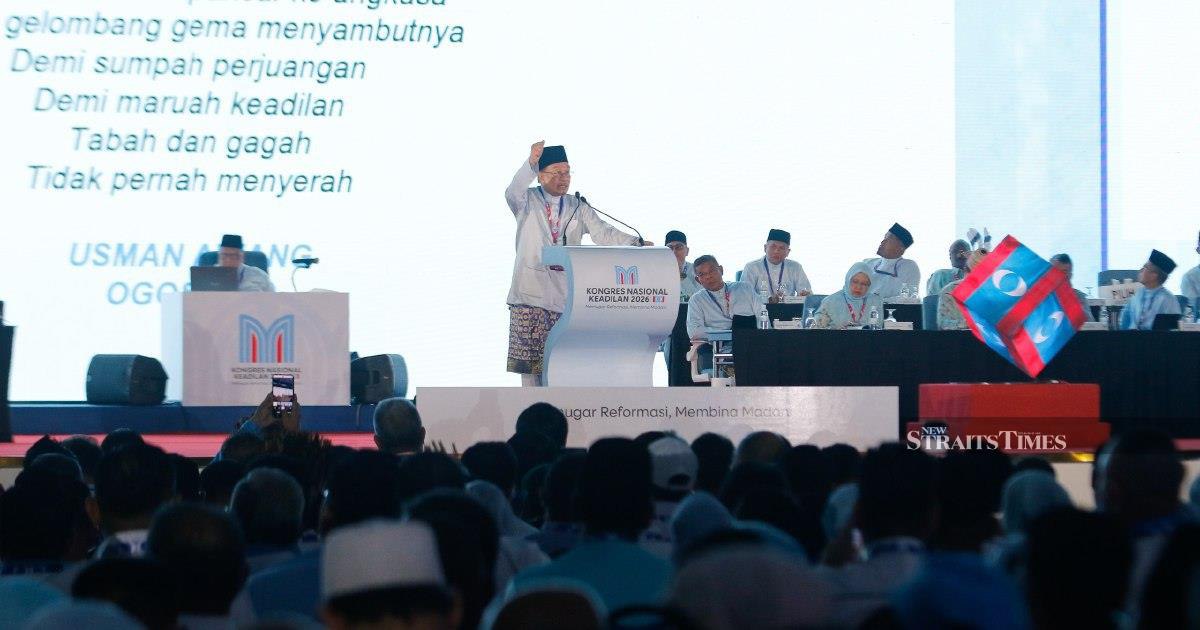
Prime Minister Datuk Seri Anwar Ibrahim has indicated that his government intends to intensify efforts on its reform programme, moving beyond the initial phase of stabilisation to tackle deeper structural changes across the economy and public institutions. Speaking at Ayer Keroh, the PKR president outlined a determination to press forward with the administration's transformational agenda with considerably more force than previously demonstrated.
The statement reflects a strategic reassessment within the ruling coalition regarding the pace of implementation. Having secured political stability following several years of uncertainty marked by successive changes in government and ministerial reshuffles, the administration appears confident enough to shift gears and address more contentious and complex policy areas that require sustained political will. This acceleration comes as the government consolidates its parliamentary majority and public support following recent political developments.
For Malaysian observers, this announcement carries significant implications for the trajectory of the country's economic and governance landscape. The reform agenda encompasses multiple dimensions, from fiscal restructuring and public service efficiency to institutional integrity and regulatory modernisation. The decision to pursue these more aggressively suggests the government intends to move beyond incremental change toward more transformative measures that could reshape long-established systems and practices.
The timing of this declaration is particularly noteworthy given Malaysia's position within the region. As Southeast Asian economies grapple with inflationary pressures, evolving trade dynamics, and technological disruption, comprehensive institutional and economic reforms have become increasingly necessary to maintain competitiveness. Thailand, Indonesia, and Vietnam have all undertaken significant structural initiatives in recent years, and Malaysia's own reform momentum will be closely watched by investors and regional analysts assessing the country's medium-term growth prospects.
Reforms in governance and public administration have proven challenging in the Malaysian context, where entrenched interests and complex political considerations often complicate implementation. Previous administrations have announced reform programmes with varying degrees of follow-through, and scepticism remains among observers regarding the capacity to execute ambitious change. Anwar's statement therefore represents not merely a rhetorical commitment but a test of whether the current government possesses the political capital and institutional capacity to deliver substantive transformation.
The economic dimensions of the reform agenda merit particular attention. Questions surrounding government spending efficiency, revenue mobilisation, and the sustainability of public finance frameworks require urgent attention. The fiscal reform component of the government's plans will likely involve difficult decisions regarding subsidies, tax policy, and public service remuneration—all areas with significant political implications. How aggressively the government pursues these changes will signal its willingness to prioritise long-term economic stability over short-term political convenience.
Institutional reforms, meanwhile, extend to areas such as the civil service, judiciary, and law enforcement. Building greater meritocracy, reducing layers of bureaucracy, and strengthening independence within key institutions remain stated objectives. The willingness to accelerate progress here will demonstrate whether the government's reform commitment extends to challenging existing power structures and vested interests within the establishment.
Regional observers will scrutinise whether Malaysia's reform programme can meaningfully address perceptions of governance challenges that have affected foreign investor confidence in recent years. Institutional strengthening, particularly in areas related to transparency and predictability of government decision-making, remains relevant to Malaysia's competitive positioning for foreign direct investment across technology, manufacturing, and financial services sectors.
Domestically, the government's reform push will likely generate responses from various stakeholder groups. Business associations may welcome reforms improving efficiency and reducing regulatory burden, while public sector unions could resist changes affecting employment conditions. The government's ability to build consensus around necessary but challenging reforms will substantially influence the success of implementation efforts.
The statement from Anwar suggests the administration believes it has navigated the political stabilisation phase successfully and now possesses sufficient room for manoeuvre to tackle more difficult reform measures. This represents a shift in governance psychology—from crisis management toward proactive transformation. Whether this ambition translates into tangible outcomes across multiple reform fronts will significantly impact Malaysia's economic trajectory and institutional development over the coming years.
The coming months will reveal which specific reform areas the government prioritises and the practical mechanisms through which it intends to drive implementation. Clear policy frameworks, dedicated institutional accountability, and sustained political support will be essential to translating Anwar's declared intention into visible reform results that reshape Malaysia's economic and governance landscape.

