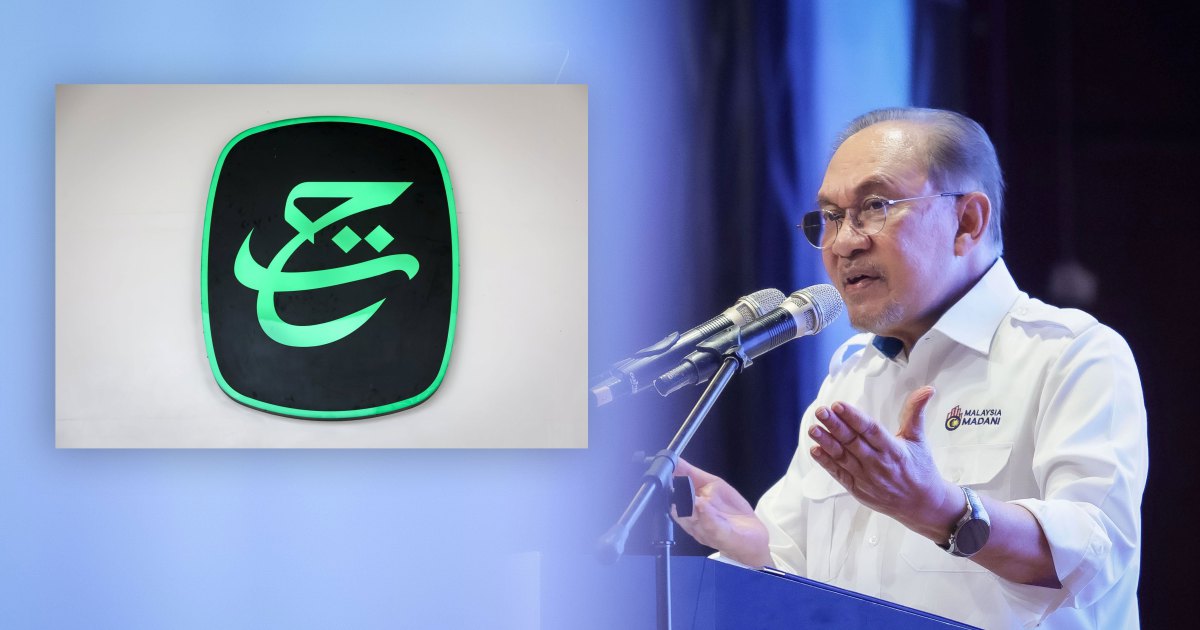
Prime Minister Anwar Ibrahim has made clear that officials held responsible for the financial losses and abuse of authority within Lembaga Tabung Haji cannot avoid facing the consequences of their actions, signalling the government's determination to pursue investigations and legal proceedings against implicated individuals where sufficient evidence exists to support charges.
The statement, delivered in Jelebu, underscores the administration's commitment to addressing the persistent challenges that have plagued Malaysia's pilgrimage savings body, an institution that holds substantial deposits from hundreds of thousands of Malaysians saving for their hajj journey. The explicit commitment to accountability reflects growing public concern over the financial management of an organisation entrusted with the savings of ordinary citizens seeking to fulfil one of Islam's five pillars.
Tabung Haji has faced sustained scrutiny over the past several years following revelations of significant financial deterioration, investment losses, and questions surrounding the governance and decision-making processes of senior management. The institution's struggles have directly impacted the confidence of depositors and raised urgent questions about oversight mechanisms and internal controls that were supposed to safeguard public funds.
Anwar's pronouncement represents an escalation of the government's public stance on the matter, moving beyond general assurances of reform to explicitly linking investigation with potential criminal prosecution. This approach signals that the administration is prepared to pursue individual accountability rather than allowing systemic failures to be attributed to institutional shortcomings alone, a distinction that matters significantly for depositors seeking justice for losses.
The timing of such statements reflects the political sensitivity surrounding Tabung Haji within Malaysian society. The institution serves a religiously significant function, serving as the repository for hajj savings of predominantly Muslim Malaysians across all income levels and demographic backgrounds. When these deposits deteriorate due to mismanagement or impropriety, the impact extends beyond financial loss to questions of governance and trust in public institutions serving religious purposes.
Investigative bodies and enforcement agencies will likely face pressure to move expeditiously through complex financial records spanning years of transactions, investment decisions, and corporate governance lapses. Establishing sufficient evidence for prosecution typically requires forensic accounting expertise, analysis of decision-making documentation, and clear demonstration of either negligence or deliberate misconduct, making such investigations inherently time-intensive.
The implications for Malaysia's broader institutional governance are noteworthy. Tabung Haji's difficulties have coincided with broader concerns about corporate governance in state-linked companies and public institutions, an issue that gained prominence following high-profile cases involving sovereign wealth funds and government-linked enterprises. Demonstrating that accountability mechanisms can function effectively in addressing misconduct strengthens public confidence across the institutional landscape.
For depositors, many of whom are ordinary Malaysians dependent on this savings mechanism to finance their religious obligations, the promise of accountability carries practical significance. It suggests that deterioration in the institution's financial position will not simply be accepted as an inevitable outcome of market cycles but will be treated as a potential consequence of mismanagement requiring redress.
The challenge facing Malaysian authorities lies in translating political commitment into concrete investigative outcomes. Public statements about accountability must be followed by visible investigative progress, transparent communication regarding findings, and credible legal proceedings where evidence supports prosecution. Failure to demonstrate such follow-through would further erode confidence in both Tabung Haji and the institutions responsible for its oversight.
Moving forward, the government faces the dual challenge of simultaneously conducting investigations while implementing structural reforms necessary to restore the institution's financial health and governance standards. Depositors require both assurance that misconduct will be addressed and confidence that future management will operate according to prudent principles. These objectives are not inherently incompatible but do require coordinated policy approaches across multiple government agencies.
The statement also carries implications for institutional leadership and potential future candidates for senior positions within Tabung Haji and similar organisations. Signalling that misconduct carries legal consequences rather than being treated as a matter for administrative handling alone may influence both the quality of governance and the quality of individuals willing to assume responsibility for managing public funds.
Regionally, Malaysia's approach to addressing governance failures in state institutions may be observed by other Southeast Asian nations grappling with similar challenges within their own sovereign wealth funds and pilgrimage savings bodies. Demonstrating effective accountability mechanisms could serve as a model for institutional reform across the region, contributing to broader improvements in public fund management standards.

