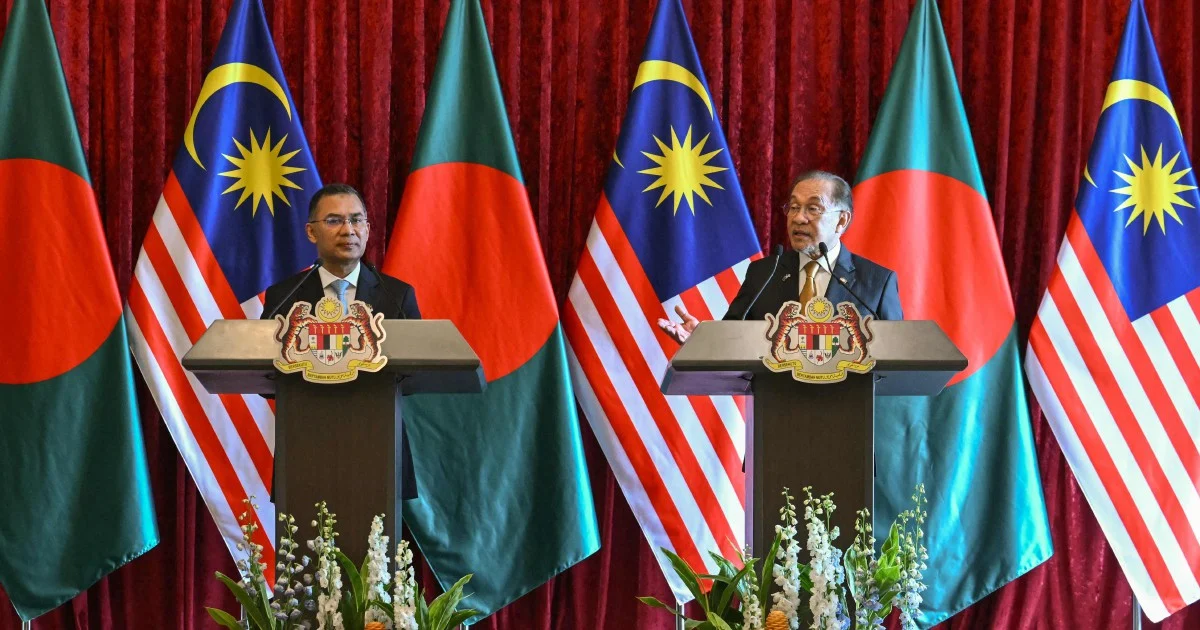
Prime Minister Datuk Seri Anwar Ibrahim has committed to dismantling exploitative practices targeting Bangladeshi migrant workers, acknowledging their indispensable role in sustaining Malaysia's economic engine. In remarks highlighting the scale and urgency of the issue, Anwar characterised the mistreatment of these workers as fundamentally unacceptable, signalling a government intent on strengthening protective mechanisms across labour-intensive sectors.
Bangladeshi workers represent one of the largest cohorts of foreign labour in Malaysia, concentrated in construction, manufacturing, domestic service, and plantation work. Their remittances form a substantial economic lifeline for families back home, while their presence addresses critical labour shortages in industries that domestic workers increasingly avoid. Despite their economic significance, many Bangladeshi workers have faced documented cases of wage theft, passport confiscation, unsafe working conditions, and inadequate housing—vulnerabilities that persist partly due to language barriers, unfamiliarity with Malaysian employment law, and isolation from support networks.
Anwar's pledge arrives amid mounting diplomatic and humanitarian pressure. Bangladesh's government has repeatedly raised concerns about its nationals working abroad, while international labour organisations have documented systemic abuses in the Malaysian employment market. The commitment represents a potential shift from previous administrations, which while acknowledging labour rights rhetoric, struggled to enforce protective standards effectively. A comprehensive crackdown would require coordination across multiple government agencies, including the Ministry of Human Resources, Immigration Department, and labour inspectorates at federal and state levels.
The exploitation of migrant workers intersects with broader governance challenges in Malaysia. Unscrupulous employment agents, sometimes operating across both Bangladesh and Malaysia, profit from charging illegal fees to workers desperate for employment. Once in Malaysia, workers frequently discover their contracts differ materially from verbal promises made during recruitment. Employer collusion with corrupt officials has historically enabled the worst practices to flourish unchecked. Without addressing these systemic weaknesses—particularly the role of recruitment agencies and the enforcement capacity of labour departments—rhetorical commitments risk remaining unfulfilled.
For Malaysian employers, particularly in construction and agriculture, Bangladeshi workers have become economically essential. Project delays and cost overruns often result from insufficient labour supply. A genuinely protective regime must therefore balance worker rights with economic realities, offering pathways for legal employment while closing avenues for abuse. This requires clarity in contract terms, accessibility to complaint mechanisms, and meaningful penalties for violations that deter non-compliance.
Regional context amplifies the significance of Anwar's statement. Other Southeast Asian nations including Thailand and Singapore have faced similar criticism from international bodies and source countries regarding migrant worker treatment. Malaysia's approach could either set a higher standard for the region or reveal the gap between ministerial pronouncements and implementation capacity. Bangladesh itself has occasionally restricted worker deployments to countries with poor safety records, a measure that could escalate if conditions do not demonstrably improve.
Practical enforcement presents the deepest challenge. Labour inspectorates across Malaysia report chronic understaffing and funding constraints, limiting their ability to conduct workplace audits at scale. Many exploited workers hesitate to lodge formal complaints fearing deportation or employer retaliation. Protecting workers while they remain economically vulnerable requires anonymised reporting channels, whistleblower protections, and visa independence from individual employers—reforms that demand legislative changes and sustained resource allocation.
Anwar's administration has signalled broader commitments to labour standards and workers' rights compared to its predecessor, including initial steps toward ratifying International Labour Organisation conventions. Extending these commitments specifically to migrant workers reflects recognition that Malaysia's reputation and international standing increasingly depend on demonstrable protections for vulnerable populations. Bangladesh, as a major source nation, carries diplomatic weight that Anwar's government appears willing to acknowledge.
The economics of enforcement matter profoundly. Unscrupulous employers can undercut law-abiding competitors by suppressing worker costs through abuse. Levelling the playing field requires consistent, credible enforcement that raises compliance costs for violators above the savings from exploitation. This may necessitate workplace audits tied to business licensing, penalties substantial enough to modify behaviour, and prosecution of repeat offenders—all politically contentious given employer influence.
Implementation timelines and measurable targets will determine whether this pledge catalyses genuine change. Anwar's commitment to eliminate exploitation, if backed by budgetary increases for labour enforcement, legislative reforms expanding worker protections, and transparent reporting on enforcement outcomes, could mark a watershed. Conversely, without these foundations, the statement risks becoming another unfulfilled promise in a pattern that has previously undermined Malaysian credibility on labour rights.
For Malaysian readers and businesses, the implications are multifaceted. Enhanced worker protections may modestly increase labour costs, though evidence from other jurisdictions suggests such impacts are often overstated. More fundamentally, reducing exploitation could stabilise the migrant worker supply by improving conditions and reputation, benefiting Malaysia's economic competitiveness long-term. Bangladesh-Malaysia relations, economically and diplomatically important, depend partly on how seriously Malaysia addresses worker grievances.