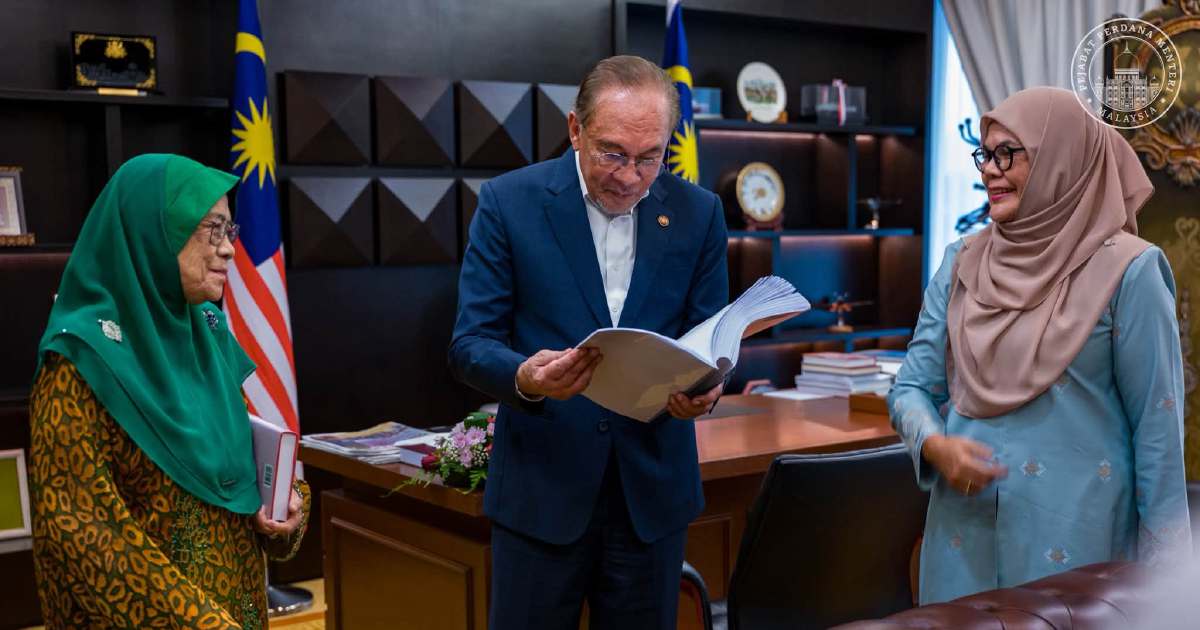
Prime Minister Datuk Seri Anwar Ibrahim is banking on a new publication to transmit his philosophical outlook and policy thinking to posterity. The book, titled Gagasan Anwar Ibrahim Dalam Peradaban Budaya Bangsa, assembles his accumulated thoughts on governance, societal progress, and the cultivation of national values. By making his intellectual framework accessible in written form, Anwar seeks to establish a touchstone that Malaysia's leadership pipeline can reference as the country navigates complex challenges ahead.
The publication represents a deliberate effort to distil decades of Anwar's political engagement into a coherent document. Rather than relying on scattered speeches or memoir fragments, this single volume gathers his reflections on how nations strengthen their cultural moorings while advancing economically and technologically. For a Malaysia confronting questions about social cohesion, religious pluralism, and institutional integrity, having a leader articulate a sustained vision in print offers students of governance a clearer vantage point from which to evaluate policy choices.
Anwar's emphasis on nation-building through character development signals his conviction that material progress alone cannot sustain a society. The book's framework appears rooted in his belief that leadership—whether in government, business, or civil society—derives moral weight from principled conduct and commitment to collective welfare. This philosophical grounding distinguishes his approach from purely technocratic governance models that prioritise efficiency metrics over human dimension considerations.
The timing of the publication carries significance given Malaysia's ongoing political evolution. Since assuming office, Anwar has positioned his administration around themes of institutional reform, anti-corruption, and inclusive development. A documented philosophical foundation helps coherence across government agencies and provides civil servants with clarity on the prime minister's values framework when interpreting policy directives. It also creates a common reference point for public discourse about national priorities.
For the business and academic communities, the book offers insight into how Malaysia's top policymaker conceptualises the relationship between cultural identity and modernisation. These constituencies increasingly grapple with balancing traditional values against globalisation pressures. Anwar's treatment of this tension—as compiled in the new volume—may influence how Malaysian companies position themselves internationally and how universities shape curricula around nation-building themes.
The publication also reflects broader regional trends toward documenting leadership philosophy in Southeast Asia. Other ASEAN leaders have similarly sought to preserve their governing visions through authored works, recognising that written records prove more durable than oral transmission. For Malaysia, where leadership transitions occur periodically, having successive prime ministers articulate their foundational thinking creates an evolving intellectual archive of the nation's governing consciousness.
Anwar's hope that the book serves future generations implies a confidence that his ideas will prove adaptable across changing circumstances. Rather than prescribing specific policies frozen in time, the compilation apparently emphasises underlying principles that successors can reinterpret as conditions shift. This approach differs from treating a leader's writings as immutable doctrine, instead inviting younger leaders to engage critically with established thinking while respecting its core insights.
The compilation process itself may shape how Anwar's legacy crystallises. Books create a finality that speeches lack—once published, the text becomes fixed and citable, subject to interpretation but not revision. This permanence means scholars, journalists, and political opponents will all reference the same source material when assessing Anwar's intellectual trajectory and consistency between stated principles and actual governance.
For Southeast Asian observers, the volume represents another data point in understanding how Malaysian leadership approaches the region's perennial challenge: maintaining political stability and social harmony amid diversity. Anwar's compiled ideas on cultural values and nation-building will inevitably be read in comparison with how other ASEAN governments articulate similar concerns, offering a window into Malaysia's distinctive perspective on these universal governance questions.
The book's focus on cultural civilisation—suggested by its Malay title—indicates Anwar views national resilience as inseparable from cultural vitality. This framing suggests his administration may continue prioritising initiatives that strengthen indigenous arts, literature, and philosophical traditions alongside conventional development metrics. Understanding this dimension helps explain policy choices that might otherwise seem disconnected when viewed through purely economic or institutional lenses.
Looking forward, the publication's reception among Malaysian youth and opinion-formers will partly determine whether it achieves Anwar's aspirational goal. A book remains inert until readers engage with it; its influence depends on whether educators incorporate it into curricula, whether media amplifies its themes, and whether the ideas resonate with people facing actual governance challenges. The prime minister is evidently betting that documenting his worldview substantively increases the likelihood that Malaysia's future leaders will at least encounter and grapple with his foundational thinking, even if they ultimately diverge from his conclusions.

