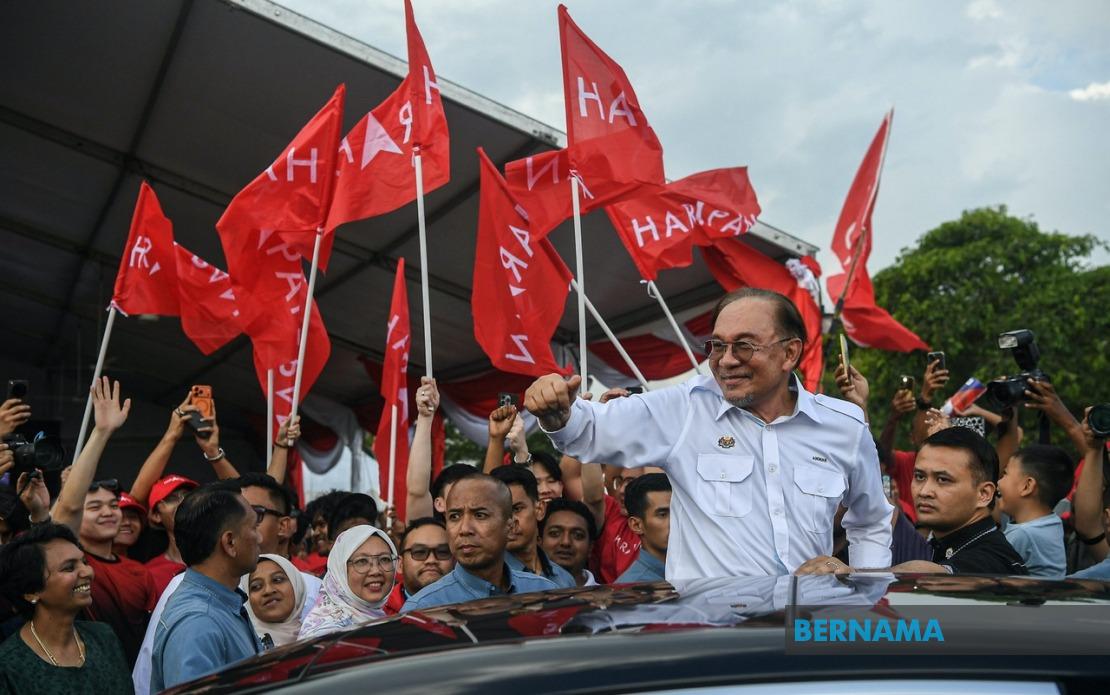
Prime Minister Datuk Seri Anwar Ibrahim's involvement in Pakatan Harapan's Johor campaign has catalysed a surge in grassroots enthusiasm as the coalition contests the 16th state election, according to observations from senior party figures monitoring voter sentiment on the ground. The PH chairman's direct engagement with constituents across the state has generated what communications leadership describes as spontaneous and overwhelmingly positive reactions, suggesting the coalition's messaging is resonating beyond traditional party supporters.
Communications Minister Datuk Fahmi Fadzil provided these insights after observing campaign dynamics firsthand during recent outreach activities. His account highlights the visceral connection established when the Prime Minister visits local communities, noting instances such as elderly residents making extraordinary efforts to greet him—including one man who transported his wife by trishaw specifically to see Anwar at a rally. Such anecdotes, while individual in nature, aggregate into patterns that campaign strategists interpret as indicators of broader acceptance and engagement among voters.
The coalition's campaign strategy has centred on deploying Anwar's political capital and popular appeal across multiple constituencies. Over a single weekend period, the Prime Minister attended 15 campaign programmes spanning Johor's diverse regions, a punishing schedule designed to maximise visibility and reinforce PH's message to voters. Fahmi, who doubles as PH's communications director, characterised these appearances as instrumental in sustaining party machinery momentum and providing direct encouragement to candidates navigating a competitive electoral environment.
Packatan Harapan's scope in this contest is comprehensive—the coalition has fielded candidates across all 56 State Legislative Assembly seats, a full-slate approach indicating confidence in its platform and readiness to compete for control of state government. This comprehensive candidacy contrasts with scenarios where coalitions selectively contest seats or negotiate seat-sharing arrangements, suggesting internal cohesion and strategic alignment among PH's constituent parties in Johor.
The electoral landscape itself remains fragmented and contested. A total of 172 candidates are pursuing the 56 available seats, yielding an average of just over three candidates per constituency. This three-way or multi-way contestation in numerous seats complicates voter choice calculus and potentially amplifies the significance of campaigning intensity and leader visibility. In such fragmented contests, the presence of a national political figure like the Prime Minister can function as a consolidating force, channelling votes behind the coalition's standard-bearers.
Fahmi's interpretation of community responses emphasises the distinction between active support and receptiveness to the coalition's policy narrative. He suggested that even where voters do not commit unequivocally to PH, the public engagement and interest demonstrated at campaign stops indicates openness to the coalition's governance platform. This framing acknowledges the reality that electoral victories often hinge not merely on passionate supporters but on persuadable segments of the electorate who require sustained engagement and credible messaging.
The polling schedule reflects standard Malaysian electoral practice. Early voting commenced on July 7, the day Fahmi delivered his remarks, with primary polling day scheduled for July 11. This compressed timeframe between campaign intensification and voting creates urgency for parties to consolidate messaging and mobilise supporters. The early voting provision, particularly significant in states with substantial numbers of essential workers and individuals unable to vote on the primary date, represents an opportunity for parties to secure votes before the final campaign push.
Fahmi's remarks carry particular weight given his dual portfolios spanning government communications and party political strategy. His observations thus reflect not merely party spin but observations coordinated with official state apparatus engaged in documenting electoral processes. This positioning allows him to speak with credibility about sentiment shifts that official observers might corroborate through their own documentation of campaign attendance and public engagement metrics.
The Johor contest carries wider implications for Malaysian federalism and coalition sustainability. As the nation's second-largest state by population and a traditional stronghold of Barisan Nasional, Johor's electoral direction influences perceptions of national political momentum. A strong PH performance would validate Anwar's coalition-building strategy and suggest consolidation of support across Malaysia's most significant regions. Conversely, mixed results might indicate geographic limitations in PH's appeal and necessitate strategic recalibration ahead of future electoral contests.
For observers across Southeast Asia monitoring Malaysian politics, the Johor election serves as a barometer of coalition cohesion and democratic engagement levels. Malaysia's multiethnic, multi-party system operates within frameworks of intense competition moderated by constitutional conventions and electoral procedures. The visible enthusiasm described by Fahmi—residents traversing distances to encounter political leaders—demonstrates the vitality of grassroots political participation despite challenges facing democratic systems across the region.
The campaign dynamics reflect broader patterns in Malaysian electoral politics where personality and direct leadership engagement remain significant factors in voter decision-making. Despite advances in digital communication and media proliferation, physical presence by senior political figures continues to generate disproportionate impact on voter perception and mobilisation. This pattern underscores the continued importance of traditional campaigning methods alongside modern digital outreach strategies.
As Malaysian voters prepare to exercise franchise in Johor on July 11, the intensity of Pakatan Harapan's campaign, anchored by Prime Minister Anwar Ibrahim's sustained presence across constituencies, has established a baseline of engagement and messaging amplification. Whether this translates into electoral gains commensurate with Fahmi's optimistic assessment will become evident when results are tallied, providing clarity on voter sentiment regarding the coalition's governance record and policy platform at state level.

