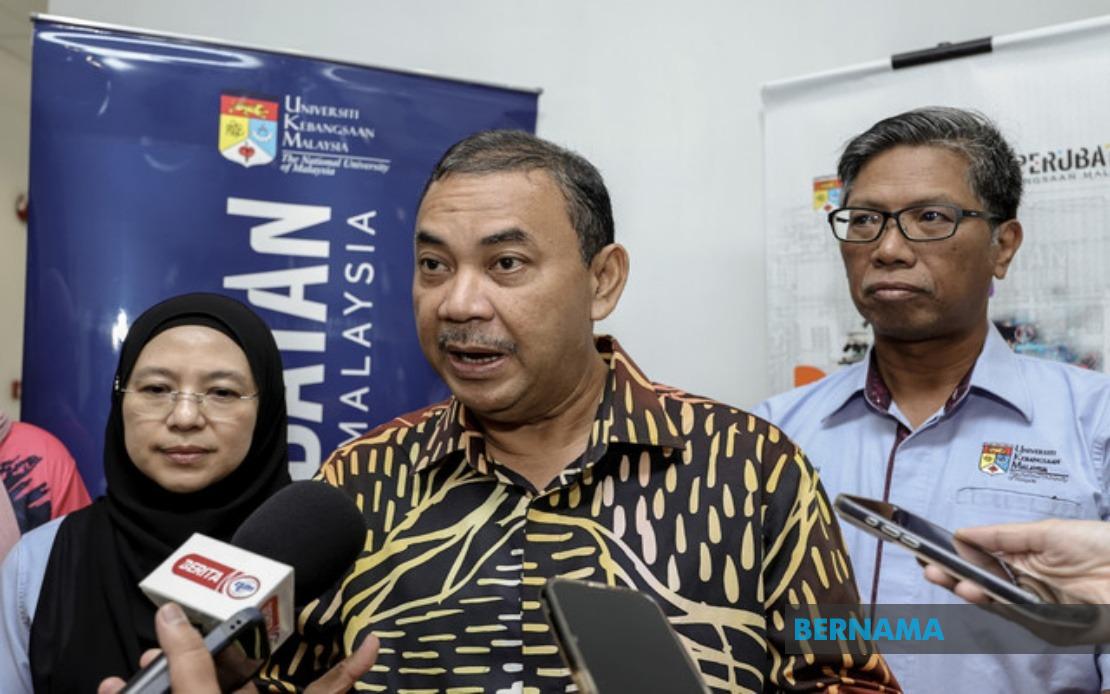
Datuk Azman Abidin, the Prime Minister's political secretary, has asserted that the MADANI Government under Datuk Seri Anwar Ibrahim deserves credit for tangible improvements across several crucial economic indicators, particularly in attracting foreign and domestic investment, steering the national economy, and stabilising the ringgit. Speaking at an event in Kuala Lumpur, Azman contended that these accomplishments have been widely acknowledged across political and business circles, lending credibility to the administration's broader reform agenda.
The remarks come as political analysts have increasingly pointed to the government's track record of reform and economic stabilisation as justification for extending its mandate beyond the current term. Azman framed this recognition as validation of Anwar's capacity to direct the machinery of government effectively and suggested it provides voters with a compelling case to support his continued tenure as Prime Minister. His comments reflect the government's positioning ahead of anticipated electoral considerations and budget announcements scheduled for the remainder of the year.
According to Azman, the administration plans to amplify public awareness of its achievements and ensure that benefits from government programmes reach all sections of Malaysian society. He indicated that several major initiatives and policy announcements are in the pipeline, timed strategically around the National Day and Malaysia Day commemorations as well as the tabling of Budget 2027. This sequencing suggests a deliberate effort to maintain momentum in communicating government successes to the electorate.
Another dimension of Azman's remarks involved confidence in the electorate's capacity for rational assessment. He expressed belief that Malaysians would evaluate the government's performance and initiatives on their merits when making electoral decisions, implying that transparent performance metrics and genuine achievements should suffice to win public confidence without resorting to excessive campaigning or partisan rhetoric.
Beyond the political narrative, Azman also promoted the STEM Exploration 2.0 programme, which was being inaugurated at the Faculty of Medicine at Universiti Kebangsaan Malaysia. He described the initiative as crucial infrastructure for identifying and nurturing scientific talent among younger Malaysians, addressing a national need to deepen human capital in high-value sectors. The programme's second iteration engaged 200 Form Three students from the Klang Valley and Negeri Sembilan, with Azman advocating for nationwide expansion in subsequent years.
In his remarks on education policy, Azman articulated a vision for STEM disciplines to transition from optional electives to foundational components of the national curriculum. He framed this not merely as educational reform but as essential preparation for Malaysia's navigation of accelerating global technological change. This positioning reflects growing concern among policymakers about skills gaps and the competitive pressures facing Southeast Asian economies in attracting high-tech investment and innovation-driven enterprises.
The STEM programme itself encompassed hands-on experimental work, microbiology exercises, and introductory sessions on human immune and circulatory systems, complemented by demonstrations of three-dimensional printing technology applied to medical contexts. These activities aim to demystify scientific fields and expose secondary school students to career pathways in medicine and research before they make crucial subject selections for upper secondary studies.
Azman's exhortation to participating students reflected a broader narrative about nation-building and individual aspiration. He encouraged young people to view their participation as an initial stepping stone toward larger ambitions, emphasising that professional and scientific achievements emerge gradually from foundational commitment to learning and intellectual curiosity. This messaging aligns with government efforts to rebrand STEM education as a patriotic and economically rational pursuit rather than an academic speciality for a narrow elite.
The convergence of political messaging and educational initiative in Azman's remarks illustrates how Malaysian policymakers increasingly link economic competitiveness directly to educational investment and human capital development. By highlighting both the government's macroeconomic track record and its commitment to nurturing scientific talent, Azman sought to construct a comprehensive narrative of capable administration delivering results across multiple domains simultaneously.
For Malaysian readers, Azman's comments underscore the government's intention to continue prioritising economic stability and investor confidence as hallmarks of its governance approach. The emphasis on currency strength and investment inflows reflects recognition that Malaysia's regional competitiveness depends on macroeconomic fundamentals that signal reliability to international capital markets and multinational enterprises seeking Southeast Asian operations hubs.
The timing of these statements also carries significance given that major economic announcements and budget presentations remain on the political calendar. Azman's framing of government achievements as already-recognised and broadly-endorsed attempts to establish momentum ahead of these milestone events, potentially influencing how voters and investors perceive the administration's direction and competence in the months ahead.
Ultimately, Azman's dual focus on political performance and educational investment reflects a calculation that the current government's legitimacy rests on demonstrable delivery across both immediate economic concerns and longer-term nation-building objectives. Whether such positioning proves persuasive will largely depend on whether voters perceive that broad sections of society have tangibly benefited from the government's policies and whether educational investments translate into meaningful career opportunities for younger Malaysians entering an increasingly demanding global job market.

