Prime Minister Datuk Seri Anwar Ibrahim has returned from his two-day working visit to Kazan with a significant achievement: Russia's pledge to supply Malaysia with oil and gas under a long-term agreement framework rather than the more precarious annual or seasonal arrangements that have characterised energy trade for decades. The commitment, forged during his attendance at the 35th ASEAN-Russia Commemorative Summit alongside Investment, Trade and Industry Minister Datuk Seri Johari Abdul Ghani and Economy Minister Akmal Nasrullah Mohd Nasir, represents a watershed moment for Malaysia's energy security strategy as the country navigates increasingly volatile global petroleum markets.
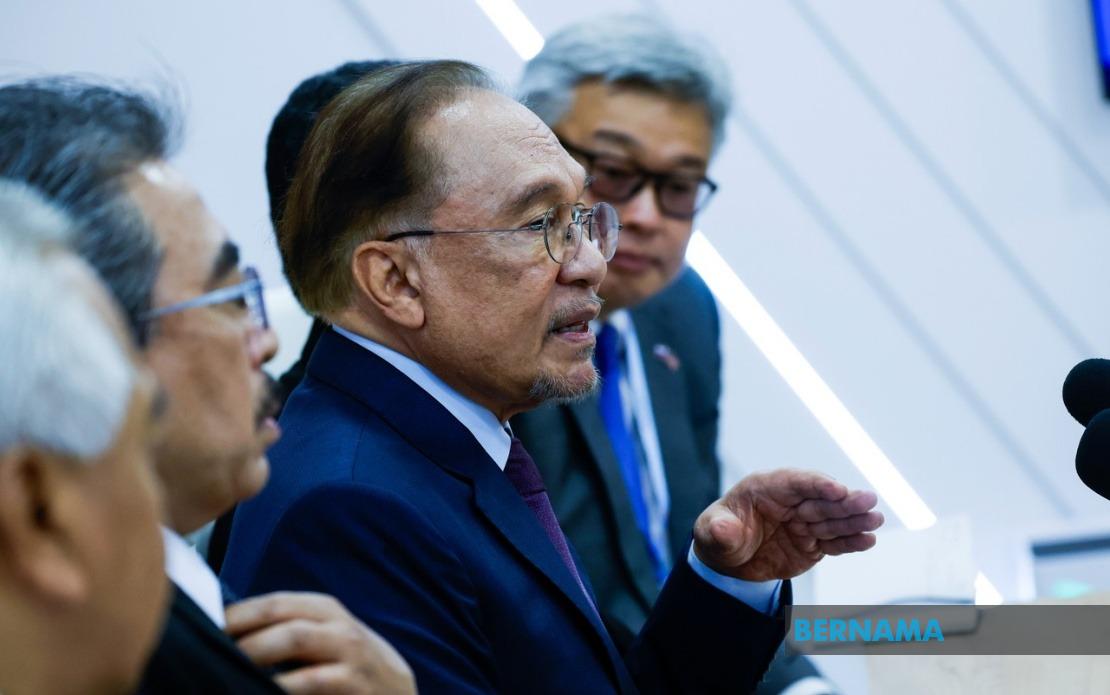
The energy accord emerged as the centrepiece of Malaysia-Russia bilateral engagement, with both governments agreeing to establish a stable, multi-year framework that will insulate Malaysia from the price volatility and supply uncertainties that have plagued energy procurement in recent years. During closing remarks to Malaysian media, Anwar outlined the advanced state of negotiations, noting that company representatives have already engaged in preparatory discussions and that the agreement's foundational principles have secured governmental approval. The drafting process has reached its final stages, with remaining work centred on technical refinements and formal execution rather than substantive policy disagreement. Anwar committed to accelerating the finalisation process upon his return to Kuala Lumpur, signalling the government's determination to convert diplomatic progress into binding contractual arrangements with measurable energy security outcomes.
Russia's willingness to commit to extended energy partnerships reflects broader strategic calculations within Moscow's foreign policy establishment. The Kremlin has positioned itself as a reliable long-term energy partner to Asian economies amid Western sanctions and the fragmentation of traditional energy markets. For Malaysia, the opportunity to diversify away from spot-market vulnerability and towards predictable, secured supply chains addresses a fundamental vulnerability that has constrained economic planning and industrial competitiveness. The initiative also reflects Anwar's articulated philosophy that Malaysia cannot afford to remain passively constrained by excessive caution in international economic engagement, a position that carries particular salience given the current geopolitical environment characterised by great-power competition and supply chain realignments.
Beyond the energy dimension, Anwar utilised his presence in Kazan to champion a broader recalibration of Malaysia-Russia relations extending into commerce, investment, tourism, and technology sectors. During a bilateral meeting with Rustam Minnikhanov, Head of the Republic of Tatarstan, both sides identified multiple cooperation vectors including trade expansion, financial investment, educational exchange, halal industry development, and talent mobility programmes. Tatarstan's prominence as one of Russia's principal oil-producing regions positioned the state as a natural focus for Malaysia's downstream petrochemical and refining sector ambitions, creating potential for vertical integration opportunities along energy value chains. The discussion acknowledged that cooperation potential remains substantial, particularly as both jurisdictions seek to develop complementary industrial capabilities within energy infrastructure and associated manufacturing sectors.
The regional dimension gained prominence through the finalisation of the ASEAN-Russia Strategic Programme on Trade and Investment Cooperation 2026-2035, which Anwar characterised as an essential institutional architecture for sustained economic collaboration across the decade. This programmatic framework establishes binding commitments and operational mechanisms to facilitate trade expansion and investment flows between the ten-nation ASEAN bloc and the Russian Federation. Current trade dynamics reveal the relationship's growing importance: ASEAN-Russia bilateral commerce reached US$18.1 billion in 2024, whilst Russian foreign direct investment into ASEAN markets totalled RM367.90 million in the same period. For Malaysia specifically, Russia ranked as the ninth-largest European trading partner in 2025, with bilateral trade valued at RM8.72 billion, demonstrating that despite geopolitical obstacles, commercial ties remain material and expanding.
Malaysia's trade composition with Russia reflects the structural characteristics of both economies. Malaysian exporters have concentrated on electrical and electronic goods, machinery components, equipment, and processed foodstuffs, sectors where Malaysia maintains competitive advantages in manufacturing and value-addition. Conversely, Malaysian imports consist predominantly of petroleum products, mineral resources, chemical compounds, and derivatives, reflecting Malaysia's dependence upon Russian hydrocarbon and raw material supplies. This complementarity provides a foundation for expanding bilateral flows, as neither economy directly competes in most traded categories and mutual benefits arise from deepening specialisation. Anwar's emphasis upon accelerating visa-free travel arrangements and establishing direct air connections between Malaysia and Russia targets the tourism and people-to-people dimensions of the relationship, recognising that sustained economic partnerships require institutional infrastructure facilitating human mobility and cultural exchange.
Anwar's visit occurs within a context of deliberate Malaysian energy diversification strategy. The country faces persistent vulnerabilities in hydrocarbon supply arising from global market volatility, geopolitical tensions affecting shipping lanes and production capacity, supply-chain disruptions cascading through international energy networks, and structural price instability driven by speculative financial flows. By securing long-term contractual commitments from Russia, Malaysia reduces exposure to these systemic risks through agreements establishing pricing mechanisms, delivery schedules, and supply volumes negotiated over extended timeframes. This approach proves particularly significant given Malaysia's reliance upon energy-intensive industries including petrochemicals, manufacturing, and aluminium smelting, where cost predictability and supply certainty directly impact industrial competitiveness and employment levels. Energy security thus constitutes not merely an abstract policy objective but a determinant of Malaysia's capacity to sustain economic growth and industrial development.
Anwar's characterisation of the visit as productive and successful establishes momentum for the subsequent leg of his Central Asian tour, which proceeded to Turkmenistan for additional bilateral discussions centred upon energy cooperation expansion. Turkmenistan possesses among the world's most substantial natural gas reserves and has historically supplied Central Asian markets, though diversification into Asian markets remains underdeveloped relative to resource endowments. The sequential visits to Russia and Turkmenistan reflect a coordinated diplomatic strategy targeting major energy producers within the broader Eurasian framework, positioning Malaysia as an active participant in reshaping energy geopolitics beyond traditional Middle Eastern suppliers. This strategic reorientation carries implications for Malaysia's broader alignment within Asian international relations, signalling a willingness to engage substantively with non-Western powers and construct alternative partnership architectures.
Anwar's engagement with Russian President Vladimir Putin during the summit affirmed appreciation for Moscow's support for expanded energy cooperation involving Petronas, Malaysia's national oil and gas enterprise. This personalised diplomatic acknowledgement serves multiple functions: it validates Petronas' international negotiating role, signals high-level political backing for commercial partnerships, and establishes personal rapport between leadership figures essential for sustaining engagement amid geopolitical fluctuations. The Prime Minister's emphasis upon bilateral mechanisms extending across trade, investment, finance, and the halal economy suggests recognition that twenty-first-century partnerships require multifaceted engagement spanning diverse sectoral interests rather than single-issue cooperation. Malaysia's positioning as a bridge between Islamic-majority Southeast Asia and global energy markets creates distinctive opportunities for developing halal-certified energy-related products and services, an avenue explicitly identified as warranting expanded collaboration.
The energy security dimension resonates particularly acutely for Malaysian policymakers conscious that the regional economy remains vulnerable to supply disruptions and price volatility. Long-term contractual frameworks with major producers including Russia and Turkmenistan provide partial insulation against such risks whilst simultaneously reducing Malaysia's historical dependence upon Middle Eastern suppliers. This geographical diversification strategy aligns with broader Southeast Asian interest in constructing autonomous energy security arrangements less vulnerable to disruptions emanating from any single supplier region. ASEAN's collective experience with energy market volatility has generated recognition that institutional mechanisms promoting stable supplier relationships and transparent pricing mechanisms serve regional interests more effectively than reliance upon spot markets characterised by speculative behaviour and monopolistic pricing power.
Anwar's assertion that Malaysia must embrace bolder engagement with emerging economic partners reflects acknowledgment that traditional Western-centric trade architectures no longer capture the full spectrum of value-creation opportunities available to Malaysian enterprise. Russia, despite sanctions-driven economic constraints, retains substantial technological capabilities, resource endowments, and market opportunities attractive to Malaysian investors and exporters. By normalising and institutionalising bilateral engagement, Malaysia positions itself to participate in alternative value chains and partnership networks emerging as Western trade architecture contracts. This positioning carries strategic significance extending beyond immediate commercial returns, affecting Malaysia's longer-term alignment within Asian geopolitical structures and its capacity to exercise diplomatic influence through strategic partnership diversification.
The visit concludes a productive engagement cycle advancing Malaysia's long-term energy security objectives through institutionalised partnerships with major producers. The combination of securing long-term supply agreements, advancing regional cooperation frameworks, and establishing operational mechanisms facilitating expanded commercial engagement demonstrates coordinated diplomatic strategy oriented towards tangible economic outcomes. As Anwar proceeds to Turkmenistan and subsequently continues his Central Asian tour, the momentum generated in Kazan establishes foundation for sustained energy cooperation expansion benefiting Malaysia's economic development objectives and contributing to broader Southeast Asian energy security architecture.

%22%2F%3E%3C%2Fpattern%3E%3C%2Fdefs%3E%3Crect%20width%3D%22100%25%22%20height%3D%22100%25%22%20fill%3D%22url(%23phy0vqg)%22%2F%3E%3Crect%20width%3D%22100%25%22%20height%3D%22100%25%22%20fill%3D%22url(%23phy0vqp)%22%2F%3E%3Ctext%20x%3D%2250%25%22%20y%3D%2250%25%22%20text-anchor%3D%22middle%22%20dominant-baseline%3D%22central%22%20fill%3D%22rgba(255%2C255%2C255%2C0.95)%22%20font-family%3D%22Georgia%2C%20'Times%20New%20Roman'%2C%20serif%22%20font-weight%3D%22700%22%20font-size%3D%22170%22%20letter-spacing%3D%22-0.02em%22%3EMalaysia%3C%2Ftext%3E%3C%2Fsvg%3E)