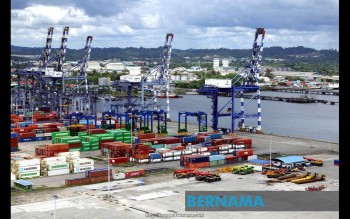
Malaysia's export sector is positioned for significantly stronger performance in 2026 than previously anticipated, according to Apex Securities Bhd, which has substantially revised upward its annual export growth forecast to 26.2 per cent from an initial projection of 16.3 per cent. The upgrade reflects the robust trajectory demonstrated during the first seven months of the year, signalling a marked acceleration in Malaysia's external trade activity that underpins the securities firm's equally optimistic macroeconomic outlook for the broader economy.
The revision is grounded in concrete performance data from the opening months of 2026, providing a solid foundation for the upgraded forecast. This confidence extends to the firm's overall assessment of Malaysia's economic health, with Apex Securities maintaining its positive gross domestic product growth estimate of 5.0 per cent for the full year. The interplay between trade performance and GDP expansion suggests a virtuous cycle in which export-led growth is translating into broader economic resilience, a particularly significant development given Malaysia's historical dependence on international trade.
The electronics and electrical sector stands as a primary engine for the anticipated export momentum through the remainder of 2026. Apex Securities expects this traditional pillar of Malaysian manufacturing to sustain its competitive position and market share, buoyed by structural shifts within global supply chains. The emergence of artificial intelligence as a transformative industrial force is generating substantial new demand for components and semiconductors, sectors where Malaysia maintains established competitive advantages. Simultaneously, the electric vehicle revolution continues to create upstream opportunities for components suppliers, while related industrial segments connected to the broader energy transition are expected to sustain healthy order books throughout the medium term.
Beyond electronics, Malaysia's commodity exports are anticipated to receive substantial support during the second half of 2026, presenting a diversification benefit to the export portfolio. Oil and gas exports are expected to benefit from elevated crude oil prices that have persisted in global markets, alongside potential supply-side disruptions emanating from geopolitical tensions around the Strait of Hormuz. Any escalation in regional instability could prompt buyers to source additional supplies from alternative producers, including Malaysia, providing a potential windfall for the domestic petroleum sector. This scenario underscores how geopolitical risk in distant regions can paradoxically create commercial opportunities for Malaysian exporters.
Palm oil represents another crucial commodity for Malaysia's export earnings, and Apex Securities identifies multiple factors supporting sustained demand and pricing through the latter half of 2026. Indonesian demand for biodiesel, particularly the B50 blend incorporating elevated proportions of palm oil, is expected to remain firm, providing a reliable anchor for palm oil consumption. This institutional demand stream offers greater stability than commodity price fluctuations alone, providing a more predictable foundation for revenue generation within the plantation sector. Beyond Indonesia's internal requirements, anticipated weather patterns present additional tailwinds for palm oil valuations.
Climate dynamics are expected to reinforce the positive outlook for palm oil prices, with meteorological forecasts suggesting an intensification of El Niño conditions bringing warmer and drier weather across tropical regions during the traditional October-to-December window. Such conditions typically constrain global palm oil supply by reducing yields from competing producers in Indonesia and other equatorial regions, creating artificial scarcity that supports prices. Apex Securities notes that palm oil prices have already advanced considerably, rising 16.8 per cent to RM4,596 per metric tonne as of August 19, 2026, compared to levels at the start of the calendar year, suggesting that market participants are already pricing in anticipated supply tightness.
However, the securities firm's optimism comes tempered by identified headwinds that could constrain export performance as 2026 progresses toward conclusion. Front-loaded demand generated by pre-emptive inventory building earlier in the year may normalize or reverse during the final quarter, as buyers work through accumulated stockpiles rather than maintain elevated purchasing patterns. This cyclical dynamic is compounded by challenging year-over-year comparisons, as the corresponding period in 2025 likely featured strong export numbers, making percentage growth calculations more demanding when comparing similar quarter-over-quarter timescales.
Geopolitical instability in the Middle East presents perhaps the most significant tail risk to the export forecast, as sustained escalation of regional tensions could trigger a global demand contraction that would offset the benefits of higher commodity prices. The interplay between supply-side support from disruptions and demand-side damage from broader conflict demonstrates the inherent uncertainty surrounding commodity-dependent economies. A major military confrontation or significant supply chain disruption in the region could rapidly reverse the positive supply dynamics that currently underpin the commodity export outlook.
Equally consequential for Malaysia's trade trajectory is the unresolved uncertainty surrounding United States trade policy, which has emerged as a persistent risk factor for Malaysian exporters. The ongoing Section 301 investigation into excess capacity in various sectors remains inconclusive, leaving Malaysian manufacturers exposed to potential tariff escalation that could undermine competitiveness in American markets. This investigation process, which examines whether particular countries are maintaining productive capacity exceeding apparent domestic demand, carries significant implications for countries like Malaysia with manufacturing export orientations. Any punitive tariff determinations could disproportionately impact Malaysian producers within targeted sectors, particularly electronics and related manufactures that depend on American market access.
The divergence between Apex Securities' upgraded export forecast and the identified risks underscores the volatile and complex environment confronting Malaysian trade policymakers and business leaders. While structural trends in electronics and climate-driven commodity dynamics offer genuine support for export growth, cyclical normalization and potential policy shocks represent legitimate sources of uncertainty. For Malaysian readers and policymakers, this analysis suggests that 2026 export performance may ultimately prove highly dependent on developments in geopolitical hotspots and American trade policy decisions that remain beyond domestic control, highlighting the inherent vulnerabilities of an export-reliant economic model.

