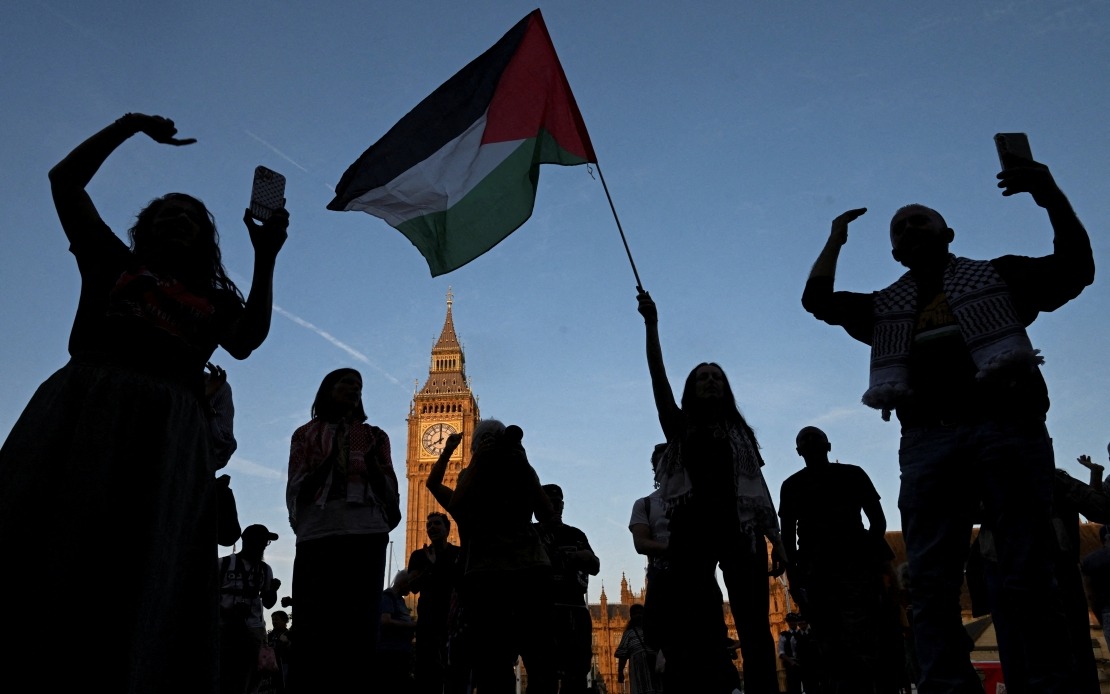
Newly appointed Arab League Secretary-General Nabil Fahmy has signalled that defending Palestinian rights will remain central to the 22-member organization's agenda, marking a clear statement of priorities as he begins his tenure. Speaking at his inaugural press conference at the League's Cairo headquarters on Monday, Fahmy outlined an assertive position on longstanding Middle Eastern disputes, indicating that the Arab League intends to take a more proactive stance on multiple fronts affecting regional stability and Arab interests.
Fahmy's remarks underscore the institutional continuity of Arab League positions on Palestinian matters whilst also suggesting a determination to move beyond declaratory statements toward concrete action. His emphasis on defending Palestinian legitimate rights and ending occupation reflects the consistent rhetorical stance the League has maintained, yet his language around legal accountability introduces a more legalistic dimension to Arab League advocacy. By invoking the principle that genocide knows no statute of limitations and pledging support for international prosecution of perpetrators, Fahmy appears to be positioning the League as a mechanism for channelling Arab grievances through international legal frameworks rather than relying solely on regional diplomatic pressure.
The Secretary-General's characterization of Israeli operations in Gaza and the West Bank as genocide represents the strongest possible framing available within international law discourse. This language goes beyond describing military operations or disputed territory control—it invokes one of the most serious categories of international crime. For Malaysia and other Southeast Asian nations maintaining diplomatic relations with both Israel and Arab League members, such statements carry implications for how regional disputes may be litigated in international forums and how pressure campaigns might be organized through the United Nations and its subsidiary bodies.
Beyond Palestine, Fahmy articulated concerns about Israeli military actions affecting Lebanon, describing recent incidents as violations of Lebanese sovereignty and international law. This positioning of Lebanon alongside Palestinian territories reflects the League's view of Israeli actions as a regional security challenge rather than a localized dispute. The reference to continued violations in Beirut and southern Lebanon suggests escalating cross-border tensions that have concerned international observers and prompted calls for restraint from global powers seeking to prevent wider conflict.
The Secretary-General also revisited the question of the Syrian Golan Heights, which Israel has occupied since 1967 and formally annexed in 1981—a move recognized by only a handful of countries including the United States. By reaffirming the Arab League's rejection of any fait accompli imposed by force, Fahmy maintained the League's principled opposition to territorial changes resulting from military conquest, a position that echoes broader international law principles enshrined in the United Nations Charter. This consistency on the Golan Heights alongside contemporary statements on Palestine and Lebanon reinforces the League's broader opposition to what it frames as Israeli expansionism.
Fahmy's call for stronger, more vigilant Arab action reflects an apparent frustration with the effectiveness of previous approaches. His emphasis that the Arab region faces a critical phase necessitating proactive measures suggests recognition that traditional diplomatic mechanisms may have yielded insufficient results. For observers across Southeast Asia, this language indicates the Arab League may be exploring alternative strategies, whether through enhanced coordination among member states, expanded engagement with non-Arab powers, or intensified efforts to leverage international institutions.
Crucially, Fahmy stressed that addressing Arab regional issues must stem from Arab will and that sustainability requires broad Arab consensus. This emphasis on internal Arab agreement hints at longstanding divisions within the League itself. Several Arab states have normalized relations with Israel in recent years, whilst others maintain adversarial positions. By insisting that only what Arabs agree upon can achieve lasting results, Fahmy appears to be acknowledging that the League's effectiveness depends on resolving these internal contradictions—a formidable challenge given the divergent strategic interests of member states.
The new Secretary-General's comprehensive statement addressing Palestinian territories, Lebanon, and Syria within a single framework attempts to present these as interconnected aspects of a broader regional security architecture threatened by Israeli actions. This holistic approach differs from treating each dispute in isolation and may reflect a strategic calculation that linking these issues enhances Arab League leverage by framing them as components of a unified regional challenge requiring coordinated responses.
For Malaysia and other Southeast Asian nations, Fahmy's statements carry relevance insofar as they signal the Arab League's intended posture in international forums where these disputes are negotiated. The League's emphasis on legal accountability mechanisms suggests potential increased activity in the International Criminal Court and other bodies where Malaysia might be called upon to support or oppose specific initiatives. Additionally, as several Arab League members maintain significant economic and strategic relationships across Southeast Asia, the League's regional priorities may influence bilateral relationships and voting patterns in international institutions.

