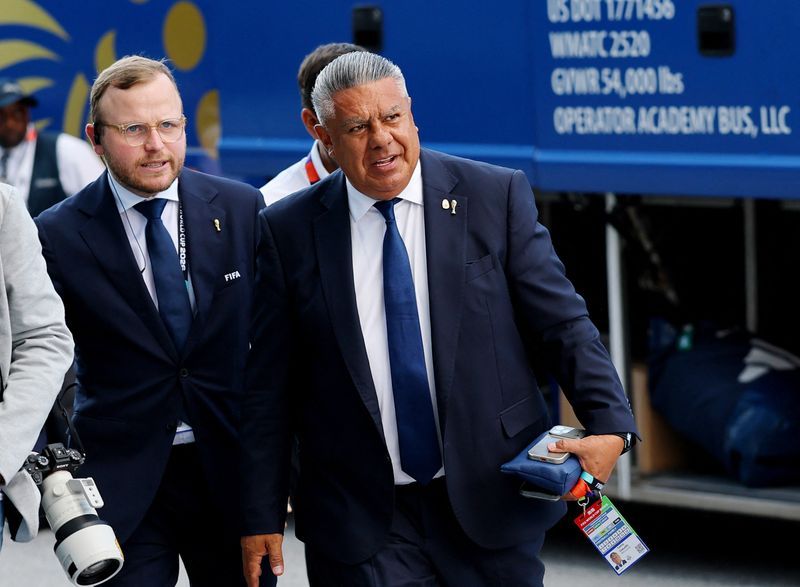
Argentina's football association moved swiftly to dismiss mounting reports that its leadership had been ensnared in a US federal investigation, issuing a categorical denial on Wednesday that president Claudio Tapia or treasurer Pablo Toviggino had received court summons or faced device seizures. The assertion came as media outlets, citing witness accounts and law enforcement sources, painted a picture of an unusually tense scene at New York's JFK Airport involving the Argentine national team in the aftermath of their World Cup triumph last year.
The timing of the alleged encounter proved particularly notable. According to reports from those present at the airport, federal agents stopped both Tapia and Toviggino as the squad prepared to depart on its charter flight, questioning the pair for approximately 30 minutes aboard a bus positioned on the tarmac. The AFA's acknowledgement that a third party had been summoned to provide testimony before a US grand jury—potentially concerning multiple individuals including association officials—stood in apparent tension with its blanket denial that the organization's top officials faced direct legal action.
Underlying the dispute sits a far more consequential investigation. Media investigations, particularly reporting from Infobae, have revealed that American authorities are examining more than $300 million in commercial contracts linked to the AFA. This scrutiny represents an escalation of concerns about Argentine football's financial architecture that first surfaced in December, when raids targeting money-laundering activities shook the sport domestically. For Malaysian and Southeast Asian observers of international football governance, the controversy underscores how even associations managing the world's most popular sport remain vulnerable to financial oversight and regulatory exposure.
The AFA's formal statement attempted to create precise legal distinctions between what it characterized as false allegations and the actual scope of US involvement. The association asserted that neither Tapia nor Toviggino had been personally ordered to appear in court, that no electronic devices belonging to either official had been confiscated, and that no procedural obligations had been imposed upon them. The statement's carefully legalistic language—emphasizing the absence of "personal measures," "orders of appearance," and "seizures or confiscation of property"—suggested the association was responding to specific claims rather than denying all US government interest in AFA matters.
The distinction between direct summons and third-party questioning carries significant implications. While the AFA denied that its leadership faced court-ordered testimony obligations, the admission that an unnamed party had been summoned to discuss AFA officials and contracts indicates that American authorities possess sufficient concern to compel witness testimony. This suggests investigative momentum that extends well beyond routine inquiries. For regional sports administrators and finance professionals tracking developments in international football, the situation reflects how jurisdictional reach and financial crime investigations increasingly transcend traditional boundaries.
Argentine football has experienced considerable turbulence surrounding financial management in recent years. The December raids that preceded the latest controversy demonstrated domestic authorities' willingness to investigate potential money-laundering connected to the sport. The emergence of US federal interest introduces another investigative layer, potentially complicating matters for the AFA considerably. The association must now contend not merely with domestic scrutiny but with American law enforcement resources and the extraterritorial reach of US courts—a circumstance that has ensnared numerous international organizations and figures regardless of their home jurisdiction.
The wider context of international football governance cannot be overlooked. FIFA and continental confederations have faced repeated allegations of financial irregularities, corruption, and inadequate transparency over decades. Argentina's domestic football administration, despite the national team's sporting achievements, has periodically confronted questions about commercial dealings and financial controls. The convergence of domestic and international scrutiny suggests a shifting landscape where football associations face unprecedented exposure to multiple regulatory regimes simultaneously.
For administrators across Southeast Asia and beyond, the Argentina situation illustrates mounting pressures for financial accountability in sport. Governing bodies increasingly operate within international regulatory frameworks that extend beyond their home nations. The capacity of US authorities to investigate contracts and summon witnesses regarding foreign sports organizations demonstrates how financial crime investigations respect neither geographic borders nor the traditional insularity that sports organizations historically enjoyed. This represents a meaningful change in the compliance environment for international sports governance.
The AFA's careful parsing of legal language may ultimately prove less consequential than the underlying investigation's trajectory. Whether or not Tapia and Toviggino face direct summons, the fact that US authorities are examining $300 million in AFA contracts suggests serious investigative intent. The third party's testimony, potentially concerning multiple officials and contractual arrangements, could generate significant evidentiary foundation for expanded inquiries. For observers monitoring international sports governance and financial oversight, the case demonstrates how even prestigious football associations remain subject to rigorous external scrutiny and the complex legal terrain they must navigate in an increasingly interconnected world.

