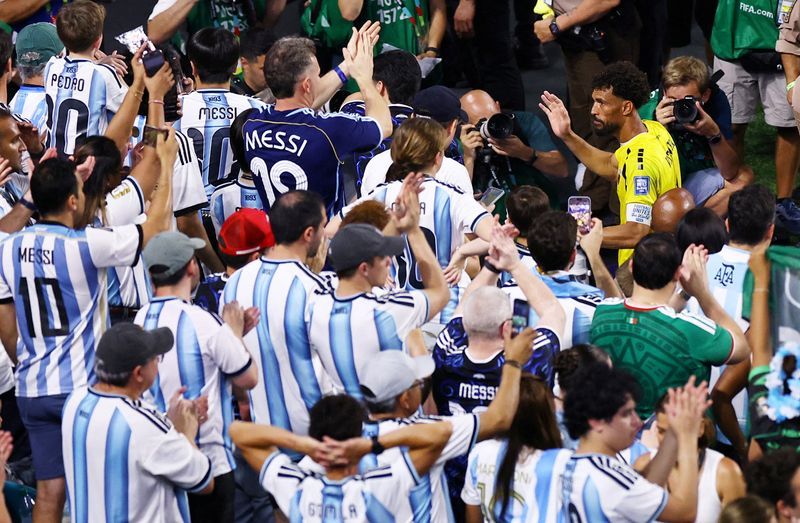
Argentina secured passage to the World Cup knockout rounds with a hard-fought 3-2 extra-time victory over Cape Verde in Kansas City, Missouri on July 4, yet the result has prompted serious reflection on the defending champions' defensive vulnerabilities despite an otherwise dominant group stage performance. The South American powerhouse, widely considered among the tournament favourites, found themselves repeatedly pressured by the African nation making their World Cup debut, with Cape Verde mounting two separate comebacks before Cristian Romero's header—fortuitously deflected in by Cape Verde's Diney Borges—finally ended the contest.
The intensity of the challenge posed by Cape Verde came as a surprise to many observers, though manager Lionel Scaloni had explicitly warned that the islanders represented a genuine threat after their respectable group stage showing that included draws against Spain and Uruguay. This prescience proved justified, as Cape Verde's willingness to press high and their tactical discipline repeatedly disrupted Argentina's rhythm and exposed gaps in their defensive organisation that had remained largely untested throughout the group phase. The vulnerability of a team that had seemed almost invincible only weeks earlier now poses a significant concern as Argentina prepares to face Egypt in Atlanta on Tuesday in the round-of-16 clash.
Argentina's group stage credentials appeared impeccable on paper. Victories over Algeria (3-0), Austria (2-0) and Jordan (3-1) suggested a team functioning with clinical efficiency and dominant control. However, the absence of genuinely competitive opposition during that phase meant their defensive structures had never been seriously examined under sustained pressure from a technically proficient opponent. Critics had already noted during the preparatory period that Iceland in June represented their only meaningful European test since the 2022 World Cup triumph, indicating a broader pattern of scheduling that failed to adequately stress-test the team's capacity to respond to high-intensity challenges.
Lionel Messi, who extended his remarkable World Cup goalscoring record to 20 goals with a first-half finish, acknowledged the physical and tactical strain the match imposed on Argentina's wider system. The 39-year-old captain's candid assessment—that Argentina struggled to execute effective pressing and that their defensive lines became dangerously disjointed—provided rare insight into the specific mechanisms that Cape Verde exploited. Messi's frustration centred on Argentina's inability to regain possession in advanced areas, forcing them into a reactive posture for extended periods against opponents they theoretically should have dominated.
Marcelo Gallardo, the respected former River Plate coach who represented Argentina at the 1998 and 2002 World Cups, interpreted the scare as a potentially beneficial jolt to complacency. Speaking on ESPN Argentina, Gallardo suggested that the difficulty of the match might ultimately prove constructive, suggesting that Argentina's response to this adversity would prove more revealing about their championship credentials than their group stage demolitions. This perspective reflects a growing analytical consensus that knockout football demands an entirely different psychological and tactical mindset than group stage football, and that early exposure to genuine resistance can sharpen rather than diminish tournament ambitions.
Manager Scaloni's response to the criticism emphasised resilience rather than defensive security, highlighting Argentina's capacity to elevate performance during moments of crisis rather than dwelling on technical or tactical shortcomings. His acknowledgment that discussion might arise regarding their quality of play was notably diplomatic, but his emphasis on the team's character and match control suggested an interpretation of events that prioritised intangible qualities over statistical performance. This framing reflects a pragmatic understanding that knockout tournaments ultimately reward psychological robustness alongside technical excellence.
Two players emerged as particular bright spots in Argentina's struggle, their individual contributions taking on heightened symbolic significance given their recent injury histories. Lisandro Martinez, who had returned from an anterior cruciate ligament injury sustained in early 2025, scored Argentina's second goal in a statement performance that underpinned his rehabilitation narrative. Romero, himself recently recovered from knee problems that had earlier threatened his tournament participation, proved instrumental in fashioning the decisive goal, suggesting that Argentina's defending capability may improve as fitness levels optimise across the squad.
Martinez's post-match reflection on his recovery journey revealed the emotional and physical dimensions often obscured by tactical analysis. His gratitude toward the medical and coaching staff, combined with explicit recognition of the club's role in his rehabilitation, illustrated the interconnected global football ecosystem whereby national team ambitions depend partly on the diligence of European club environments. His statement that he felt "on cloud nine" conveyed both the personal vindication of overcoming serious injury and the collective relief of contributing meaningfully to Argentina's advancement.
As Argentina returns to training in Miami on Saturday, the contrast between their group stage dominance and their narrow escape against unfancied opposition will inform tactical preparations for Egypt. The Egyptian challenge will provide a more immediate test of whether the Cape Verde experience has catalysed defensive improvements or whether structural vulnerabilities remain unresolved. For Malaysian and Southeast Asian observers, Argentina's struggles illustrate a broader principle applicable across football: early tournament momentum provides no guarantee of later success, and the transition from group stage to knockout football represents a qualitative leap in opponent quality and tactical sophistication. Argentina's next 90 minutes will reveal whether their escape has prompted the necessary recalibration for championship football.

