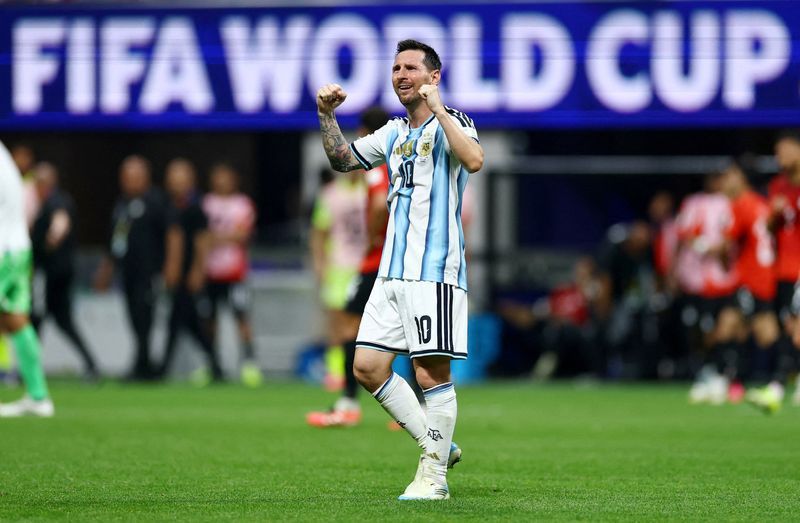
Argentina's path through the knockout stage of the World Cup has proven far more treacherous than their composed group-stage performance suggested, yet the defending champions continue to find ways to progress when adversity strikes. Following a dramatic 3-2 comeback victory over Egypt in Atlanta on Tuesday, Lionel Scaloni's squad heads to Kansas City to face Switzerland in Saturday's quarter-final, carrying with them the confidence born from escaping another near-catastrophic collapse. The emphatic manner in which Argentina swept through their opening three matches—dispatching Algeria, Austria, and Jordan with relative ease—created expectations of a smooth title defence, making their subsequent struggles against Cape Verde and Egypt all the more jarring for supporters accustomed to their team's dominance.
The recovery against Egypt stands as a potential turning point in Argentina's campaign, with Lionel Messi orchestrating the remarkable turnaround from two goals down with merely eleven minutes of regulation play remaining. Former Argentina striker Carlos Tevez, commenting for ESPN Argentina, highlighted the intangible qualities that carried his nation through the crisis, emphasising the heart and determination the squad displayed rather than technical superiority. That unwillingness to surrender represents perhaps the most valuable asset a tournament team can possess, particularly when facing elimination in knockout football where a single lapse in concentration can prove fatal. The scoreline and circumstances may ultimately define this World Cup campaign for Argentina, should Scaloni's squad progress further, as comebacks of this magnitude often become the narratives through which tournaments are remembered and immortalised.
While acknowledging the vulnerabilities exposed during recent matches, Scaloni offered a more nuanced assessment of his team's performance against the Egyptians compared to their earlier knockout encounter. He pointed to the substantial number of chances created during the opening period, including a penalty Messi failed to convert, suggesting his team controlled significant portions of the match despite the scoreline at times suggesting otherwise. The coach's insistence that Argentina performed substantially better against Egypt than against Cape Verde reflects a coach seeking to identify positives amid evident defensive frailties and moments of disorganisation that could prove catastrophic against more clinical opponents. The team's ability to construct attacking opportunities throughout the match, even when trailing, indicates that their fundamental tactical framework remains intact despite the lapses in defensive discipline that allowed opponents to score four goals across two knockout encounters, compared to just one conceded during the group stage.
The transformation from group-stage security to knockout-stage anxiety reflects a pattern common in tournament football, where the intensity and defensive organisation of opponents increases dramatically once the format shifts to single-elimination competition. During Argentina's passage through the group phase, Scaloni rotated his personnel strategically, affording key players rest while maintaining competitive advantage against lesser opposition. That luxury evaporates entirely once knockout football commences, placing sustained pressure on the same players across consecutive high-stakes matches with minimal recovery time. The physical and mental toll accumulates rapidly, potentially explaining both the defensive lapses and the occasional breakdown in coordination that allowed Cape Verde and Egypt to trouble the defending champions in ways the group-stage opponents simply could not manage.
Messi's personal determination to fight until the final whistle provided the emotional anchor around which his teammates rallied, with the talismanic forward refusing to accept defeat even as the scoreboard and remaining time appeared to conspire against Argentina's hopes. His commentary following the victory—emphasising his team's refusal to surrender and their commitment to competing until the referee's final whistle—reflected a mentality that has sustained Argentina through previous tournament challenges. Midfielder Leandro Paredes reinforced this theme, insisting that the squad never truly felt out of the contest despite the objective disadvantage they faced at various points. This psychological resilience, this insistence on remaining engaged regardless of circumstances, represents a form of tournament capital that cannot be manufactured through tactical drills or training sessions but rather emerges from experience, leadership, and the collective determination of a squad unwilling to accept early elimination.
Scaloni now confronts the challenge of preparing his squad for an opponent with formidable World Cup pedigree and championship experience. Switzerland, whom the coach described as possessing an incredible tournament tradition and outstanding players steeped in international football, represents a qualitatively different proposition than the opponents Argentina has faced thus far. The Swiss combine tactical discipline with technical competence, the capacity to absorb pressure while maintaining shape and organisation that could expose Argentina's defensive vulnerabilities if the South American side reverts to the disorganisation that nearly proved fatal against Egypt. Preparation becomes crucial during the brief window between Tuesday's victory and Saturday's contest, with Scaloni required to balance the need for physical and mental recovery against the necessity for tactical adjustments aimed at tightening defensive organisation whilst maintaining the attacking impetus that ultimately secured progression.
Argentina's training schedule in Kansas City during the intervening period will prove instructive regarding Scaloni's priorities and his assessment of where the squad requires strengthening before confronting Switzerland. Rest and recovery form essential components of any preparation following an emotionally draining comeback victory, yet tactical work addressing the defensive vulnerabilities that have accumulated during knockout play cannot be neglected. The coach must instil greater discipline and organisation at the back without undermining the attacking dynamism and offensive conviction that characterises his team's football when performing optimally. Balancing these competing demands—restoration and rejuvenation on one hand, tactical refinement and defensive tightening on the other—represents the essential challenge confronting any coach preparing a squad for successive high-stakes knockout contests against progressively stronger opposition.
For Malaysian and Southeast Asian observers following the World Cup, Argentina's journey illustrates the unpredictability inherent in knockout tournament football, where preparation, quality, and prior dominance provide no guarantee against elimination when circumstances conspire against a team in any single encounter. The South American champions' struggles resonate particularly within a region where football organisations perpetually wrestle with competitive consistency and the challenge of maintaining high performance standards across different opposition types and tactical approaches. Argentina's response to adversity offers a template of sorts—the emphasis on collective belief, refusal to surrender, and tactical adaptability—that applies universally across competitive football regardless of geography or economic resources. Should the defending champions ultimately progress through to later stages, their knockout-phase struggles may retrospectively appear merely as challenges overcome, trials that tested resolve without breaking it.

