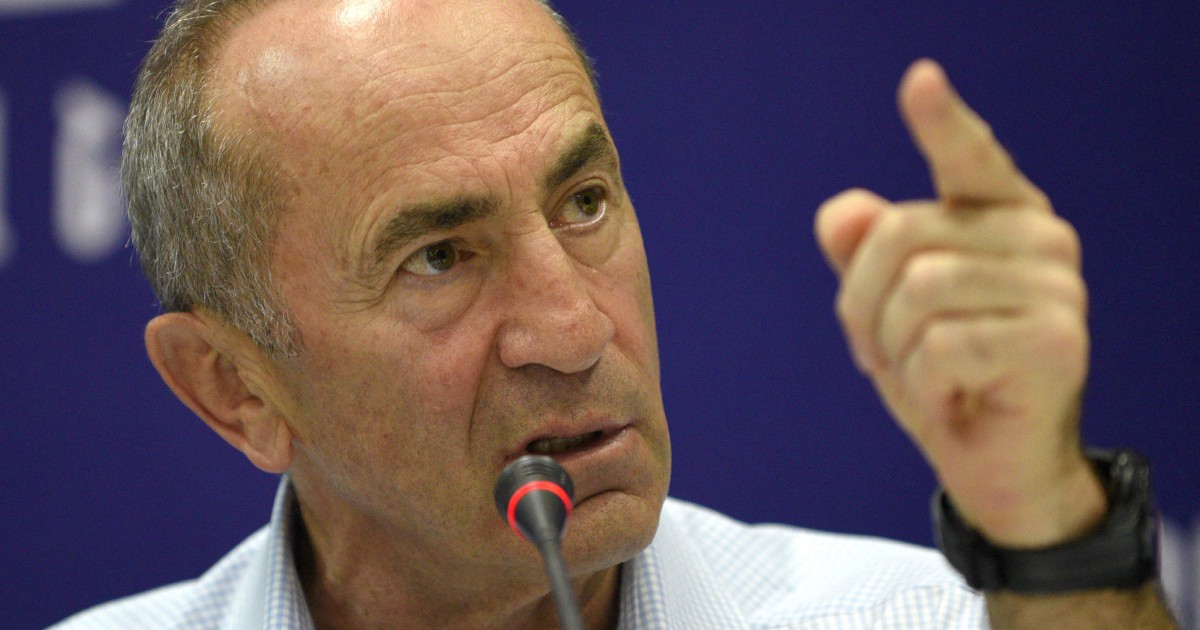
Armenia's state prosecutors took former president Robert Kocharyan into custody on Tuesday, marking an escalation in the country's ongoing political tensions centred on accountability and post-conflict governance. Kocharyan, who now leads an opposition faction, faces multiple corruption-related charges related to his period leading the nation, a development that highlights how post-Soviet societies frequently struggle to balance institutional reform with political reconciliation.
The detention represents a critical moment in Armenia's fragile democratic transition. Kocharyan served as president between 1998 and 2008, a tenure marked by significant geopolitical challenges, including the unresolved Nagorno-Karabakh dispute and Armenia's complex relationship with neighbouring Azerbaijan. His presidency coincided with attempts to strengthen state institutions, though his era has since become synonymous with questions about governance standards and financial probity. The formal charges underscore how Armenia's judiciary has increasingly turned attention to examining historical governance practices.
For regional observers, the case demonstrates broader patterns visible across the South Caucasus and post-Soviet space, where former leaders face legal reckoning following transitions in power. Unlike some neighbouring countries where such prosecutions remain politically charged but limited, Armenia's approach reflects its stated commitment to institutional accountability. However, the detention of a prominent opposition figure inevitably raises questions about whether legal proceedings reflect genuine reform or represent political manoeuvring by the current administration under Prime Minister Nikol Pashinyan.
Kocharyan's opposition credentials add complexity to the narrative. Since Pashinyan's rise to power following the 2018 Velvet Revolution, Armenia has witnessed considerable political polarization. Kocharyan has emerged as a leading critic of Pashinyan's handling of the devastating 2020 Nagorno-Karabakh conflict and subsequent peace negotiations. Many observers view his detention through this lens, suggesting it potentially weaponizes the justice system against political opponents, a concern frequently voiced regarding post-revolutionary governance in the region.
The specific nature of corruption allegations remains significant for understanding Armenia's institutional development. Prosecutorial investigations into presidential-era conduct often reveal patterns of resource misallocation, patronage networks, and inadequate financial oversight characteristic of many transition-era governments. Armenia's prosecutors have signalled their intention to examine Kocharyan's stewardship comprehensively, though the transparency and impartiality of these proceedings will substantially determine their legitimacy in the eyes of both domestic and international observers.
For Malaysia and Southeast Asian readers, the Armenian case offers instructive parallels regarding post-conflict governance and leadership accountability. Like several Southeast Asian nations, Armenia confronts the challenge of building institutional credibility while managing deep political divisions. The question of whether former leaders should face justice for perceived abuses or whether national reconciliation takes precedence remains unresolved across multiple regions. Armenia's approach—prosecuting its former leader—contrasts with some regional models emphasizing amnesty or truth commissions, making it a noteworthy comparative study in transitional justice.
The detention also occurs amid Armenia's broader geopolitical isolation following the Karabakh conflict's conclusion. The 2020 war, which resulted in Azerbaijani territorial gains and ongoing tensions, has fractured Armenian society over questions of military preparedness and diplomatic strategy. Kocharyan, having overseen Armenia during an earlier military conflict, carries particular symbolic weight in these debates. His prosecution thus intersects with unresolved national trauma and competing visions for Armenia's future security and international alignment.
International dimensions warrant consideration as well. Armenia maintains significant diaspora communities worldwide, including substantial populations in the West, whose views on such prosecutions influence Armenia's international standing. Western observers typically emphasize rule-of-law concerns, scrutinizing whether prosecutions follow due process standards and international legal norms. Conversely, regional powers maintain vested interests in Armenia's domestic political trajectory. The prosecution's perceived fairness will consequently shape Armenia's reputation for democratic governance and judicial independence.
The charges themselves encompass a spectrum of alleged misconduct during Kocharyan's presidency. While specific details remain under judicial review, corruption charges in post-Soviet contexts typically involve allegations of abuse of executive authority, misappropriation of state resources, or facilitating illicit financial flows. Armenian prosecutors have indicated their intention to pursue comprehensive investigations, suggesting they view this detention as inaugural rather than conclusive.
Moving forward, several factors will determine the prosecution's trajectory and broader implications. The quality of evidence presented, the independence demonstrated by the judiciary, and the political response from opposition and civil society will collectively signal whether Armenia is genuinely advancing institutional accountability or instrumentalizing the courts. The coming months will prove decisive in clarifying Armenia's commitment to impartial justice versus selective prosecution of political opponents.
For Armenia's neighbours and international observers, this case underscores enduring challenges facing post-Soviet states navigating democratic consolidation. The tension between accountability and political stability, between prosecuting historical grievances and building forward-looking consensus, defines much contemporary post-conflict governance in the region. How Armenia resolves Kocharyan's case will reverberate across the South Caucasus and inform broader assessments of the country's institutional maturity and democratic credentials.

