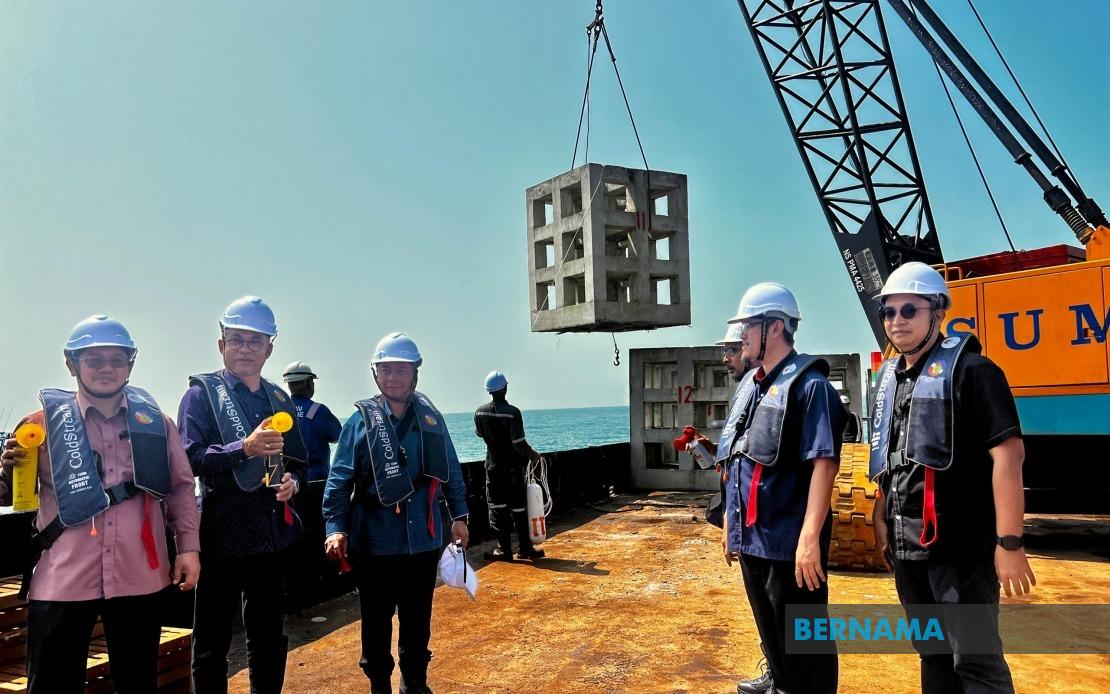
Authorities in Kelantan are turning to an increasingly popular conservation strategy to shield traditional fishermen from competition by large commercial trawlers. The state's fisheries department has just placed thirty artificial reef structures in coastal waters about 4.6 nautical miles from the Tok Bali Jetty, marking the first deployment to be funded entirely through a conservation initiative by Sultan Muhammad V. The project demonstrates how physical barriers can serve dual purposes—simultaneously protecting marine ecosystems and defending the livelihoods of small-scale fishing communities.
The engineering logic behind artificial reefs is straightforward but effective. When large industrial fishing vessels attempt to work in shallow coastal waters where these structures sit on the seabed, their heavy trawling nets and equipment become entangled on the reef frames, making continued operations impossible. Kelantan Fisheries Department director Ismail Ibrahim explained that this mechanical impediment naturally discourages encroachment by large-scale operators onto grounds traditionally worked by artisanal fishermen using smaller boats and less destructive methods. The structures thus serve as de facto maritime fences, regulating access through physical rather than purely regulatory means.
Beyond their role as technological barriers, the reefs function as carefully designed marine habitats. Fish species migrate to these areas to spawn and raise juvenile offspring, attracted by the shelter and food sources that accumulate around the submerged structures. Within six months of deployment, depending on local environmental conditions and ecosystem development, the reefs typically begin showing measurable impacts on fish populations. This biological productivity eventually benefits the fishing communities, who capture more fish and access better nutrition, addressing food security concerns across Kelantan's coastal regions.
Kelantan's reef programme has been operating since 2007, demonstrating sustained commitment to marine conservation at the state level. To date, the fisheries department has installed approximately four hundred artificial reefs across four separate locations in Kelantan waters. This year alone, planners are rolling out seventy-two additional units in phases, suggesting accelerated expansion of the initiative. The geographic distribution across multiple sites indicates strategic thinking about ecosystem management, ensuring that no single area becomes oversaturated while maximizing territorial coverage.
The conservation strategy gains particular significance within Southeast Asia's broader context of illegal, unreported, and unregulated fishing. Industrial vessels from various nations frequently breach agreements and enter waters they should avoid, often targeting small-scale fishing grounds where enforcement capacity is limited. Malaysian fishermen have long complained about competition from unlicensed foreign operators who can afford to work less selectively and damage habitats more severely. By making certain coastal zones physically inhospitable to trawler operations, Kelantan's programme reduces the reward for such encroachments without requiring constant naval patrols or confrontational enforcement actions.
Sustaining the reef programme requires ongoing maintenance and monitoring that extends far beyond the initial deployment. Kelantan's fisheries department conducts regular inspections to remove rope, nets, and debris that accumulate on the structures. Ironically, while entangled fishing gear serves the desired purpose of deterring large boats, excessive buildup can compromise the reefs' ability to function as healthy habitats. Routine cleaning operations maintain the balance between these two objectives, ensuring that structures remain effective barriers while supporting genuine marine biodiversity.
The financial backing from Sultan Muhammad V reflects recognition among Malaysia's state leadership that fishing communities require institutional support to compete fairly against industrial operators. Traditional fishermen lack the capital to upgrade vessels and equipment to match industrial capacity, making them vulnerable to displacement. By investing in habitat enhancement and access protection rather than subsidizing boat modernization, the sultan's approach tackles the underlying structural inequality in fisheries competition. This model may prove replicable elsewhere in Malaysia's fishing states, where similar pressures affect coastal populations.
The implications for Malaysian food security should not be underestimated. Coastal fisheries supply protein to millions of Malaysians and provide employment across processing, distribution, and retail sectors. When small-scale fishermen are squeezed out by industrial competition, supply chains consolidate and prices typically rise. Consumers, particularly lower-income households, lose access to affordable fish products. By protecting coastal fishing grounds through reef deployment, Kelantan's programme indirectly supports household food budgets and nutritional outcomes across its population.
Regional observers note that Malaysia's approach differs from purely regulatory strategies adopted in some neighbouring countries. While enforcement-based systems rely on government capacity to monitor vast ocean areas and prosecute violators, structural solutions like artificial reefs operate passively and continuously. A reef cannot be bribed or evaded; it simply makes certain operations uneconomical. This passive effectiveness may explain why Kelantan has sustained the programme for over a decade and continues expanding it, suggesting genuine satisfaction with results among fisheries planners and affected communities.

