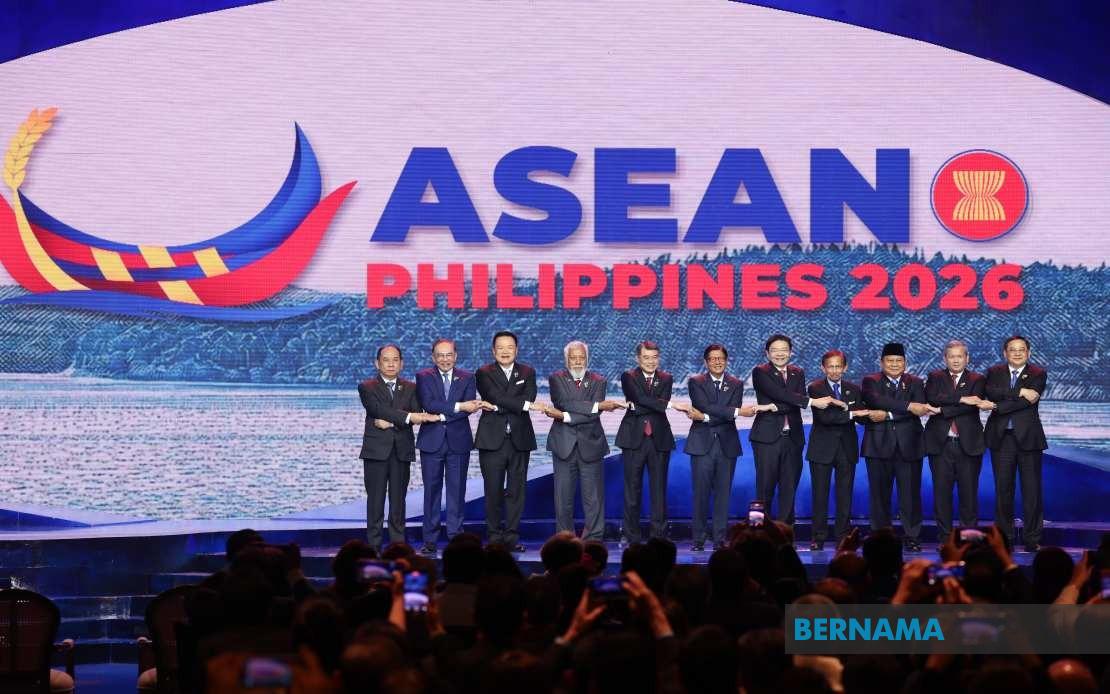
The Association of Southeast Asia Nations marked its 59th anniversary at a moment of profound transition, as the bloc confronts a transformed geopolitical landscape fundamentally reshaping Asia's strategic balance. Established in 1967 by five founding members—Indonesia, Malaysia, the Philippines, Singapore, and Thailand—ASEAN has grown into an 11-member organisation spanning from Brunei to Timor-Leste. Yet success over nearly six decades has shifted the nature of the challenge facing the grouping. No longer does ASEAN need to demonstrate its relevance to the world; the more pressing question now concerns whether it can harness its influence effectively while maintaining the internal cohesion necessary to act as a unified bloc.
The geopolitical environment has become measurably more complex. Recent conflicts in West Asia involving the United States and Iran have rippled across the region, exposing ASEAN economies to acute energy security vulnerabilities and disrupting global supply chains upon which many member states depend critically. Simultaneously, the strategic competition between Washington and Beijing continues to intensify, with the South China Sea disputes serving as a flashpoint where ASEAN's interests collide directly with great power rivalry. These concurrent pressures demand not merely diplomatic finesse but coordinated practical action that transcends the traditional ASEAN approach of consensual dialogue and measured statements.
Analysts emphasise that ASEAN's future trajectory depends fundamentally on its capacity to reinforce its own centrality from within the organisation itself. Prof Dr Phar Kim Beng, director of the Institute of International and ASEAN Studies at the International Islamic University Malaysia, articulated this challenge with particular clarity. Having served previously as an official within the ASEAN Secretariat, he brings institutional insight to the observation that external partners must respect ASEAN's position—but ASEAN member states themselves must first insist upon it with consistent conviction. The bloc cannot afford to rely solely on foreign validation of its relevance; its member governments must demonstrate through concrete actions that they regard ASEAN as the central pillar of regional architecture.
Translating this principle into reality requires substantial work across multiple domains. Labour mobility remains inadequate across the region, with workers facing significant barriers to movement despite ASEAN's stated commitment to a single economic community. Digital connectivity, though improving, lags behind the region's potential, fragmenting markets and limiting the economies of scale that could enhance ASEAN's competitive position globally. Government-to-government cooperation, while nominally strong, often falters when member states prioritise bilateral relationships with external powers over collective ASEAN positions. These gaps between aspiration and implementation undermine the credibility of ASEAN Community Vision 2045, the strategic framework intended to guide the bloc's evolution through the coming decades.
Dr Rahul Mishra, an associate professor at the Jawaharlal Nehru University's Centre for Indo-Pacific Studies, reinforces this diagnosis by arguing that ASEAN's normative appeal—its capacity to manage both internal disputes and external pressures through dialogue—represents genuine strength. Yet this diplomatic asset must be complemented by substantive functional cooperation that translates negotiated positions into tangible outcomes. The Myanmar crisis exemplifies the stakes; over three years after the military coup, ASEAN's ability to influence events has proven limited, raising questions about the organisation's practical leverage over member state conduct. Similarly, the proliferation of transnational cyber scams originating from the region demands coordinated law enforcement responses that transcend the diplomatic sphere.
ANSEAN has simultaneously expanded its external engagement architecture, recently elevating Turkey to the status of full dialogue partner and welcoming four new signatories to the Treaty of Amity and Cooperation in Southeast Asia—Sweden, Poland, Romania, and Lithuania. This expansion, while symbolically important, creates new obligations and constituencies that the organisation must manage. The Treaty itself, marking its 50th anniversary this year, now encompasses 62 High Contracting Parties, reflecting ASEAN's success in establishing itself as a framework of reference for regional order. Yet breadth of external engagement carries its own complications; managing relationships with diverse external actors becomes increasingly demanding, potentially diverting attention from pressing internal integration challenges.
The fundamental tension lies between ASEAN's outward-facing diplomatic expansion and its inward-facing integration gaps. As the bloc engages more dialogue partners and assumes higher international visibility, the divergence between what ASEAN promises and what it delivers becomes more exposed. Regional partners increasingly expect ASEAN to move beyond dialogues and intent statements, insisting instead on concrete cooperative mechanisms that address shared security challenges, facilitate physical and digital infrastructure development, resolve disputes, and manage the complex dynamics of living alongside rising superpowers. The credibility of ASEAN depends increasingly on its ability to operationalise these commitments in ways that produce measurable benefits for member states and their citizens.
This year's ASEAN Day celebration adopts the theme "Navigating Our Future Together," which will also characterise the Philippines' chairmanship in 2026. The framing acknowledges the collective nature of the challenges ahead while implicitly recognising that no single member state can navigate these waters alone. For Malaysia and other ASEAN members deeply integrated into regional supply chains and dependent on maritime security for economic survival, the stakes are particularly acute. Trade disruptions from West Asian conflicts, the ongoing South China Sea tensions, and the need to integrate disparate regulatory environments across the bloc all demand responses that transcend national borders.
The practical pathways forward require ASEAN to strengthen several critical areas simultaneously. Enhanced labour mobility would allow workers to follow opportunities across the region, building human ties that reinforce institutional integration. Digital connectivity investments could reduce transaction costs and enable integrated regional markets, particularly benefiting smaller economies. More robust government-to-government cooperation mechanisms, backed by enforcement capacity, could address transnational challenges like cybercrime and organised crime more effectively than current arrangements. Yet achieving these requires member states to cede some autonomy to collective decisions, a prospect that remains contentious given ASEAN's historical emphasis on national sovereignty and consensual decision-making.
The Myanmar crisis and its handling illustrate both ASEAN's normative strength and operational limitations. The bloc maintained dialogue channels when other international actors imposed isolation, demonstrating diplomatic sophistication. Yet it failed to prevent the coup or meaningfully shape subsequent events, revealing the gap between engagement and influence. This experience underscores that ASEAN's centrality depends not on recognition alone but on demonstrable capacity to shape outcomes in ways that align with member interests. As geopolitical competition intensifies and external powers become more assertive, ASEAN's ability to maintain its role as the indispensable regional framework hinges on this capacity for practical impact.
Moving forward requires member states to view ASEAN not as an optional consultative forum but as the essential institutional framework through which they advance collective interests. This mindset shift would manifest in concrete commitments to strengthen dispute resolution mechanisms, harmonise regulations across member states, and develop coordinated responses to transnational security challenges. The ASEAN Community Vision 2045 provides the strategic roadmap; implementation now demands the political will and institutional investment to transform vision into reality, ensuring that the bloc remains central to Southeast Asia's future as external pressures mount.

