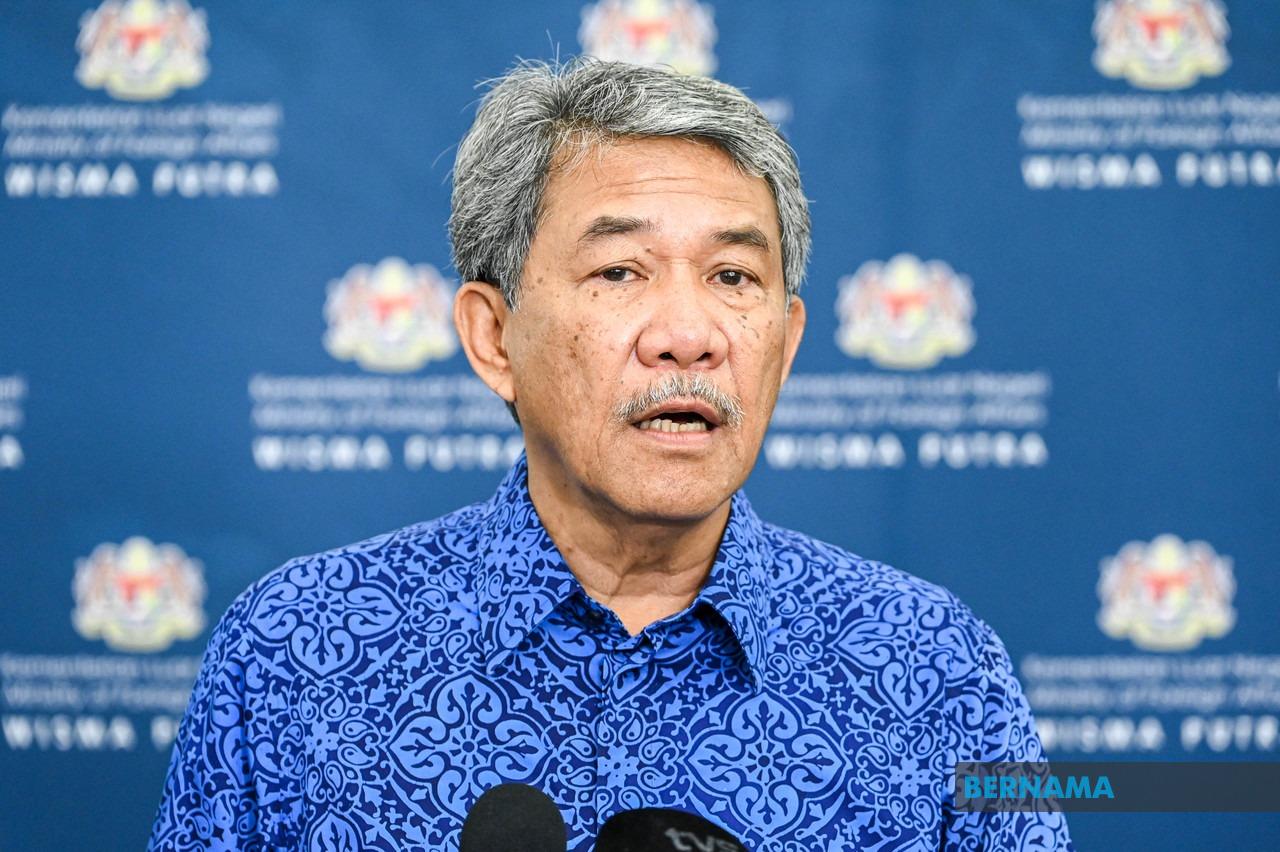
Southeast Asia's regional bloc must position itself as an independent navigator steering through treacherous international waters, according to Foreign Minister Datuk Seri Mohamad Hasan, who underscored the imperative for ASEAN to preserve its autonomy and collective influence during a time of unprecedented global disorder. Speaking at the 59th ASEAN Day celebration in Putrajaya on Monday, Mohamad articulated a vision of the ten-member organisation functioning as a self-directed entity rather than a passive observer of great power competition, arguing that the fundamental principle of ASEAN centrality has become more critical than ever as traditional frameworks governing international relations fracture under strain.
The global landscape is undergoing profound transformation, Mohamad observed, with major power rivalries, geopolitical competition centred on economic leverage, and the visible erosion of multilateral institutions creating an environment of heightened unpredictability. This deteriorating order demands that ASEAN respond not with reactive posturing but with strategic clarity and purposeful ambition. The Foreign Minister emphasised that maintaining the bloc's unity and autonomous voice in such circumstances represents both a challenge and an opportunity for regional states to assert their collective agency, particularly as larger powers compete for influence across Southeast Asia.
The centrality principle itself, Mohamad stressed, operates as a privilege rather than an entrenched right, requiring continuous cultivation and defence by member states committed to upholding the bloc's institutional integrity. This framing carries particular significance for Malaysia and other medium-sized ASEAN members, which depend on the cohesion of regional mechanisms to amplify their influence beyond what individual nations could achieve in isolation. The fragmentation characterising the current international order renders the bloc's collective voice increasingly valuable, yet simultaneously threatens it with the possibility of splintering should internal divisions deepen.
At a moment when great powers are intensifying efforts to create exclusive spheres of influence and competing trade ecosystems, ASEAN's commitment to genuine regionalism and inclusive multilateralism serves as a stabilising force that benefits all Southeast Asian nations. Mohamad positioned the organisation as an agent of constructive change capable of shaping global rules and norms in directions that privilege openness, inclusivity, and justice-based principles. This vision extends beyond passive adherence to existing international agreements; it contemplates ASEAN playing an active role in determining how the future international system develops, ensuring that Southeast Asian perspectives and interests remain central rather than peripheral to global governance.
The capacity to punch above its demographic and economic weight requires ASEAN to engage strategically with diverse partners globally, expanding partnerships with nations including China, India, and the Republic of Korea rather than confining itself to traditional Western alignments. Mohamad articulated this outreach as a strategic necessity rather than discretionary engagement, reflecting the reality that Southeast Asia's prosperity depends on accessing multiple sources of investment, technology, and market opportunity. Crucially, he insisted that such partnerships be conducted on a basis of equality, with ASEAN determining its own course rather than accepting subordinate roles in hierarchical arrangements designed by external powers.
Internal cohesion emerges as the essential precondition for exerting external influence in a polarised world where member states face mounting pressure to align with competing blocs. Mohamad warned against allowing internal divisions to weaken collective leverage, emphasising that the fortunes of individual ASEAN nations rise and fall with regional stability and prosperity. This interconnection implies that short-term national advantages gained through exclusive bilateral arrangements with major powers could ultimately undermine each state's long-term interests by corroding the institutional framework upon which regional resilience depends.
The digital economy has assumed particular prominence in ASEAN's growth trajectory, with Mohamad identifying it as the essential engine propelling the next phase of regional development and integration. Advancing the ASEAN Digital Economy Framework Agreement represents a priority aligned with both economic modernisation and the deepening of intra-regional linkages, while simultaneously updating trade arrangements with major partners reflects the imperative to adapt existing frameworks to contemporary realities. These efforts signal recognition that conventional approaches to regional commerce and integration require fundamental reimagining to remain relevant and competitive in a rapidly evolving global environment.
Sustainability has become non-negotiable within ASEAN's economic planning, moving beyond peripheral considerations to occupy a central position within development strategies. The acceleration of regional power infrastructure, particularly the ASEAN Power Grid initiative, exemplifies how environmental transition and energy security can advance simultaneously while attracting investment capital seeking exposure to clean energy opportunities. This integration of sustainability into core economic planning distinguishes ASEAN's approach from earlier models that treated environmental protection as a constraint on growth rather than a catalyst for prosperity.
The bloc's composition has evolved substantially since its 1967 founding by five members through the Bangkok Declaration, with expansion now encompassing eleven nations spanning diverse political systems, development levels, and strategic orientations. Timor-Leste's admission as the newest member during the 47th ASEAN Summit in October last year exemplifies the organisation's capacity to integrate new members while maintaining institutional coherence, though it simultaneously compounds the challenge of achieving consensus on complex issues where divergent interests intersect. This year's theme, Navigating Our Future Together, adopted for both ASEAN Day celebrations and the 2026 chairmanship cycle under the Philippines, encapsulates the dual imperative of maintaining collective identity while accommodating legitimate diversity among members.
For Malaysian policymakers and the broader regional community, Mohamad's remarks crystallise the strategic calculation underpinning Southeast Asian foreign policy in this era of intensifying competition. ASEAN centrality functions as more than diplomatic rhetoric; it represents the operational framework through which smaller and medium-sized states preserve strategic autonomy against pressure from larger powers seeking to incorporate them into exclusive arrangements. Malaysia's commitment to this principle, alongside its neighbours, determines whether Southeast Asia emerges from the current period of fragmentation strengthened by collective agency or weakened by fragmentation into competing camps, each aligned with external powers pursuing their own strategic objectives.

