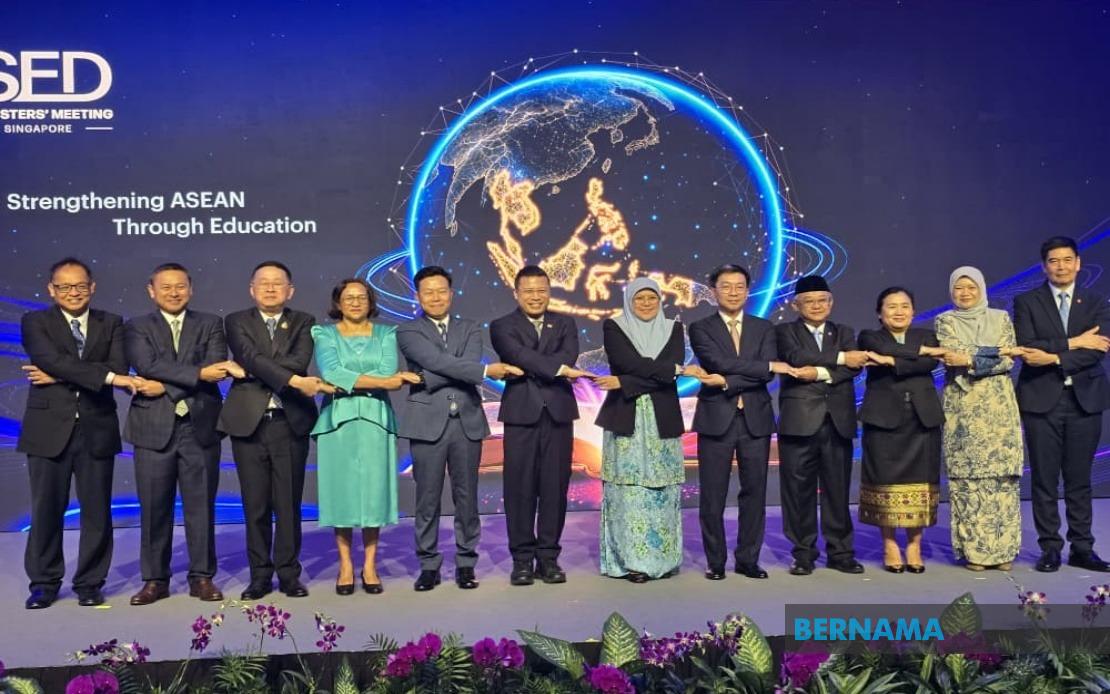
ASEAN's education leadership gathered in Singapore this week to ratify an ambitious strategic blueprint designed to reshape how the region approaches learning and skill development over the next five years. The Five-Year Work Plan on Education 2026-2030 represents a watershed moment for Southeast Asia's education sector, setting a unified direction for ten nations to pursue systemic transformation that balances economic competitiveness with social cohesion and cultural identity.
The plan emerges at a critical juncture when ASEAN economies face mounting pressure to develop workforces capable of navigating rapid technological disruption and global market shifts. By establishing collective priorities around inclusive, comprehensive, and transformative education systems, the member states have signalled their recognition that isolated national approaches will prove insufficient. The framework explicitly commits ASEAN to nurturing individuals who possess not only technical acumen but also resilience, adaptability, and a strong grounding in shared regional values—qualities increasingly seen as essential differentiators in a crowded global marketplace.
Singapore Education Minister Desmond Lee articulated the strategic rationale underpinning the plan, emphasizing that education systems across ASEAN must become more agile in responding to technological innovation and evolving labour market demands. His remarks underscored a fundamental tension that policymakers throughout the region must navigate: how to equip citizens with cutting-edge skills while simultaneously preserving the cultural and social foundations that give ASEAN its distinctive character. This balancing act will determine whether the region's education investments translate into genuine human development or merely produce technically proficient but culturally adrift cohorts.
Three pillars anchor the roadmap's strategic direction. Artificial intelligence in education represents perhaps the most forward-looking component, acknowledging that AI will fundamentally reshape teaching methods, curriculum design, and assessment practices across ASEAN classrooms within the next half-decade. The commitment to Science, Technology, Engineering and Mathematics reflects the region's urgent need to build deeper competencies in fields critical to industrial advancement and innovation-driven economic growth. Equally significant is the emphasis on holistic development, a recognition that narrow academic optimization often produces graduates ill-equipped for the complex decision-making and interpersonal challenges they will encounter in professional life.
Equitable access to quality education stands as a foundational commitment within the plan, addressing a persistent challenge across Southeast Asia where disparities in educational opportunity often mirror broader patterns of economic inequality. Rural areas, marginalized communities, and less developed member states have historically received disproportionately fewer resources and less attention from regional capacity-building initiatives. By elevating equity as an explicit priority, ASEAN's education ministers have signalled that sustainable regional development cannot proceed along trajectories that leave significant populations behind. The implications are profound: implementing this commitment will require substantial reallocation of resources and political will from member states to ensure that educational benefits reach beyond urban centres and affluent communities.
Student well-being has likewise secured prominent placement within the strategic framework, reflecting growing international recognition that learning outcomes depend fundamentally on the physical, mental, and emotional health of young people. This represents a significant shift from traditional education paradigms that treated well-being as peripheral to the core academic mission. For Malaysian stakeholders and policymakers throughout the region, the well-being emphasis carries particular relevance given rising rates of youth mental health challenges, increasing academic pressures, and social anxieties stemming from economic uncertainty and rapid social change.
The institutional architecture supporting the plan warrants particular attention. Singapore's establishment of a regional research network centred at the Singapore Centre for Character and Citizenship Education creates formal mechanisms for cross-national learning and knowledge exchange around values education. This approach transforms what might otherwise remain isolated national curricula into a genuinely collaborative regional endeavour, allowing ASEAN member states to learn from one another's successes and failures in implementing character education. For Malaysia, participation in such networks offers opportunities to benchmark its own values education approaches against peer nations while contributing Malaysian expertise and experience to regional best practice development.
The Five-Year Work Plan unfolds against Singapore's 2026-2027 chairmanship of the ASEAN Education Sector, positioning the city-state to shape implementation priorities and institutional arrangements during a critical period. As the regional leader most advanced in technology adoption within education and among the strongest performers in international assessment metrics, Singapore's stewardship carries considerable weight. However, the plan's success ultimately depends on whether member states including Malaysia translate broad strategic commitments into concrete operational changes within their own education systems, classrooms, and teacher training frameworks.
For Malaysian Education Minister Fadhlina Sidek and counterparts throughout ASEAN, the coming months will involve translating abstract strategic language into specific policy measures, budget allocations, and curriculum revisions. The emphasis on AI integration raises important questions about digital infrastructure readiness across less-developed areas of the region and about equipping teachers with the pedagogical skills necessary to harness AI effectively. STEM development requires sustained investment in subject-matter expertise and laboratory facilities—resources that remain unevenly distributed across ASEAN.
The alignment of education strategy with broader ASEAN community-building objectives cannot be overstated. Education serves not merely as an economic development tool but as a mechanism for fostering regional identity and strengthening the interpersonal and institutional bonds that hold ASEAN together. By emphasizing shared values alongside competitive workforce development, the plan implicitly rejects false choices between national self-interest and regional cooperation. This holistic framing offers a valuable counterweight to narrower, zero-sum approaches to education policy that have sometimes characterized bilateral competition within Southeast Asia.
Success metrics and accountability mechanisms will prove crucial in determining whether the Five-Year Work Plan becomes a transformative force or merely another well-intentioned regional declaration. Member states must establish clear benchmarks for progress on AI integration, STEM competency development, equity improvements, and student well-being indicators. Regular monitoring and transparent reporting on implementation will help maintain political momentum and identify where technical assistance or resource reallocation becomes necessary.
The education roadmap ultimately reflects ASEAN's conviction that the region's future prosperity and stability depend on investment in human capital development grounded in regional cooperation. By establishing unified strategic direction while respecting national sovereignty in implementation, the framework charts a middle path between overambitious centralization and fragmented national efforts. For Malaysia and other member states, the plan represents both an opportunity and a challenge—an opportunity to access regional expertise and comparative insights, and a challenge to commit meaningful resources and political attention to implementation in a context of competing budgetary demands.

