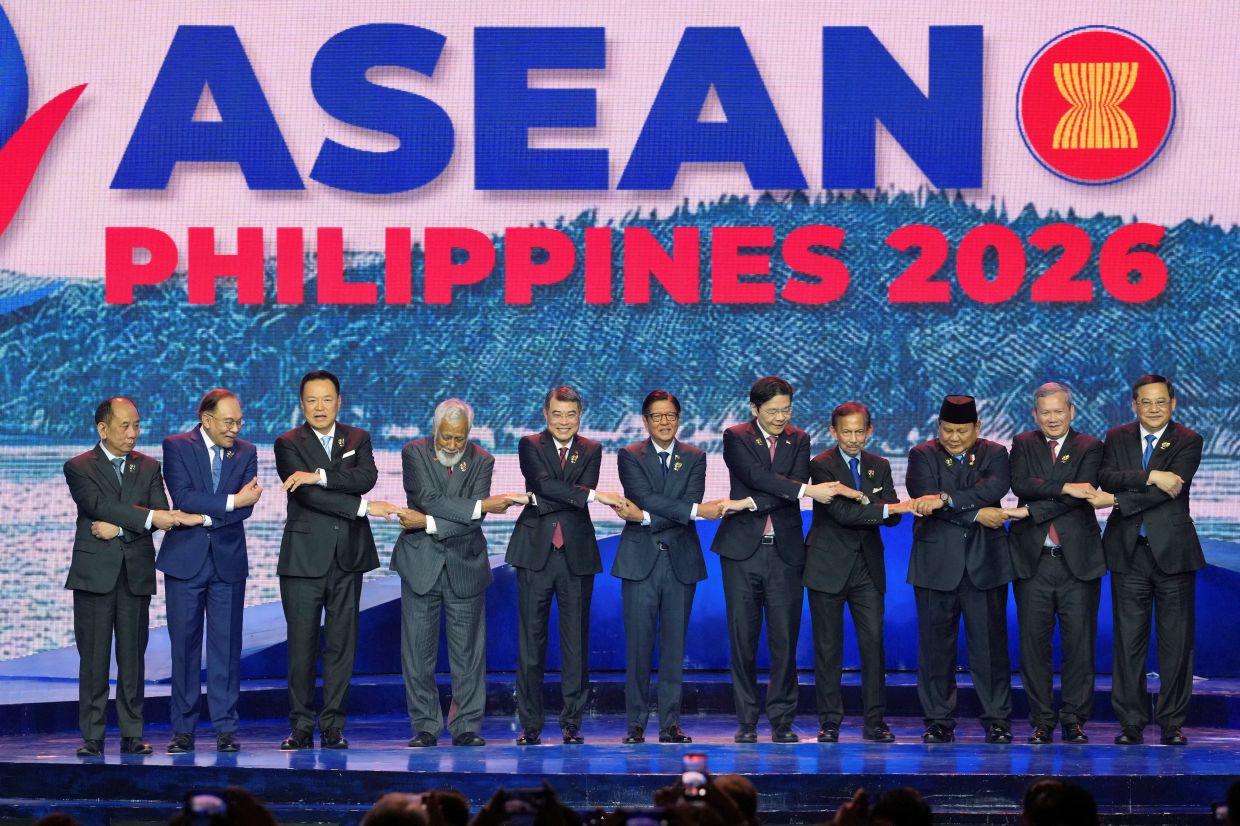
South-East Asia's diplomatic leadership is converging on Manila this week for an annual summit that reflects the region's precarious position between competing global powers and unresolved internal crises. The gathering brings together not only the ten ASEAN member states and host nation the Philippines, but also Washington, Beijing, Moscow and Brussels—making it a crucial moment to assess how the bloc intends to manage escalating tensions both within and beyond its borders. The three-day meeting underscores how deeply intertwined regional stability has become with global conflicts, from Middle East hostilities to great power competition in the Indo-Pacific.
The renewed fighting between the United States and Iran looms large over these discussions, presenting an immediate concern for Southeast Asian economies that depend heavily on stable energy supplies. The region's more than 680 million people rely substantially on petroleum and liquefied natural gas sourced from the Middle East, making any disruption to shipping through the Strait of Hormuz—which carries roughly one-fifth of the world's oil—a direct threat to their prosperity. The Philippines already experienced this vulnerability acutely enough that President Ferdinand Marcos Jr. declared a national energy emergency in March to prevent fuel shortages and price gouging. ASEAN's foreign ministers plan to issue a collective statement expressing concern about Middle East escalation and appealing for diplomatic resolution, signalling the bloc's desire to shield itself from the fallout of conflicts beyond its geographical sphere.
Yet the broader anxiety underpinning these talks relates to American strategic priorities. The Trump administration's focus on containing Iran has raised questions across Southeast Asia about whether Washington remains sufficiently committed to the Indo-Pacific region, particularly in countering what ASEAN members perceive as increasingly aggressive Chinese behaviour in the South China Sea and around Taiwan. This concern motivates U.S. Secretary of State Marco Rubio's attendance and his stated commitment to reassure partners that America remains engaged in regional security. Rubio framed his visit as advancing "a free and open Indo-Pacific that delivers safety, security and prosperity," attempting to reset expectations that had grown uncertain during an era when American military resources and diplomatic attention have been divided between multiple global crises.
Rubio's presence also signals potential for bilateral engagement with Chinese Foreign Minister Wang Yi, though neither side has publicly confirmed detailed plans. In cautious language, Rubio acknowledged that dialogue between two major powers serves mutual interests, emphasising that despite inevitable disagreements, continued communication remains essential. Whether discussions will address Trump administration grievances about alleged Chinese interference in the 2020 election remains unclear, though Rubio has left open the possibility. The more immediate question for ASEAN observers concerns whether substantive progress can emerge on managing competition in contested waters.
The most combustible regional issue remains Myanmar's unresolved civil conflict, now in its fourth year since the military coup that overthrew Aung San Suu Kyi's democratically elected government in 2021. More than 8,100 people have lost their lives in fighting, whilst nearly 22,500 remain detained, according to rights monitors. ASEAN's foundational 2021 peace plan has achieved virtually nothing, undermined by the junta's refusal to comply with its provisions. The bloc's response—barring Myanmar's military leadership from high-level ASEAN meetings—has been circumvented through recent diplomatic manoeuvres. Philippine Foreign Secretary Theresa Lazaro, acting as ASEAN's special envoy, met with Myanmar's foreign minister Tin Maung Swe in Bangkok earlier this month, marking the first such engagement in five years.
This breakthrough came at considerable cost to ASEAN's credibility. Human rights organisations condemned the meeting as effectively abandoning the bloc's principled stand against the junta, arguing that sitting down with Myanmar's top diplomat without extracting concrete commitments amounted to rewarding the generals. Lazaro defended the move as "resolute diplomacy with all parties," insisting that engagement did not constitute abandonment of the five-point peace framework. Whether this recalibration represents pragmatic flexibility or diplomatic surrender remains hotly contested, though the underlying reality is clear: five years of isolation produced no movement toward peace, forcing ASEAN to reconsider its approach despite the reputational risks.
The South China Sea disputes present another arena where ASEAN cohesion is being tested. Negotiations between the bloc and China concerning a proposed "code of conduct" aimed at preventing maritime confrontations have dragged on inconclusively, even as incidents between Chinese and Philippine coast guard vessels have intensified alarmingly. The territorial disputes involve five ASEAN members—the Philippines, Vietnam, Malaysia, Brunei and Taiwan—alongside China itself, creating complex diplomatic geometry that ASEAN has struggled to navigate. Recent years have witnessed particularly aggressive Chinese activities in waters near the Philippines, where incursions and harassment of civilian vessels have prompted Manila to seek stronger international support and guarantees.
Wang Yi's participation in Manila discussions will focus on accelerating code of conduct negotiations, though sceptics question whether Beijing genuinely intends binding constraints on its own behaviour or merely seeks to manage Western and ASEAN concerns whilst preserving its strategic advantages. For Malaysia and other claimant states, the code's effectiveness remains doubtful without enforcement mechanisms and verifiable Chinese compliance. This scepticism colours ASEAN's approach to any agreements, knowing that the bloc's ability to constrain Chinese actions ultimately depends on support from outside powers like the United States and its allies.
Rubio is also expected to meet with the Quad grouping of the United States, India, Japan and Australia, reinforcing what Beijing views as an explicit containment alliance aimed at limiting Chinese regional influence. Repeated Chinese criticism of the Quad as a neocolonial mechanism for power projection underscores how competing visions of regional order have hardened around these gatherings. For ASEAN members, the Quad represents both reassurance and complication—welcome military balance against Chinese assertiveness, yet potentially divisive if membership in such groupings forces members to choose between Washington and Beijing rather than maintaining strategic autonomy.
The attendance of Russian Foreign Minister Sergey Lavrov adds another dimension, though little has been announced regarding his specific engagements. Russia's interests in Southeast Asia remain secondary to its focus on Ukraine and European security, yet Moscow maintains significant energy relationships throughout the region and occasionally uses ASEAN forums to signal that it remains a Pacific power despite Western sanctions and isolation. Lavrov's presence, alongside the notable planned appearance by Ukrainian Foreign Minister Andrii Sybiha at a separate ceremony commemorating a 1976 ASEAN non-aggression treaty, illustrates how global divisions increasingly penetrate regional spaces that once sought to maintain non-alignment.
For Malaysia and other ASEAN members, these Manila talks represent both opportunity and constraint. The opportunity lies in engaging major powers on matters affecting regional stability—securing renewed American commitments to the Indo-Pacific, pressing China on code of conduct implementation, and building consensus on Myanmar. The constraints emerge from ASEAN's limited leverage when great powers prioritise other concerns and when member states themselves disagree on fundamental approaches. Myanmar's case exemplifies this tension: ASEAN cannot sustain indefinite isolation whilst also failing to produce meaningful results through engagement, yet lacks the collective will or external support to impose solutions.
What emerges from these meetings will shape regional diplomacy for months ahead. If ASEAN can articulate unified positions on Myanmar, South China Sea conduct, and energy security whilst strengthening ties with major powers, the gathering will have succeeded in its basic function. Yet the underlying reality persists that ASEAN operates in an increasingly multipolar world where consensus is elusive and external powers often pursue interests that diverge from regional preferences. The bloc's challenge lies in maintaining relevance and influence despite these structural constraints, a test that Manila's meetings will partly illuminate.

