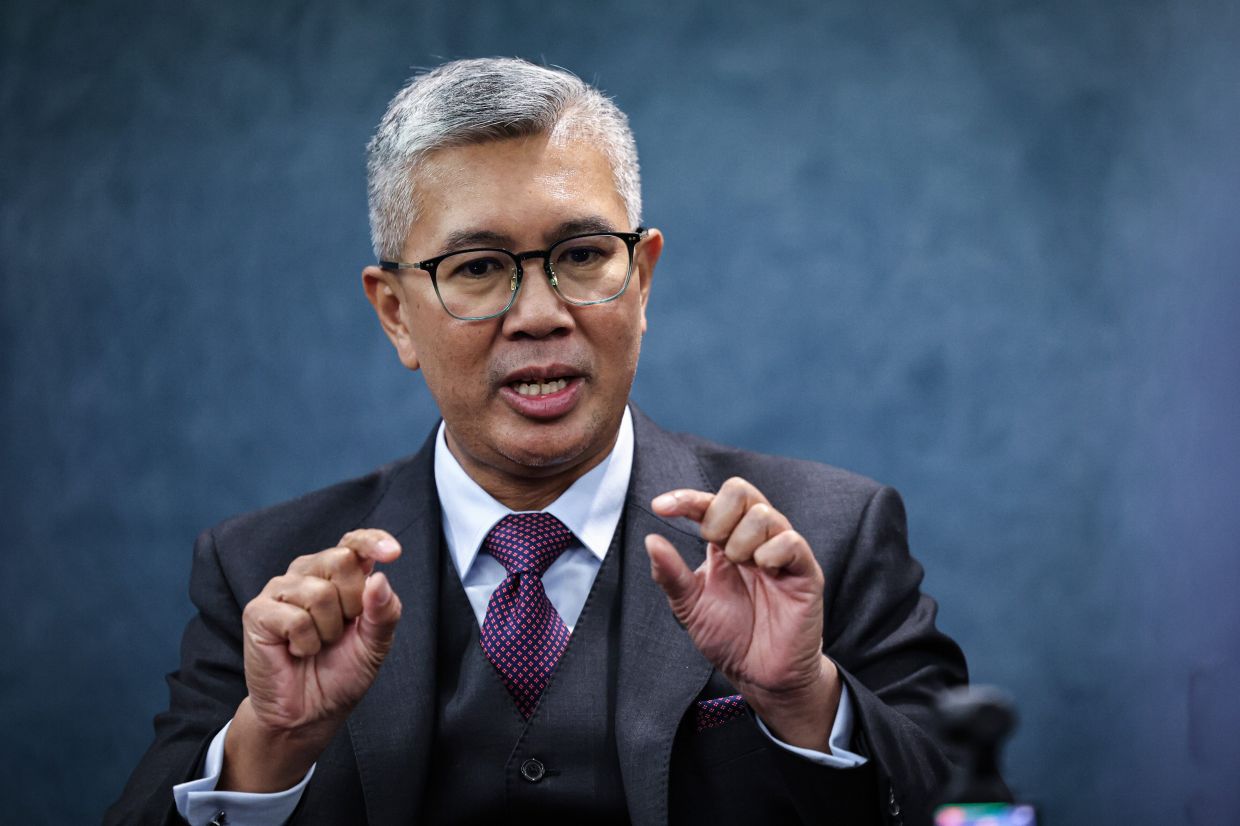
Malaysia's Investment Development Authority chairman Tengku Datuk Seri Zafrul Abdul Aziz has issued an urgent call for ASEAN nations to deepen their cooperation on energy security, warning that the region's drive towards net-zero emissions is being hampered not by lack of political will, but by fragmented financial coordination and inadequate infrastructure linkages. Speaking at the 7th International Sustainable Energy Summit here, he framed the challenge confronting Southeast Asia's ten economies as fundamentally one of capital mobilisation rather than commitment, a distinction carrying significant implications for how regional policymakers might reshape their approach to the energy transition.
The scale of the financing challenge is staggering. ASEAN requires approximately US$200 billion annually through 2030—roughly RM818 billion at current exchange rates—to fund the comprehensive overhaul of its energy systems and infrastructure. This enormous gap exists despite the region's major economies having formally pledged net-zero targets, reflecting a persistent disconnect between climate ambitions and the financial mechanisms required to realise them. The shortfall underscores how Southeast Asian governments, many facing competing budgetary pressures from healthcare, education and infrastructure needs, struggle to unlock sufficient capital for energy transformation without external support and regional burden-sharing arrangements.
Tengku Zafrul identified several structural impediments preventing faster progress on energy projects across the region. Permitting processes remain protracted, with viable projects frequently taking years to reach the stage where they can attract financing. Regulatory frameworks differ markedly between countries, creating uncertainty for investors considering cross-border transactions. International capital flows into regional energy projects remain constrained by perceived risks and the absence of coordinated risk-mitigation tools. These obstacles collectively create a situation where even projects with sound economics and genuine environmental benefits languish in development limbo, delaying the region's transition and extending its reliance on fossil fuels longer than necessary.
Central to his vision for accelerating regional energy development is the ASEAN Power Grid, an ambitious undertaking designed to achieve full integration by 2045. This interconnected system would leverage the region's extraordinary diversity of renewable energy resources, allowing surplus hydroelectric generation from Laos to flow into Vietnam, geothermal capacity from Indonesia to supplement Malaysian needs, and solar production from Malaysia to balance regional demand fluctuations. Such integration transforms individual national energy systems into an interdependent regional network, theoretically improving efficiency, reducing waste, and enabling smaller economies to benefit from larger neighbours' resource endowments. The concept mirrors successful electricity interconnection schemes in Europe and other regions, though executing it across Southeast Asia's varied institutional capacities and governance standards presents formidable coordination challenges.
Equally significant was Tengku Zafrul's proposal for an ASEAN Green Investment Facility, a mechanism designed to aggregate capital from multiple sources—sovereign wealth funds, pension schemes, development banks and private investors—into a pooled vehicle capable of de-risking substantial clean energy projects across member states. Rather than expecting individual national treasuries to finance major infrastructure investments independently, as has historically been the case, this facility would distribute financial responsibility across the region while leveraging the diversification benefits of portfolio-based investing. Such an approach acknowledges that no single Southeast Asian economy possesses sufficient fiscal space to unilaterally fund transformative energy infrastructure, yet collectively the region's financial resources and institutional capacity could prove adequate to the task if properly coordinated.
Beyond infrastructure and capital mobilisation, Tengku Zafrul stressed the importance of establishing shared emergency protocols to safeguard energy security against future disruptions. The global energy shocks of recent years—whether from geopolitical tensions, supply chain fractures or extreme weather events—revealed how vulnerable interconnected but uncoordinated energy systems can become. He advocated for ASEAN to develop joint fuel reserves held strategically across member states, coordinated crisis communication channels to prevent panic or hoarding, and regional supply-chain monitoring systems that provide early warning of emerging bottlenecks. These measures would formalise the principle of collective resilience, ensuring that when external shocks occur, the region responds as a unified entity rather than ten separate economies competing for scarce resources.
Malaysia itself has positioned itself as a potential champion of this regional agenda, Tengku Zafrul noted, through its New Industrial Master Plan 2030, National Energy Transition Roadmap and Green Investment Strategy. These national initiatives create a foundation upon which regional cooperation might be built, signalling to other ASEAN members that Malaysia possesses both the strategic clarity and institutional commitment necessary to lead multilateral energy coordination. However, he emphasised that genuine regional leadership requires bringing all member states along rather than imposing solutions from above, requiring patient diplomacy, equitable burden-sharing and acknowledgment of different countries' varying capacities and circumstances.
The urgency underlying Tengku Zafrul's remarks cannot be overstated. Each year that ASEAN delays in mobilising the necessary capital and infrastructure represents continued exposure to energy price volatility, climate-related risks and potential shortages that could undermine economic growth across the region. For Malaysia specifically, energy security directly affects industrial competitiveness, manufacturing costs, and the nation's ability to attract and retain foreign investment. Neighbouring economies face similar pressures, making the case for cooperation more compelling than any abstract argument about regional solidarity.
Implicitly, Tengku Zafrul's framework addresses a fundamental geopolitical reality confronting Southeast Asia: the region's energy transition cannot be achieved through isolated national efforts, nor can it be imposed through great-power initiatives that bypass ASEAN agency. Instead, it requires the region to develop its own institutional mechanisms for coordinating capital, sharing risk, and building infrastructure that transcends national borders. This conception of energy security as fundamentally regional rather than national represents a significant evolution in how Southeast Asian policymakers conceptualise the transition challenge, one with implications extending well beyond the energy sector into broader questions of regional integration and collective prosperity.

