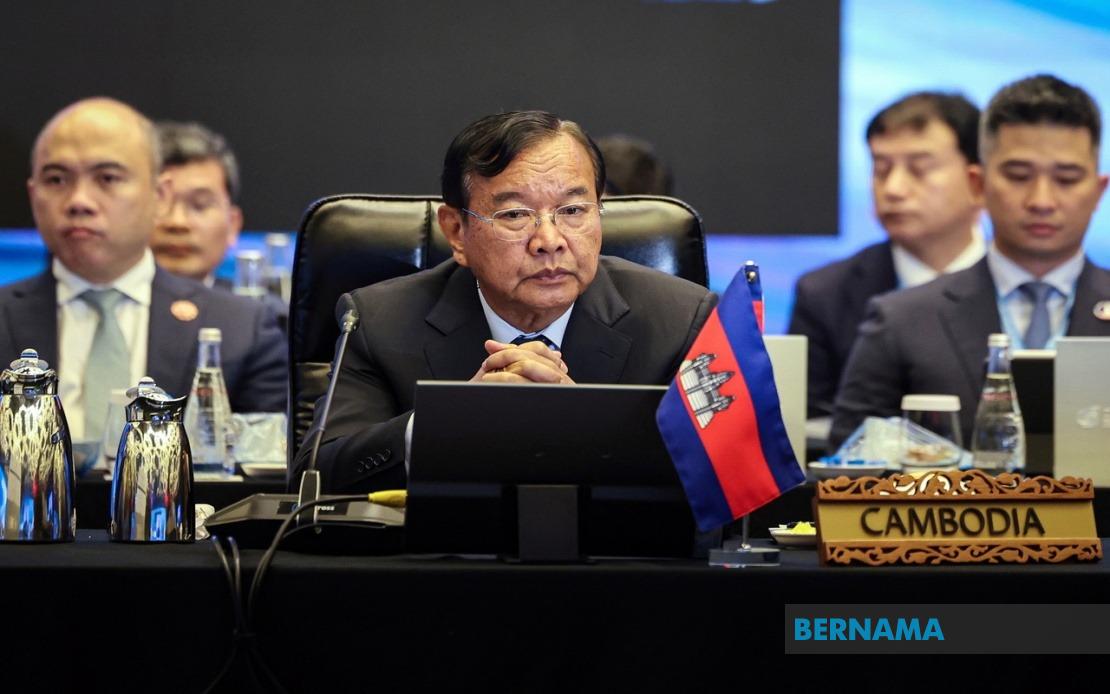
Cambodian Foreign Minister and Deputy Prime Minister Prak Sokhonn has underscored the irreplaceable importance of ASEAN as Southeast Asia's cornerstone institution, arguing that the regional grouping must take proactive steps to address mounting global uncertainties. Speaking on the occasion of ASEAN's 59th anniversary, Sokhonn emphasized that the organization's founding principles, enshrined in its Charter and the Treaty of Amity and Cooperation, remain as relevant today as when the bloc was established nearly six decades ago.
The transformation of Southeast Asia stands as one of ASEAN's most significant achievements. Where the region once grappled with division, conflict, and profound uncertainty in the post-colonial era, the organization has fostered an environment increasingly characterized by dialogue, multilateral engagement, and mutual economic benefit. This trajectory represents a remarkable shift from the fractious geopolitical landscape of the 1960s, when newly independent nations struggled to define their roles in a Cold War-divided world. For Malaysian readers, this history is particularly resonant, as Malaysia has been instrumental in shaping ASEAN's consensus-driven approach and its commitment to non-interference in members' internal affairs.
Yet Sokhonn's remarks carry an implicit acknowledgment that contemporary challenges differ significantly from those of previous decades. The international environment has grown markedly more volatile, characterized by renewed military conflicts, escalating great-power competition, and mounting pressures on the rules-based international order that has underpinned global stability since 1945. The resurgence of armed conflict in various parts of the world, coupled with intensifying geopolitical rivalries between major powers, has created a climate of uncertainty that directly affects Southeast Asian nations' strategic calculations and security interests.
The Cambodian minister's assertion that ASEAN "cannot afford to be passive" reflects a growing conviction among Southeast Asian leaders that the region must position itself as an active participant in shaping its own destiny. Rather than adopting a purely reactive posture toward developments emanating from outside the region, ASEAN must leverage its collective economic weight, geographic significance, and diplomatic influence to advance its interests and values. This perspective suggests that passive adaptation to external pressures no longer suffices in an era where decisions made in distant capitals can have profound ramifications for Southeast Asian economies, security, and development prospects.
Sokhonn's emphasis on ASEAN's "unity and centrality" addresses a recurrent theme in contemporary regional discourse. The principle of centrality—the notion that ASEAN should remain at the heart of regional architecture and dialogue mechanisms—has become increasingly contested as external powers seek to establish bilateral relationships and alternative forums that potentially circumvent ASEAN's coordinating role. Maintaining this centrality requires constant reinforcement, particularly as individual member states face pressure from major powers to align with competing strategic visions and economic systems.
Cambodia's own journey within ASEAN since joining in 1999 provides instructive context. The Kingdom entered the bloc following years of conflict and international isolation, and membership represented both a return to regional engagement and a commitment to the ASEAN Way of consensus-building and non-confrontation. Sokhonn's reiteration of Cambodia's pride in its contributions underscores how smaller or less militarily powerful nations derive substantial benefits from ASEAN membership, which grants them platforms for voice and agency they might otherwise lack in dealings with larger regional and global powers.
The Cambodian minister's repeated invocation of the ASEAN Charter and the Treaty of Amity and Cooperation warrants careful consideration. These instruments establish binding commitments to peaceful settlement of disputes, respect for sovereignty, and non-interference in internal affairs. In an era when some regional powers have periodically challenged these principles through assertive territorial claims or military posturing, reaffirming adherence to these foundational documents serves as a stabilizing reminder of ASEAN's original peace-centered mission.
For Malaysia and other ASEAN members, Sokhonn's call for the bloc to shape rather than merely respond to change carries particular resonance. Malaysian policymakers have long advocated for a strategic ASEAN that leverages its combined demographic and economic resources to advance multilateralism and assert influence in global forums. The rise of China and India, the technological transformation of the global economy, and climate change are all challenges that require coordinated ASEAN responses rather than fragmented national approaches that could leave individual members vulnerable to external pressure.
The composition of ASEAN itself—now including Timor-Leste alongside the ten founding or early members—reflects the bloc's evolution and expanding geographic scope. With a combined population exceeding 660 million people and substantial natural resource endowments, ASEAN possesses considerable potential leverage in international negotiations. Whether the organization can translate this potential into coordinated action remains an ongoing challenge, particularly when member states maintain divergent relationships with major powers and hold competing economic interests.
Sokhonn's remarks also implicitly acknowledge that geopolitical pressures are testing ASEAN unity in novel ways. From Myanmar's internal crisis to competing maritime claims in the South China Sea, from trade negotiations with major powers to technological competition between systems, ASEAN members face constant pressure to prioritize bilateral interests over collective solidarity. The delicate balance between respecting national sovereignty and maintaining unified positions on regional issues remains the organization's perennial tension.
Moving forward, the challenge for ASEAN will be translating aspirations for active leadership into concrete policy coordination. This requires mechanisms for rapid consensus-building, enhanced implementation capacity, and genuine political will to prioritize regional interests over narrower national considerations. It also demands that ASEAN develop clearer frameworks for addressing internal crises and external challenges that affect multiple members simultaneously.
The broader significance of Sokhonn's message extends beyond ceremonial rhetoric around ASEAN's anniversary. It reflects recognition among regional leaders that Southeast Asia's future prosperity and security depend fundamentally on maintaining an inclusive, multilateral framework capable of accommodating diverse interests while advancing common objectives. In a world increasingly characterized by competitive blocs and power politics, ASEAN's commitment to dialogue and cooperation represents a distinctive contribution to international relations—one worth preserving and strengthening.

