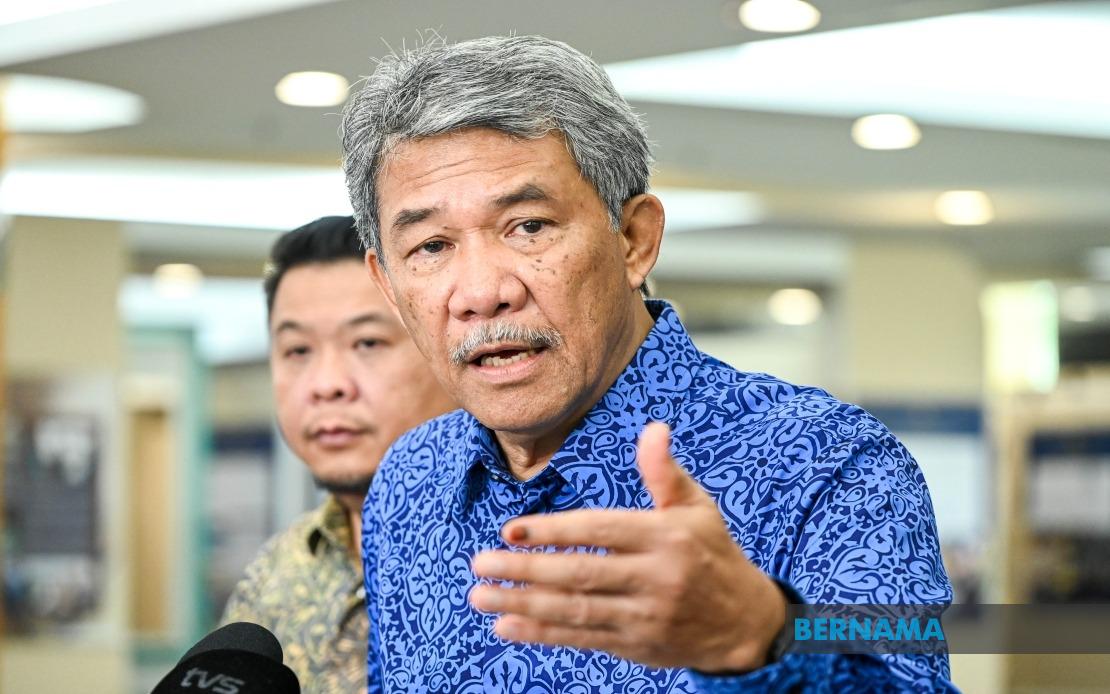
ASEAN's ambition to become the world's fourth-largest economy by 2030 hinges on a crucial gap: internal trade among member states currently represents less than 25 per cent of the region's overall commerce. Foreign Minister Datuk Seri Mohamad Hasan highlighted this shortfall during the 59th ASEAN Day celebration in Putrajaya on Monday, signalling that the regional bloc must prioritise economic integration over political considerations if it wishes to fulfil its economic destiny.
Mohamad's remarks reflect a strategic pivot within ASEAN's priorities. The regional organisation, once primarily defined by its diplomatic framework and political consensus-building, now positions itself as an emerging economic powerhouse capable of competing with the world's largest trading blocs. This reorientation is not merely symbolic; it represents a fundamental recognition that ASEAN's 650 million people and combined GDP offer substantial untapped potential. By drawing attention to the disparity between current intra-ASEAN trade levels and what the region could achieve, Mohamad underscores the urgency of closing this economic gap.
The 25 per cent threshold carries particular significance for ASEAN's development trajectory. Mature, integrated trading blocs typically feature far higher levels of internal commerce. The European Union, for instance, sees member states conducting roughly 60 per cent of their external trade within the bloc. ASEAN's comparatively low figure suggests considerable room for expansion and points to systemic inefficiencies or trade barriers that continue to fragment the region despite decades of cooperation through the ASEAN Free Trade Area framework.
To address this challenge, ASEAN has already established institutional mechanisms designed to facilitate movement of goods among member nations. These frameworks represent the foundation upon which deeper economic integration rests. However, structural obstacles persist: divergent regulatory standards, infrastructure gaps, and varying levels of economic development across member states create friction that mechanistic trade agreements alone cannot eliminate. The free movement of goods, while theoretically permissive, encounters practical barriers that require sustained attention and investment.
Malaysia's recent ASEAN chairmanship planted seeds that continue to bear fruit under the Philippines' stewardship this year. During its tenure, Malaysia introduced initiatives and resolutions intended to consolidate the region's economic agenda, establishing baselines from which subsequent chairs could build. The Kuala Lumpur Declaration emerged from this period as a foundational document capturing the collective will of member states to advance regional integration. The Philippines, now leading the bloc, inherits both these frameworks and the responsibility to translate them into measurable progress on trade expansion.
Malaysia's appointment as Permanent Shepherd or Permanent Auditor of the ASEAN Community 2045 vision positions the country in a custodial role over the bloc's long-term economic aspirations. This responsibility extends beyond ceremonial functions; it entails ensuring that foundational initiatives—particularly intra-regional trade—receive sustained momentum across successive chairmanships. The permanence of this role acknowledges that economic integration cannot rely solely on annual chairs with rotating priorities but requires institutional continuity and oversight.
The projection that ASEAN will become the fourth-largest economy by 2030 rests on assumptions about growth rates, foreign investment inflows, and increasing consumption within the region. However, this projection assumes that member states will successfully reduce trade friction and leverage each other's complementary strengths. A region where internal trade remains fragmented at 25 per cent faces headwinds in achieving projected growth rates. Conversely, increased intra-ASEAN commerce could accelerate development across all member economies, as supply chains deepen and specialisation increases.
For Malaysian readers and policymakers, the implications are particularly acute. Malaysia sits at the geographic and economic centre of ASEAN, with sophisticated manufacturing and financial services capabilities. Increased intra-ASEAN trade would likely benefit Malaysian enterprises seeking regional market expansion and would reinforce Malaysia's role as a regional economic hub. Current trade patterns often see ASEAN nations trading more with China, Japan, and India than with each other, a dynamic that diminishes the region's collective bargaining power and leaves individual economies vulnerable to external pressures.
The challenge ahead extends beyond mere tariff reduction or bureaucratic streamlining. Truly elevating intra-ASEAN trade requires addressing fundamental infrastructure deficits, particularly in transport and logistics connectivity. Cross-border digital commerce frameworks must be harmonised to enable seamless transactions. Technical standards must converge sufficiently to facilitate product movement without excessive compliance burdens. These deeper integrations demand coordinated policy action that transcends the scope of trade agreements alone.
Moreover, ASEAN's economic agenda must account for disparities in development levels among members. Cambodia, Laos, and Myanmar face different capacities than Singapore, Thailand, or Malaysia. Fair mechanisms that allow less-developed members to participate meaningfully in expanded trade while protecting their nascent industries require careful calibration. Without addressing these asymmetries, increased openness risks concentrating gains in already-advanced economies, potentially widening intra-ASEAN disparities rather than narrowing them.
The timeframe matters considerably. 2030 represents only six years distant—insufficient time for major infrastructure projects to come to completion or for deeply rooted structural barriers to dissolve entirely. This compression suggests that initial progress must focus on quick wins: regulatory harmonisation in priority sectors, expansion of existing preferential trade arrangements, and pilot projects demonstrating tangible benefits to sceptical stakeholders. Success requires political commitment sustained across multiple leadership transitions, a demanding prerequisite in a bloc characterised by rotating chairs and divergent national interests.
Moving forward, ASEAN's member states must recognise that achieving fourth-largest economy status demands more than optimistic projections and institutional declarations. Concrete mechanisms for dispute resolution, transparent investment frameworks, and demonstrated commitment to preferencing regional partners over external alternatives will determine whether intra-ASEAN trade rises from its current plateau. The Foreign Minister's emphasis on this critical metric signals awareness among policymakers, but translating awareness into sustained action remains the genuine test ahead.

