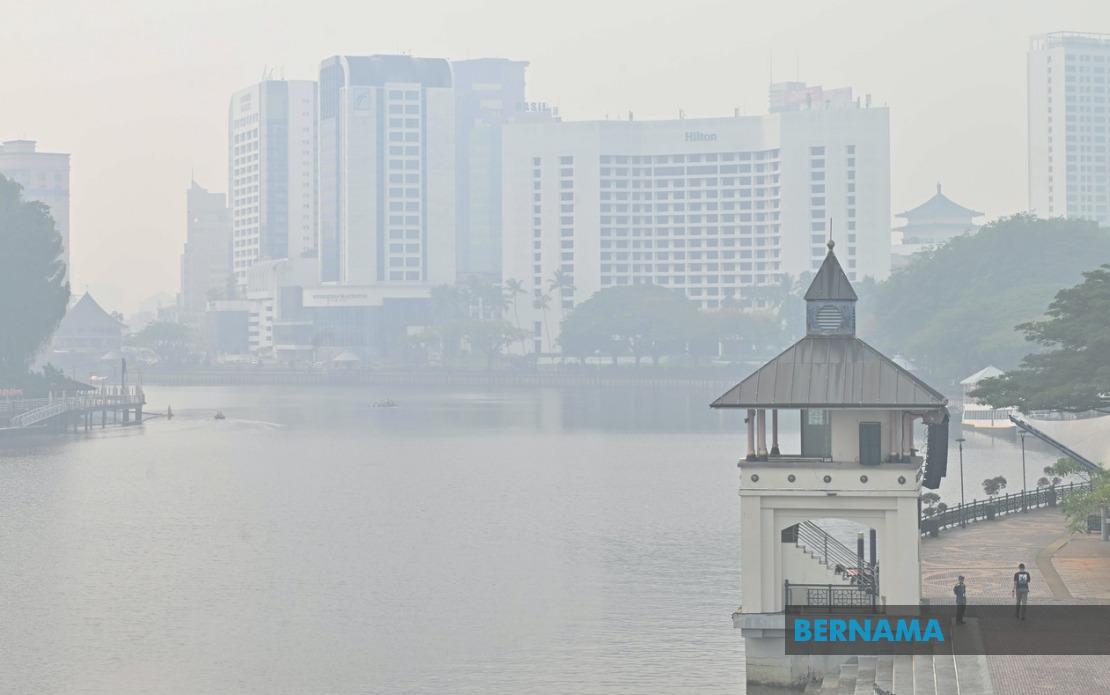
The decades-old ASEAN Agreement on Transboundary Haze Pollution requires a fundamental overhaul to become genuinely effective in protecting Southeast Asia's populations, according to prominent social activist Tan Sri Lee Lam Thye. Speaking in Kuala Lumpur, Lee emphasised that ASEAN leadership must undertake an urgent, high-level reassessment of the accord, originally signed in the capital on June 10, 2002, and establish a considerably more robust and time-sensitive regional framework capable of real enforcement. Despite more than two decades of the agreement's existence following its 2003 entry into force, the region continues to experience recurring fire crises, persistent transboundary smoke pollution, and deteriorating air quality that threatens public health across multiple countries.
Lee's intervention reflects growing frustration that the haze problem—far from diminishing—persists as an almost predictable seasonal occurrence affecting hundreds of millions of people throughout Southeast Asia. His statement reframes transboundary haze not as a meteorological inconvenience to be passively endured, but as a multifaceted governance, environmental stewardship, and public health emergency requiring sustained regional coordination. He stressed that after more than two decades of nominal cooperation, ASEAN must transition from issuing diplomatic platitudes to demonstrating concrete commitment to regional welfare. The activist's position carries particular weight in Malaysia, where recurring haze episodes have repeatedly disrupted economic activity, strained healthcare systems, and prompted emergency measures affecting schools and businesses.
Meteorological forecasts suggest the immediate outlook remains troubling. The ASEAN Specialised Meteorological Centre has flagged concerning risk factors, including strengthening El Niño conditions, below-normal rainfall patterns anticipated across parts of southern ASEAN, and prevailing wind patterns that could concentrate smoke and hotspots across vulnerable populations. Yet Lee cautioned against attributing the recurring crisis exclusively to natural climate oscillations. Whilst El Niño represents a genuine atmospheric phenomenon beyond human control, he argued, such cyclical weather patterns become genuinely catastrophic only when coupled with extensive human-driven landscape degradation. Large-scale deforestation, agricultural land conversion involving open burning, and inadequately regulated industrial clearing operations transform naturally drier periods into full-fledged regional emergencies.
To address these structural failures, Lee articulated a comprehensive reform agenda targeting the current agreement's enforcement weaknesses. He advocated for substantial strengthening and systematic review of how the pact operates in practice, including the establishment of quantifiable benchmarks for fire prevention and demonstrable reductions in hotspot frequency. Equally critical would be the elimination of persistent transboundary pollution sources through binding national commitments. Responsibility and accountability represent another cornerstone of Lee's proposed framework. Current arrangements lack adequate mechanisms for holding companies or individuals engaged in open burning and illegal land clearing answerable for their actions. He called for the creation of investigation procedures, evidence-sharing protocols, and enforcement authority capable of imposing consequences when fires deliberately or negligently cause cross-border environmental and health damage.
Lee's vision encompasses the establishment of a permanent, institutionalised haze response apparatus replacing the current ad-hoc crisis management approach. This mechanism would integrate real-time satellite monitoring infrastructure, enabling rapid dissemination of hotspot information across the region. Countries would maintain jointly-developed firefighting capabilities deployable during emergencies and possess clearly delineated responsibilities during severe pollution episodes. Such an institutionalised response would transform ASEAN's capacity to move from reactive firefighting—often occurring only after haze becomes dangerously thick—to preventative intervention at earlier stages when fires remain more manageable.
Prevention mechanisms deserve equal emphasis within Lee's proposed overhaul. ASEAN should establish joint early-warning systems activated well ahead of anticipated dry seasons, enabling coordinated preparation and resource positioning. Enhanced cooperation on peatland stewardship and forest management represents another priority, given that peatland fires—though affecting smaller areas than other vegetation types—produce disproportionately dense smoke and burn for extended periods. Transparency in information-sharing about hotspot locations, identified fire sources, and enforcement actions taken would strengthen mutual trust and enable more targeted regional response. Malaysia and other substantially affected nations, Lee argued, possess not merely the right but the responsibility to elevate haze discussions to the highest ASEAN political forums, ensuring the issue receives sustained attention from national leaderships.
Lee's framing of the diplomatic approach is strategically important for regional sensitivities. He carefully positioned advocacy for stronger regional action not as interference in national sovereignty or as blame-directed toward particular countries, but rather as a collective acknowledgment that transboundary environmental crises transcend borders and require common solutions. This diplomatic language proves essential in ASEAN contexts, where members frequently resist external pressure perceived as challenging national autonomy. By emphasising that enhanced regional cooperation serves universal Southeast Asian interests—protecting the health, economic productivity, and environmental security of all member populations—Lee constructed a framework in which stronger enforcement mechanisms become mutual self-interest rather than external imposition.
The current agreement's inadequacies have become increasingly apparent as climate patterns shift and agricultural expansion continues accelerating across parts of the region. Indonesia, whilst not singled out in Lee's statement, remains the primary source of transboundary smoke reaching Malaysia and Singapore during fire seasons, though fires occur across multiple ASEAN territories. The economic costs extend far beyond direct health expenses, encompassing lost tourism revenue, agricultural disruptions, reduced worker productivity, and substantial expenses for air quality mitigation measures. Singapore and Malaysia have invested heavily in air purification infrastructure and health responses that essentially represent compensatory expenditure necessitated by inadequate regional fire management upstream.
Lee's activism reflects a broader Southeast Asian civil society movement demanding that governments confront environmental challenges with the seriousness and resources they typically reserve for security or economic development concerns. The recurring haze crises have mobilised public opinion across multiple countries, with citizens increasingly questioning why their governments accept seasonal air quality emergencies that would provoke decisive action in developed economies. This popular pressure, channelled through figures like Lee with substantial credibility and public platforms, creates political space for governments to pursue more assertive regional environmental diplomacy without appearing to challenge each other's sovereignty.
The substantive question remains whether ASEAN political leadership possesses sufficient collective will to fundamentally revise an agreement that, despite acknowledged failures, has at least created a diplomatic framework and established the principle of regional responsibility for transboundary pollution. Revising the pact would require consensus among all member states and potentially demand domestic legal changes creating liability for companies engaged in open burning. Some ASEAN members have economic interests connected to activities driving deforestation and agricultural expansion. Yet the accumulating evidence suggests that maintaining the status quo imposes escalating costs on the region's populations, potentially creating political pressure sufficient to overcome institutional inertia and national reluctance to accept stronger external accountability for land-use practices.

