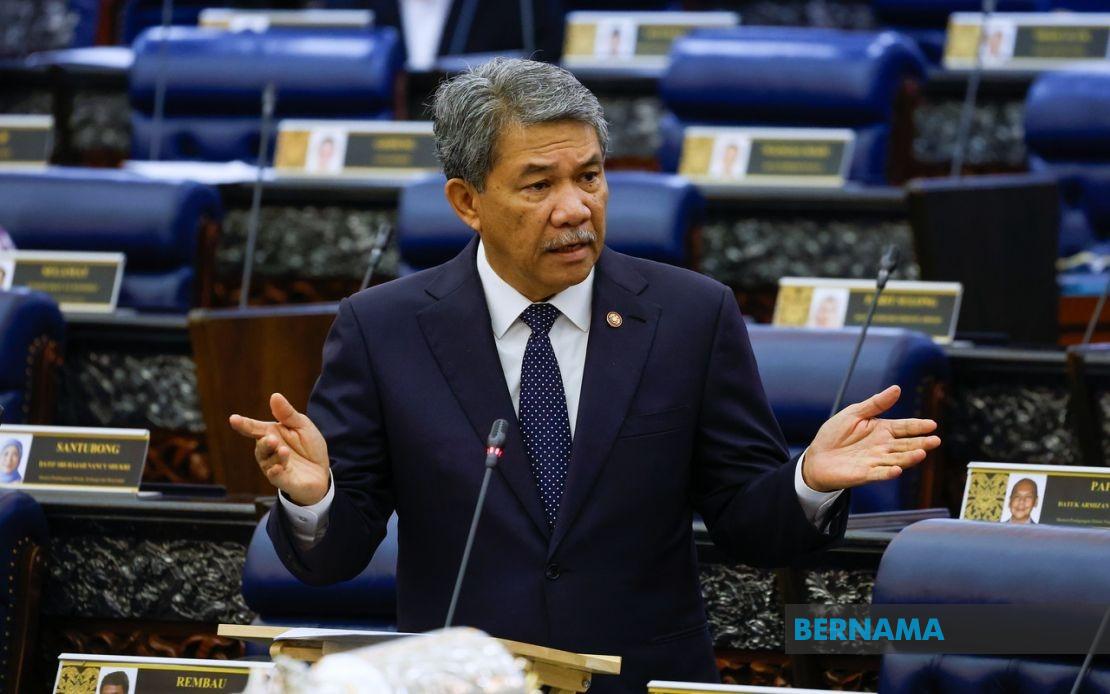
The Association of Southeast Asian Nations is charting a revised course in its approach to Myanmar's protracted political crisis, moving beyond the initial Five-Point Consensus framework toward more collaborative engagement with the military-led government. Foreign Minister Datuk Seri Mohamad Hasan disclosed that regional policymakers recognise the need for adapted tactics, even as they maintain the foundational 5PC as the central pillar of peace diplomacy. This acknowledgment of tactical evolution underscores growing recognition within ASEAN capitals that Myanmar's complex conflict—involving multiple armed actors, ethnic militias, and competing political structures—demands more nuanced and flexible multilateral coordination than the original consensus model permitted.
At the 48th ASEAN Summit convened in Cebu, Philippines in early May, member-state leaders tasked their foreign ministers with conducting informal bilateral consultations with Myanmar's government to evaluate the current situation and chart a pathway forward. This shift toward foreign-minister-level dialogue represents a deliberate recalibration designed to facilitate candid discussions about implementation challenges without the formality and political sensitivities that attach to summit-level negotiations. The decision reflects mounting frustration that Myanmar has consistently fallen short of the commitments enshrined in the 5PC since its adoption in April 2021, a gap that threatens ASEAN's credibility as a meaningful mediator in regional conflicts.
The Five-Point Consensus itself remains non-negotiable for ASEAN, Mohamad emphasised, though the organisation recognises that the framework's application requires continuous adaptation. The original five elements—immediate cessation of violence, constructive dialogue, humanitarian assistance, adoption of a special envoy, and regional coordination—have proven difficult to operationalise given Myanmar's fractionalised political landscape and the military council's reluctance to engage meaningfully with democratic opposition forces. Any substantive modifications to the framework must receive the formal imprimatur of ASEAN heads of state, a procedural safeguard that preserves the organisation's collective authority while permitting incremental refinement of implementation strategies.
Malaysia's own diplomatic initiative has focused on extending Myanmar's six-month ceasefire arrangement, which was set to expire at the end of July. By proposing an extended second phase of ceasefire arrangements, Kuala Lumpur aims to create a longer-term stabilisation window during which more comprehensive peace negotiations might take root. This temporal extension strategy acknowledges that Myanmar's competing power centres—the State Administration Council, the parallel National Unity Government, the People's Defence Force resistance movement, and numerous ethnic armed organisations—require extended periods of reduced violence to build sufficient trust for substantive dialogue. Without such breathing space, the cycle of tit-for-tat violence and entrenchment of positions perpetuates.
The Foreign Minister has further stressed Malaysia's insistence that Myanmar provide a transparent, detailed roadmap delineating how the peace process will proceed beyond temporary ceasefire arrangements. This demand for clarity reflects a broader ASEAN frustration with ambiguity surrounding Myanmar's political intentions and timeline for addressing the underlying governance crisis that triggered the February 2021 coup. A credible roadmap would ideally specify mechanisms for inclusive dialogue encompassing all significant stakeholders—military, democratic opposition, ethnic minorities, and civil society—thereby addressing perceptions that the current government prioritises military interests above national reconciliation.
Underlying ASEAN's determination to keep Myanmar within the regional fold is a geopolitical imperative rooted in mutual strategic vulnerability. Senior officials worry that prolonged marginalisation of Myanmar could create a power vacuum that external actors—particularly China, India, or other major powers—might exploit to advance competing interests. Such external encroachment would fundamentally alter the regional balance and potentially transform Myanmar's internal conflict into a proxy arena for great-power competition. This concern carries particular weight for Malaysia and other Southeast Asian nations that have invested diplomatic capital in maintaining ASEAN centrality within the region's security architecture.
Malaysia's commitment to multi-stakeholder engagement demonstrates the diplomatic complexity that defines contemporary ASEAN crisis management. Rather than working exclusively with any single faction, Kuala Lumpur maintains channels with the Myanmar military government, the exile-based National Unity Government claiming democratic legitimacy, the People's Defence Force insurgency, and various ethnic armed organisations. This omnidirectional outreach creates space for shuttle diplomacy and backchannelisation, though it also requires careful balancing to avoid accusations of legitimising the junta or abandoning democratic principles. The approach reflects pragmatic recognition that durable peace typically requires negotiating with all significant power-holders, however unsavoury some may be.
The challenge confronting ASEAN extends beyond Myanmar itself, as the organisation's inability to decisively influence outcomes there raises questions about its relevance and collective authority. ASEAN operates through consensus decision-making and non-interference in member states' internal affairs—principles that provide sovereignty protections but constrain enforcement mechanisms. When a member state repeatedly disregards consensus positions, as Myanmar has done, the organisation faces a credibility deficit that reverberates across all its initiatives. Yet deploying stronger pressure risks fragmenting ASEAN itself, as some members prioritise engagement over pressure and others advocate tougher stances based on democratic principles.
The timeframe extending toward late July acquired new significance as Myanmar's original ceasefire approached expiration. Should the government refuse to extend the arrangement or resume large-scale military operations, ASEAN's diplomatic efforts would face renewed pressure and reduced flexibility. Conversely, a successful extension, even if imperfect, would represent a tangible diplomatic achievement that preserves space for continued negotiation. Malaysian efforts to negotiate this extension thus carry outsized importance for the broader credibility of ASEAN's Myanmar strategy.
Looking forward, the calibrated approach outlined by Mohamad suggests ASEAN recognises that transforming Myanmar's political trajectory will require patience, flexibility, and sustained engagement rather than ultimatums or coercive measures. The shift toward foreign-minister-level consultations and explicit acknowledgment that implementation strategies may require modification represent modest but meaningful evolutions in the organisation's approach. Whether these adjustments prove sufficient to unlock genuine progress toward Myanmar's political transition remains uncertain, but they reflect ASEAN's determination to remain a central rather than peripheral actor in resolving one of contemporary Southeast Asia's most destabilising conflicts.

