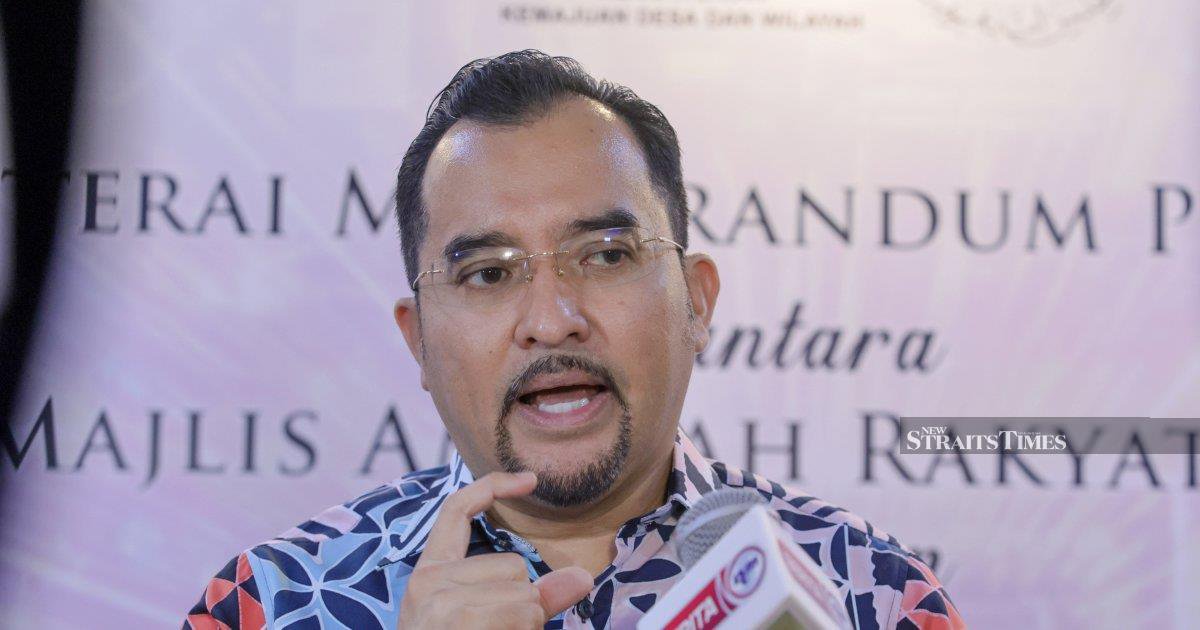
Kuala Lumpur — In a forceful statement addressing mounting scrutiny over the Islamic pilgrimage fund's dealings, Umno secretary-general Datuk Dr Asyraf Wajdi Dusuki has emphatically rejected suggestions that he played any role in facilitating or approving transactions conducted by Tabung Haji, particularly the Al-Rawda property arrangement that has drawn public attention and regulatory interest. The denial comes as the fund continues to face persistent questions about governance, oversight mechanisms, and the decision-making processes that governed major asset acquisitions and financial commitments during a period when Asyraf held the position of deputy minister in the Prime Minister's Department.
Ashyraf's assertion centres on a fundamental point about institutional hierarchy and ministerial responsibility. He contends that the operational management of Tabung Haji, and specifically the authority to approve significant transactions or investments, fell exclusively within the purview of the fund's own administrative structures and governance board. As deputy minister, his role encompassed broader coordination responsibilities within the Prime Minister's Department rather than direct involvement in the day-to-day investment decisions or asset management strategies pursued by Tabung Haji. This distinction between ministerial oversight and operational control remains critical in understanding how Malaysian government-linked Islamic financial institutions maintain their independence while remaining accountable to relevant authorities.
The Al-Rawda transaction in question has emerged as a focal point in ongoing discussions about Tabung Haji's financial stewardship and investment philosophy. The deal, which involved substantial capital allocation toward this particular property venture, prompted wider examination of how the fund deploys pilgrim contributions and pension assets. For Malaysian hajj participants, who collectively entrust Tabung Haji with their savings designated for the Islamic pilgrimage, questions about transaction governance carry significant personal resonance. These contributions represent decades of accumulated savings for many Malaysian families, making transparency and proper oversight matters of profound importance to the fund's beneficiaries.
The controversy reflects broader concerns about accountability mechanisms within Malaysia's Islamic financial ecosystem. Tabung Haji operates as a unique institution, managing resources that are both public assets and personal savings accounts. This dual character creates distinct obligations to maintain rigorous internal controls, transparent decision-making processes, and comprehensive documentation of all major transactions. When significant deals proceed without clear public understanding of the approval chain or rationale, legitimate questions arise about whether existing governance frameworks adequately protect the interests of pilgrim-depositors.
Ashyraf's denial also situates itself within the context of intensified scrutiny of political figures' connections to major financial institutions and government-linked companies. The Malaysian public and opposition politicians have increasingly demanded clearer delineation between ministerial functions and institutional autonomy, particularly when substantial sums are involved. By distancing himself from the Al-Rawda transaction and asserting the independence of Tabung Haji's decision-making apparatus, Asyraf appears to be reestablishing clear boundaries around his former ministerial portfolio and its legitimate scope of influence.
The broader implications for Malaysian governance extend beyond any single transaction. Trust in Islamic financial institutions and government-linked investment vehicles depends substantially on public confidence that decisions are made on merit, with proper documentation and transparent processes. When allegations or insinuations of political interference emerge, they inevitably undermine confidence among both current and prospective participants. For Malaysian Muslims considering whether to participate in Tabung Haji's savings schemes or other Islamic financial products, perceptions of governance quality directly influence their willingness to engage.
Examinations of Tabung Haji's Al-Rawda deal have also raised questions about the fund's investment strategy and risk management philosophy. The pilgrimage fund traditionally positioned itself as a conservative steward of hajj savings, prioritizing capital preservation alongside modest returns. Major property investments represent a departure from this conservative approach, warranting clear articulation of how such decisions serve pilgrim-depositors' long-term interests. Whether specific individuals within government sought to influence such strategies for reasons unrelated to fund performance remains an open question that proper institutional transparency could definitively answer.
The deputy minister role that Asyraf occupied carries specific responsibilities within Malaysia's bureaucratic framework. The Prime Minister's Department oversees multiple agencies and coordinates policy implementation across government. Within this context, a deputy minister's involvement in supervising specific agencies typically involves monitoring performance and ensuring alignment with government priorities, rather than making granular operational decisions. If this characterization accurately reflects how Asyraf's role functioned, then his disengagement from Tabung Haji's transaction approval represents the proper separation of ministerial oversight from institutional autonomy.
Moving forward, Tabung Haji's leadership faces mounting pressure to provide comprehensive documentation and clear explanations for major transactions that attracted public scrutiny. Whether through parliamentary questioning, media investigations, or formal regulatory examination, the fund's decision-making processes will likely face continued review. This increased transparency, while potentially uncomfortable in the short term, ultimately strengthens institutional credibility and protects the fund's ability to attract and retain the pilgrim savings that remain central to its mission and financial sustainability.

