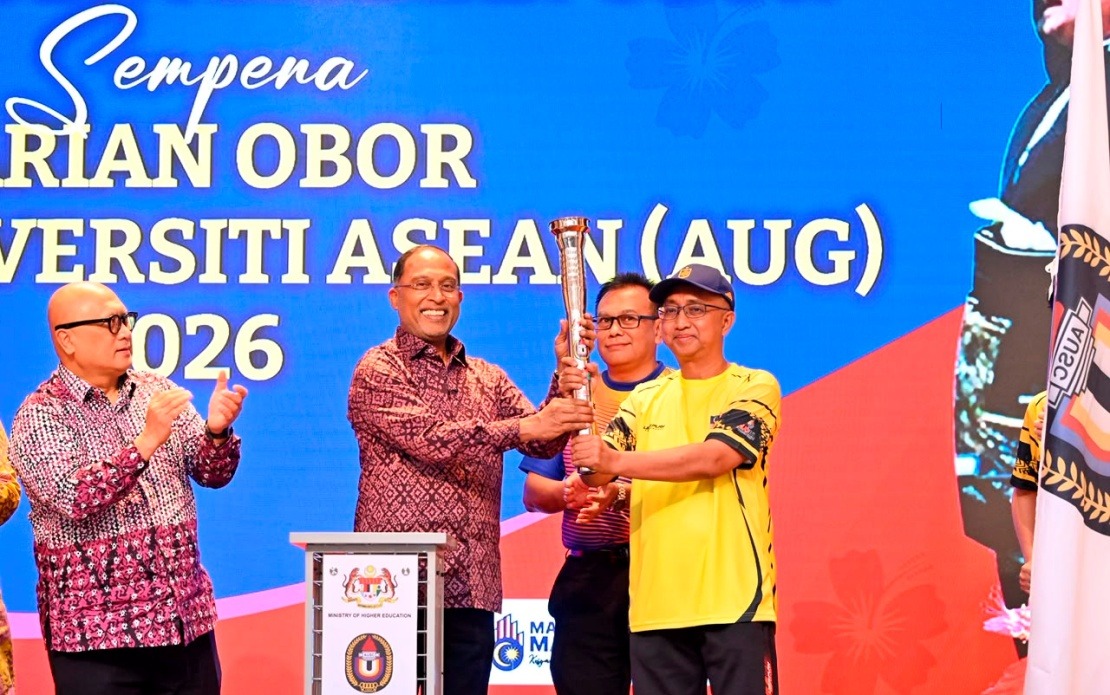
The ASEAN University Games (AUG) 2026 torch ceremony commenced at the Ministry of Higher Education headquarters in Putrajaya on Wednesday, marking an official countdown to one of Southeast Asia's premier collegiate sporting competitions. Higher Education Minister Datuk Seri Dr Zambry Abd Kadir formally presented the torch to Prof Dr Mohammad Ismail, the Malaysian contingent chief and Universiti Malaysia Kelantan Deputy Vice-Chancellor for Student and Alumni Affairs, during a gathering aligned with the ministry's monthly assembly. The symbolic handover underscored Malaysia's readiness to host and compete in an event that will define the nation's standing in regional university athletics for years to come.
Dr Zambry's remarks during the ceremony emphasised the dual responsibility facing Malaysia's student-athletes as they prepare for competition on ASEAN's largest university sports stage. He articulated a vision where Malaysia's representatives carry not merely personal ambitions but the collective aspirations of the nation itself. The minister's call for athletes to embody a "spirit of victory" while safeguarding Malaysia's reputation reflects the government's investment in positioning higher education institutions as centres of athletic excellence alongside academic achievement. This framing transforms university sports from peripheral campus activities into matters of national significance and diplomatic soft power.
The torch run itself incorporated four accomplished student-athletes representing different Malaysian institutions, each selected to represent specific sporting disciplines central to the games. Long jumper Andre Anura Anuar and shot putter Nani Sahirah Maryata both study at Universiti Putra Malaysia, signifying the institution's strength in track and field events. Karate competitor Thevendran Kaliana Sundram attends Universiti Pertahanan Nasional Malaysia, highlighting the military academy's contributions to combat sports development. Taekwondo athlete Lee Hui Yee, representing Sultan Salahuddin Abdul Aziz Shah Polytechnic, demonstrates that excellence extends beyond conventional universities into Malaysia's polytechnic network. This deliberate diversity in institution types signals an inclusive approach to athletic development across Malaysia's higher education ecosystem.
The ceremonial torch journey encompasses Malaysia's most prominent academic institutions, underscoring the distributed nature of the country's university sports infrastructure. Beginning at the Ministry of Higher Education grounds in Putrajaya, the flame travels to the Ministry of Tourism, Arts and Culture before completing an initial circuit back to MOHE. Subsequently, the torch will visit Universiti Kebangsaan Malaysia, Universiti Putra Malaysia, Universiti Pertahanan Nasional Malaysia, Universiti Malaya, and Universiti Teknologi MARA, creating a geographical and institutional narrative that connects Malaysia's educational heartland. This routing through major universities transforms the torch run from a ceremonial gesture into a mobilisation effort that energises athletic programmes across the country.
The scale of the AUG 2026 event reflects Malaysia's serious commitment to hosting a world-class competition. Scheduled for December 10 to 19, the games will attract approximately 4,669 total participants, comprising 2,849 athletes and officials originating from eleven ASEAN member countries. This composition ensures genuine regional competition rather than a domestic showcase, positioning Malaysia as a credible host capable of managing international athletic standards. The supporting cast of 700 referees and competition officials and 920 volunteers demonstrates the logistical complexity involved in orchestrating simultaneous competitions across multiple venues while maintaining competitive integrity and athlete welfare.
Nineteen sporting disciplines will feature during the competition, staged across four metropolitan locations including Shah Alam, Kuala Lumpur, Serdang, and Bangi. This geographic dispersal utilises existing university infrastructure and secondary cities, alleviating pressure on central venues while distributing economic benefits across the greater Klang Valley region. The breadth of sports contested—spanning individual, team, and contact disciplines—ensures comprehensive representation of university athletic interests. Such diversity also appeals to broader spectator demographics, potentially elevating public engagement with university sports beyond traditional constituencies.
The official theme "HOLISTIC.EXCELLENCE" encapsulates a philosophy extending beyond mere medal accumulation toward character development and institutional pride. This conceptual framework suggests Malaysian organisers envision the games as opportunities for student-athletes to cultivate well-rounded excellence combining athletic performance with personal growth and regional fellowship. The thematic emphasis resonates with ASEAN's broader aspirations toward human capital development and regional integration through youth engagement. For participating athletes, the games represent platforms to demonstrate that university sports merit serious investment and recognition within Southeast Asian higher education systems.
From Malaysia's perspective, hosting AUG 2026 positions the nation as a sports destination capable of delivering international-standard events while showcasing the quality of Malaysian higher education infrastructure. Successful execution enhances Malaysia's regional standing and demonstrates administrative competence across public institutions. The games provide valuable experience for Malaysian youth competing against regional peers, fostering athletic development pipelines that may eventually supply elite professional and commonwealth athletes. Additionally, the event generates tourism revenue and international media exposure for participating cities.
The torch run ceremony represents more than ceremonial pageantry; it constitutes an official acknowledgment that Malaysia takes its regional athletic responsibilities seriously. By enlisting ministers, prominent athletes, and university leadership in the torch journey, organisers signal institutional commitment extending from government through academia to athletic programmes themselves. This hierarchical engagement creates psychological momentum within Malaysia's university sports community, encouraging enhanced training regimens, recruitment efforts, and facility improvements ahead of December's competition. The visibility accorded to student-athletes through ministerial endorsement elevates their status within university communities, potentially attracting enhanced institutional support for athletic programmes.

