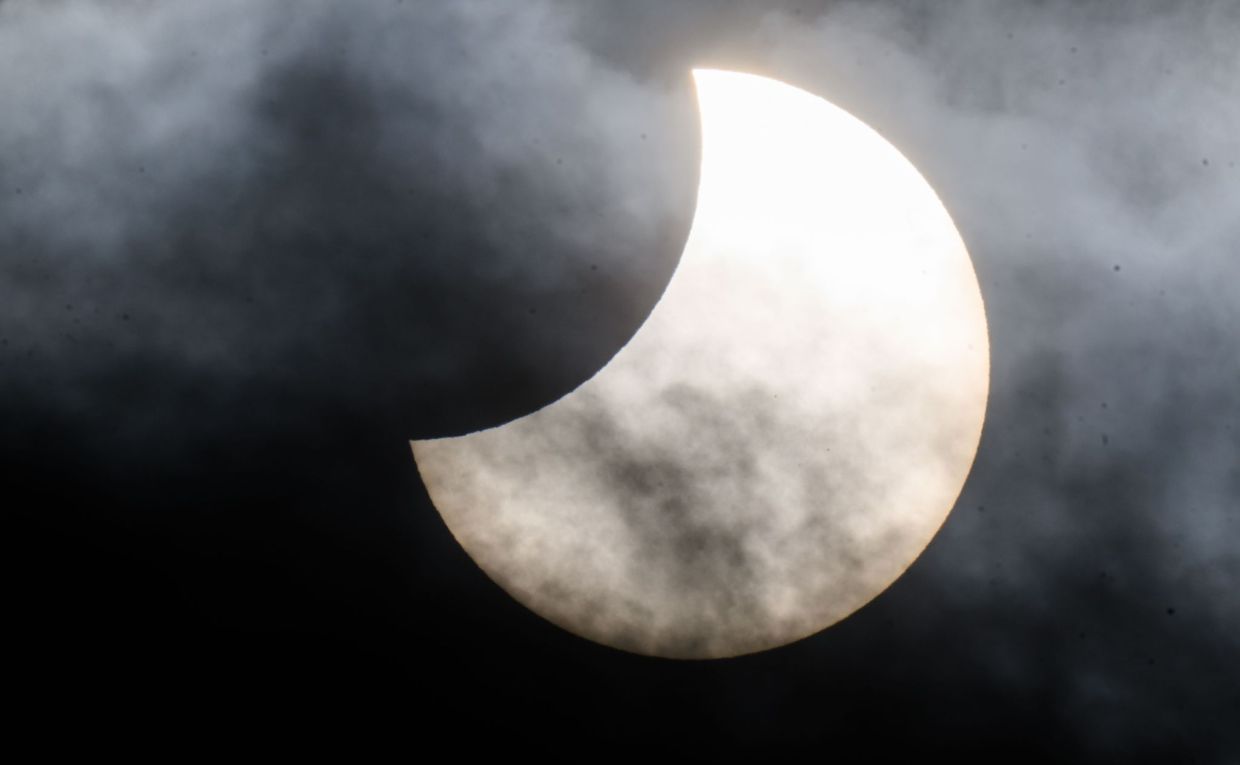
August 2026 offers astronomy enthusiasts a rare opportunity to witness two significant celestial occurrences within weeks, presenting an accessible chance for photography hobbyists across multiple continents to document these natural wonders without investing in expensive telescope equipment. The convergence of these events underscores how contemporary smartphone technology has democratised night sky photography, enabling ordinary people to capture images that once required professional-grade apparatus.
The solar eclipse on August 12 will deliver the most dramatic experience for observers positioned along its path of totality. Eastern Greenland, western Iceland, and portions of Spain including the Balearic Islands will experience the sun's complete obscuration, while the Mediterranean region will witness the phenomenon. The eclipse sequence commences around 5 pm GMT in northern Scandinavia and Greenland, progressively intensifying as it travels southeastward across the continent. The moment of maximum coverage occurs between 6:15 pm and 6:45 pm GMT, when the moon entirely blocks the sun's disk. Residents across Ireland, the United Kingdom, France, Portugal, Italy, Switzerland and Algeria occupy a favourable viewing zone where approximately 90 percent of the solar disk will be concealed, offering a partial eclipse experience that remains visually compelling despite not reaching totality.
The geographical reach of this eclipse's visibility extends well beyond Western Europe. Observers throughout Scandinavia, Eastern Europe extending to Ukraine, and North African regions including Morocco will perceive at least a partial eclipse, demonstrating the event's continental significance. For Southeast Asian observers unable to travel to the eclipse path, live streams from professional observatories will provide alternative viewing opportunities, though capturing original imagery offers greater personal satisfaction and engagement with the phenomenon.
Complementing the solar eclipse, a lunar eclipse will grace the skies on August 28, presenting an entirely different observational experience. This event manifests as a partial lunar eclipse where Earth's umbra—the planet's darkest shadow—covers 94 percent of the moon's visible diameter at its peak, creating an appearance approaching totality for most viewers. The lunar eclipse will be optimally visible from Europe, Africa, North America, and South America, with exceptional viewing conditions concentrated in Latin America and western coastal regions of North America. Unlike the solar eclipse's narrow path of totality, this lunar phenomenon offers visibility across an entire hemisphere, making it accessible to vastly more observers without requiring travel to specific locations.
Smartphone camera technology has undergone revolutionary improvements that enable hobbyists to document these celestial events credibly. Modern devices incorporate sophisticated computational photography algorithms that compensate for low-light conditions and long exposures, eliminating the necessity for bulky external equipment that previously defined astrophotography. Devices from manufacturers including Google and Samsung have integrated dedicated astro modes that automatically optimise settings when the camera detects suitable darkness and celestial subjects. This technological democratisation means that anyone possessing a contemporary smartphone can participate in eclipse documentation at essentially zero additional investment.
Selecting an appropriate observation location represents the foundational element of successful eclipse photography. Escaping urban light pollution significantly enhances both visual observation and photographic results. Digital resources such as the Light Pollution Atlas provide detailed mapping of artificial light levels across regions, displayed through a colour scale indicating sky brightness. Areas marked in darker tones—greens and blues rather than orange and red—indicate minimal light contamination and therefore superior conditions for astronomical observation. For Malaysian and Southeast Asian enthusiasts unable to travel to August's eclipse zones, understanding these principles remains valuable for future celestial events or everyday night sky photography practice.
Device preparation maximises photographic potential before attempting to capture eclipse imagery. Reducing display brightness prevents the smartphone screen from degrading human night vision adaptation, while enabling dark mode in system settings maintains this advantage. Accessing the camera application's night mode or specialised astrophotography features unlocks computational processes that extend exposure times and gather maximum available light. Google Pixel devices automatically engage astro mode when appropriate conditions exist, displaying a countdown indicating the exposure duration—typically four minutes—required for optimal light collection. Samsung Galaxy users can employ the Expert RAW application for analogous functionality. When proprietary astro modes remain unavailable, manually configuring focus to distant settings ensures that celestial bodies register sharply.
Stabilisation equipment proves essential for long-exposure eclipse photography. A smartphone tripod, available at modest cost ranging from RM40 to RM47, provides the steady positioning necessary to prevent image blur during extended exposures. Universal mobile tripods accommodate various handset sizes and adjust to multiple angles, making them versatile investments. For those lacking tripod access, smartphone image stabilisation technology has matured considerably since earlier generations, potentially enabling hand-held captures when extreme steadiness proves difficult to achieve. Alternative approaches include activating the self-timer function, positioning the device on level ground, and relying on the timer delay to eliminate vibration from manual shutter activation.
Photographing the sun specifically demands particular attention to exposure management. Reduce brightness to its absolute minimum by tapping the sun icon within the camera interface, preventing sensor overexposure and protecting device circuitry from thermal damage. This technique permits the solar disk's outline to register clearly against surrounding darkness. Critically, observers must never permit their eyes to contact unprotected sunlight when photographing. Standard sunglasses provide inadequate protection, and dedicated eclipse glasses with proper solar filters remain non-negotiable for direct observation. The smartphone camera, appropriately configured and directed toward the sun, enables documentation while allowing observers to maintain their gaze safely away from the light source itself.
For families introducing children to eclipse phenomena, indirect observation methods eliminate solar radiation hazards entirely. The projection technique involves positioning a small mirror or constructing a pinhole camera to project the sun's image onto a light surface—paper or cloth works effectively—rather than observing directly. This approach demonstrates eclipse mechanics compellingly while maintaining complete ocular safety. Educational institutions and astronomy clubs throughout Malaysia and the region could employ this methodology for group eclipse observation events, making the phenomenon accessible and secure for younger audiences unable to acquire proper solar filters.
The convergence of August's dual eclipses presents an exceptional opportunity for astronomical enthusiasts to engage with celestial mechanics using readily available technology. Smartphone capabilities have progressed to the point where serious astronomical documentation no longer demands prohibitive equipment investments, representing a meaningful shift in scientific democratisation. Whether observing personally, photographing the events, or participating vicariously through shared imagery, these August occurrences invite broad public engagement with astronomy. Malaysian observers, despite geographic distance from the eclipses' prime viewing locations, can engage in real-time international observation communities, contribute to citizen science initiatives, and anticipate future eclipses visible from Southeast Asian latitudes.

