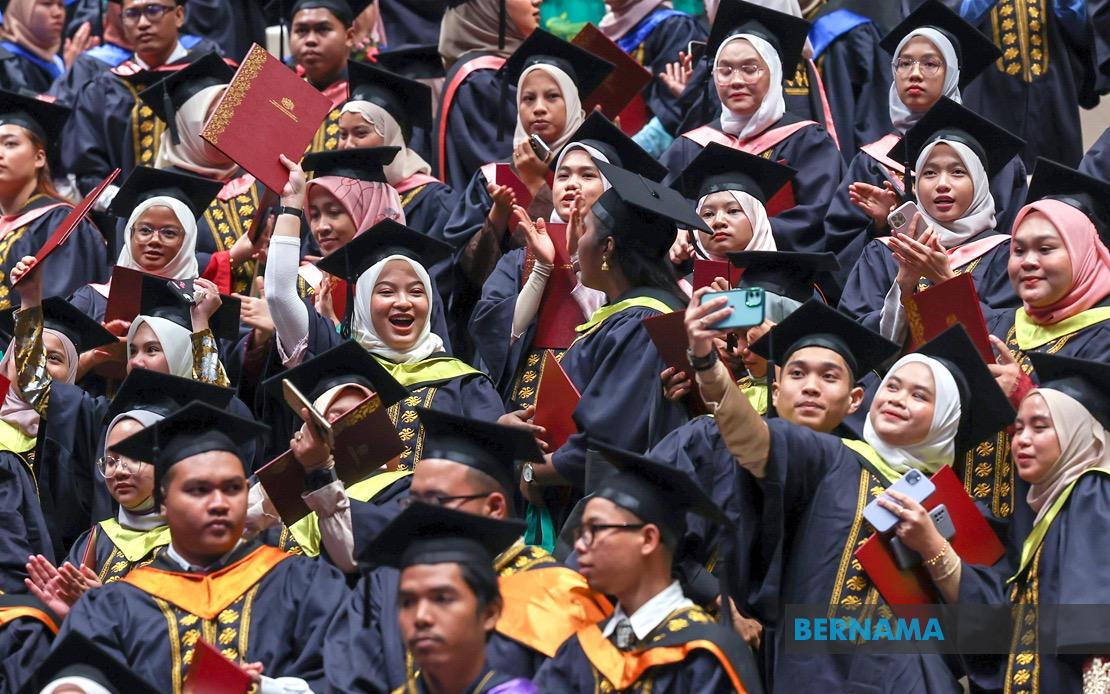
Prime Minister Datuk Seri Anwar Ibrahim's announcement that the government will repeal the Universities and University Colleges Act 1971 (AUKU) marks a significant shift in Malaysia's approach to campus autonomy and student activism. However, scholars and university leaders are emphasizing that this step cannot proceed in isolation. Instead, the authorities must establish a robust institutional mechanism to develop replacement legislation that preserves the integrity of higher education while granting students greater democratic space.
Dr Anuar Ahmad, Deputy Director of the Malaysian Inclusive Development and Advancement Institute (MINDA) at Universiti Kebangsaan Malaysia (UKM), has outlined the scale of the challenge ahead. AUKU operates not merely as a rulebook governing student conduct, but as the foundational statute that grants universities their legal authority to exist, establish governance structures, and exercise administrative powers. Dismantling it without creating an alternative framework risks leaving Malaysia's 20 major universities in a legal vacuum. Dr Anuar has recommended that the Cabinet establish a high-level committee tasked with thoroughly reviewing all existing AUKU provisions before the repeal takes effect. This approach would ensure that legitimate regulatory functions—particularly those safeguarding institutional operations and academic standards—are preserved within new legislation.
The Prime Minister has framed AUKU's abolition as an opportunity to expand academic freedom beyond the student body. Anwar Ibrahim argues that the law has previously deterred faculty members from engaging publicly with policy debates, research findings, and social issues. Under the current restrictions, many academics have adopted a cautious stance toward public commentary, despite possessing valuable expertise grounded in rigorous research and empirical evidence. The government views repealing AUKU as a means to unleash this intellectual capital, allowing scholars to contribute evidence-based perspectives that can inform public discourse and drive national development. In the Prime Minister's conception, a sophisticated society requires exposure to competing ideas, constructive criticism, and diverse viewpoints—provided such discourse remains anchored in factual analysis and scholarly integrity.
Yet security and governance experts are sounding notes of caution about the potential consequences. Dr Noor Nirwandy Mat Noordin, a warfare strategy and security analyst at Universiti Teknologi Mara (UiTM), acknowledges that expanded student expression could foster beneficial democratic development and prepare younger cohorts for future leadership responsibilities. However, he insists that any expansion of campus freedom must remain tethered to Malaysia's constitutional framework and the Rukun Negara. Without such safeguards, Dr Noor Nirwandy warns, the opening of political space could fracture national unity along divisive lines. He emphasizes that student activists and future leaders must understand their rights within the context of Malaysia's founding principles and national identity. The risk, in his assessment, is that unconstrained campus activism could fragment society rather than unify it, particularly if different student factions advance competing visions of nationhood that diverge from constitutional consensus.
Universiti Malaya Vice-Chancellor Datuk Seri Professor Dr Noor Azuan Abu Osman has advocated for a holistic approach to reform that extends beyond student activities alone. Rather than piecemeal adjustments focused on narrowly defined grievances, the university sector requires a comprehensive reexamination of how legislation shapes the entire higher education ecosystem. Such legislation must account for the multifaceted roles that universities play—nurturing individual student development, strengthening communities, and advancing national interests. UM stands ready to engage with the Ministry of Higher Education and other stakeholders in crafting this new framework, the Vice-Chancellor indicated. He has underscored that the ultimate goal must be producing graduates and societies characterized by intellectual maturity, ethical responsibility, and genuine capacity to contribute meaningfully to both institutional and national progress. Only through this comprehensive lens can Malaysia ensure that its universities remain trusted institutions capable of competing globally while serving national needs.
Student perspectives underscore the transformative potential that activists envision. Syaiful Asyraff Kamarudin, a former Universiti Malaya Student Representative Council (MPP) President, has portrayed AUKU's repeal as an opportunity to fundamentally reconceive the university's role. Rather than functioning as mere credential factories churning out graduates, Malaysian campuses could become intellectual spaces where students develop independent reasoning, interrogate dominant narratives, and engage seriously with opposing perspectives. Kamarudin has traced AUKU's legislative evolution, observing a gradual shift from centralized state control toward institutional autonomy and student empowerment. He expresses confidence that the MADANI government possesses a concrete plan to implement this transition, including mechanisms to expand the MPP's voice in university governance and potentially establish formal student government structures. This vision suggests that AUKU's removal could catalyze deeper democratization of campus decision-making.
Current student voices echo this optimism tempered with realism about implementation challenges. Nurul Husna Amanda Syukran, a third-year Financial Economics student at Universiti Sains Malaysia (USM), welcomes the prospect of a more pluralistic campus culture where diverse viewpoints circulate freely. However, she cautions that expanded freedoms must be accompanied by clear policies establishing the boundaries of responsible expression. Without such guardrails, she suggests, campuses risk descending into chaos or seeing freedoms become weaponized by particular factions. Her fellow student Muhammad Irsyad Iman Muhammad Irwan, a second-year Geology undergraduate, emphasizes that broader liberties should enable students to engage in critical thinking about societal challenges and assume more active roles in national conversations. This framing positions student activism not as an end in itself, but as a means to cultivate informed, engaged citizens capable of addressing Malaysia's complex policy questions.
The timeline for implementation remains fluid, with the Prime Minister indicating that the Cabinet will formally consider the AUKU abolition proposal during its next session. This compressed schedule raises questions about whether adequate consultation with higher education institutions and other stakeholders can occur before decisive action. The complexity of legislating an alternative framework suggests that rushing toward repeal without parallel development of replacement statutes could create confusion and regulatory uncertainty across Malaysia's university system. Observers anticipate that the advisory committee, once constituted, will likely require several months to conduct thorough consultations, assess international models of university regulation, and draft comprehensive new legislation addressing everything from student conduct standards to academic freedom protections to institutional governance structures.
The international context provides both inspiration and cautionary tales for Malaysian policymakers. Many developed democracies have moved toward lighter-touch regulation of universities, recognizing that excessive state control stifles innovation and attracts fewer talented scholars and students. Yet completely unregulated campus environments have occasionally generated serious institutional conflicts or behavioral problems that required subsequent corrective legislation. Finding the appropriate balance—sufficient freedom to enable vibrant intellectual communities while maintaining minimal standards for orderly institutional functioning—represents the central challenge. The committee charged with drafting new legislation will need to draw on comparative experience while remaining sensitive to Malaysia's distinct political culture, constitutional framework, and historical circumstances.
For Malaysia's economy and international standing, the implications of this reform extend beyond symbolic politics. A more intellectually open university environment could strengthen the nation's capacity for innovation, research productivity, and human capital development. Universities that trust their students and faculty to engage in serious debate tend to attract talented individuals from within the region and internationally. However, this potential upside will only materialize if the transition is managed carefully. Poorly executed reforms that leave institutions uncertain about their legal standing or proper governance procedures could instead trigger instability, resource flight, and reputational damage. The stakes are therefore quite high for the quality of deliberation and planning that accompanies AUKU's repeal.

