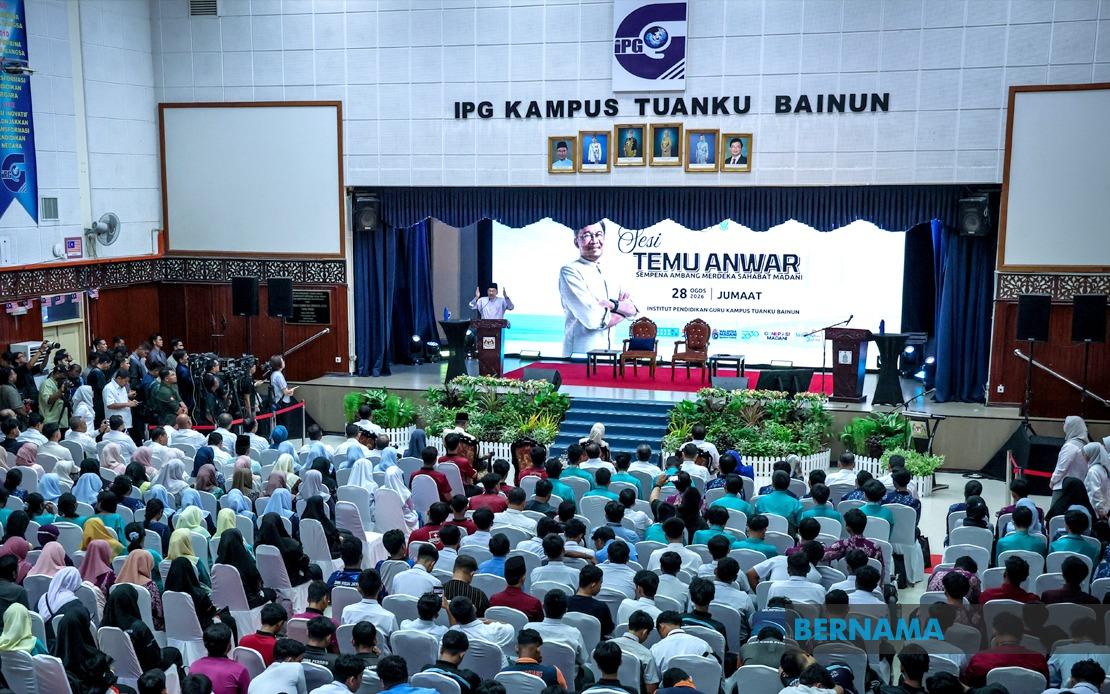
Prime Minister Datuk Seri Anwar Ibrahim has defended the government's decision to fully repeal the Universities and University Colleges Act 1971 (AUKU), characterising the move as essential to unlocking student potential and nurturing a generation capable of independent reasoning. Speaking during a community engagement session in Bukit Mertajam on August 28, Anwar positioned the controversial legislation's removal as a watershed moment for Malaysian higher education, one that fundamentally reshapes the relationship between authorities and the young scholars under their watch.
The AUKU, enacted over five decades ago, has long functioned as a restrictive framework governing student conduct and expression within tertiary institutions across the nation. Under its provisions, students faced significant limitations on their ability to participate in political activities, organise assemblies, or publicly voice dissent—restrictions that Anwar now characterises as outdated and incompatible with contemporary democratic values. His framing of the repeal reflects a broader philosophical stance that young Malaysians, having reached voting age, merit the same civic freedoms afforded to other adult citizens.
Anwar's rationale centres on a compelling demographic argument: students attaining the age of eighteen simultaneously acquire the right to participate in electoral processes, yet historically have been denied complementary freedoms within academic settings. This asymmetry, he suggests, is logically inconsistent and pedagogically counterproductive. By removing statutory curbs on student expression, the government aims to create educational environments where learners can engage with contentious ideas, test their reasoning against opposing viewpoints, and develop the analytical capabilities necessary for informed citizenship.
The emphasis on fostering creativity and critical thinking reflects wider international trends in higher education reform. Universities increasingly recognise that intellectual development requires exposure to diverse perspectives and opportunities for substantive debate. In Malaysia's context, where universities have traditionally operated under tighter state oversight than their counterparts in many comparable nations, the AUKU repeal represents a notable liberalisation. This shift carries particular significance for Southeast Asia, where university autonomy and student activism vary considerably across the region.
However, Anwar's vision extends beyond simple removal of restrictions. His comments suggest an expectation that students will exercise newfound freedoms responsibly and with intellectual humility. He specifically acknowledged that student opinions will not invariably prove correct, implying that freedom of expression encompasses exposure to refutation and error—integral components of authentic learning. This nuance distinguishes his position from more absolutist conceptions of free speech, instead framing liberty as inseparable from accountability and intellectual maturity.
The Prime Minister's remarks come amid broader educational policy discussions occurring throughout Malaysia's government apparatus. Education Minister Datuk Seri Fadhlina Sidek's presence at the event underscores whole-of-government commitment to implementing the AUKU repeal and ensuring its smooth integration into institutional practice. Universities must now develop fresh governance structures and campus cultures accommodating expanded student agency, a transition requiring careful coordination between administrators, faculty, and student bodies.
This educational liberalisation holds implications extending beyond Malaysian campuses. Southeast Asian institutions frequently observe Malaysian policy innovations, and the AUKU repeal may influence discussions about student freedoms throughout the region. Countries grappling with balancing security concerns against educational openness may scrutinise whether Malaysia's approach yields positive outcomes, potentially informing their own legislative choices regarding university governance.
The repeal also reflects Anwar's broader political positioning since assuming office. His administration has signalled commitment to democratic reforms, institutional accountability, and generational renewal—themes that resonate with younger voters and civil society organisations long critical of authoritarian governance structures. By championing student freedoms, the Prime Minister aligns his government with progressive educational philosophy while simultaneously appealing to Malaysia's substantial youth demographic.
Yet practical implementation presents genuine challenges. Universities accustomed to regulating student behaviour under AUKU's framework must establish alternative mechanisms ensuring campus safety and institutional integrity. Administrators require clear guidance regarding permissible activities, and faculties need training in managing more robust political discourse within academic settings. Student leaders, meanwhile, must understand their expanded rights come paired with heightened expectations regarding constructive engagement and community responsibility.
The AUKU repeal represents only one element within Malaysia's evolving approach to higher education governance. Concurrent discussions regarding university funding, autonomy, research priorities, and internationalisation suggest the government envisions comprehensive tertiary sector reform. Within this broader context, student freedoms function not as isolated concessions but as foundational components enabling educational excellence.
Longer-term effects will depend substantially on how Malaysian universities operationalise their newfound flexibility. Institutions embracing the repeal's spirit—establishing genuine forums for intellectual exchange, protecting dissenting voices, and encouraging substantive engagement with challenging ideas—may emerge as educational leaders within the region. Those treating the AUKU's removal as mere bureaucratic formality, maintaining restrictive practices through alternative mechanisms, risk squandering the reform's transformative potential.
Anwar's emphasis on youth empowerment and intellectual development reflects recognition that Malaysia's future competitiveness hinges on producing graduates capable of innovation, adaptation, and independent thought. In an increasingly complex global environment, economies require workforces possessing not merely technical competence but also creative problem-solving abilities and intellectual courage. The AUKU repeal, therefore, extends beyond immediate campus concerns, embodying investment in Malaysia's long-term economic and social prospects.

