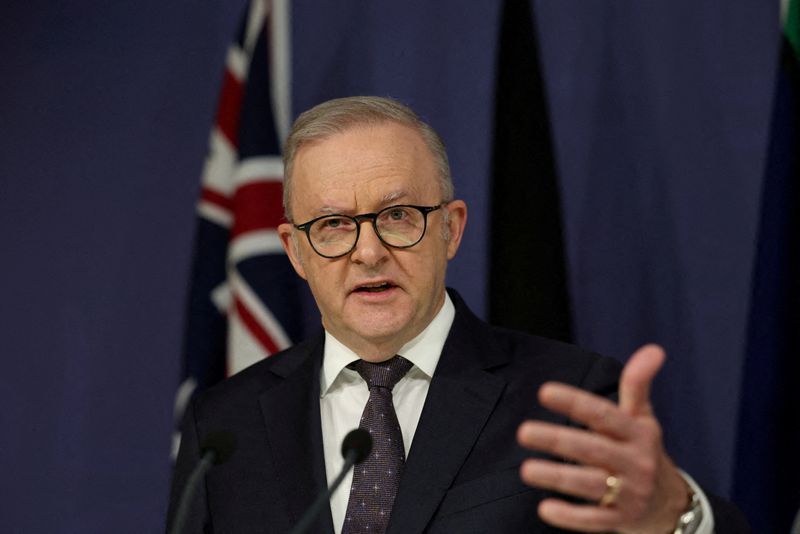
Australia will establish a new Office of AI positioned directly within the Department of the Prime Minister and Cabinet, signalling the government's intention to treat artificial intelligence as a strategic priority requiring whole-of-government coordination. Prime Minister Anthony Albanese is expected to unveil this initiative during a major policy address in Sydney on Wednesday, marking a significant shift in how the nation approaches regulation of the transformative technology.
The creation of this centralised office represents a departure from Australia's previous fragmented approach to AI governance. Until now, the country has addressed artificial intelligence matters on an ad-hoc basis, with different government departments and sectors developing their own responses to emerging challenges. This scattered approach has created uncertainty for businesses and inconsistency in how various aspects of AI deployment are managed across the economy. Albanese is anticipated to acknowledge this limitation in his address, emphasising that just as Australia developed coordinated responses to other significant technological shifts—from civil aviation regulation in the 1920s through to genetic engineering frameworks in the 1990s—artificial intelligence demands a similarly comprehensive and unified strategy.
The Office of AI will serve as a coordination mechanism, bringing together expertise and policy development across multiple ministries to create cohesive standards and regulatory pathways. By establishing this institutional arrangement, the government aims to provide businesses with greater clarity regarding approval processes and compliance requirements. This streamlined approach is intended to reduce bureaucratic friction and make Australia a more attractive destination for AI investment, particularly as the technology becomes increasingly central to economic competitiveness globally.
Australia's ambition to position itself as a leading AI hub and attractive location for data centre investment has been tempered by growing public concern about the technology's potential negative consequences. Environmental advocates and labour representatives have raised alarms about the energy and water demands of large-scale data centres required to support AI infrastructure. The water consumption issue is particularly acute in Australia, where several regions face chronic water scarcity challenges. Simultaneously, economists and union organisations have voiced concerns that widespread AI adoption could displace significant numbers of workers across various sectors without adequate support for transition or retraining.
Beyond employment and environmental concerns, other pressing issues have emerged regarding the implications of unchecked AI development. Questions about data security and privacy have intensified, particularly given Australia's existing regulatory framework may not adequately address the unique challenges posed by advanced AI systems. Intellectual property protections remain uncertain in an era when AI can rapidly process and analyse vast amounts of copyrighted material. Public safety concerns have also grown, with community groups warning that autonomous systems and algorithmic decision-making could create unforeseen risks if deployed without proper oversight.
Currently, Australia lacks any dedicated AI legislation. Instead, the regulatory landscape relies on a patchwork of existing privacy laws, consumer protection statutes, and a voluntary ethics framework for AI. While these mechanisms provide some guardrails, experts have questioned whether they are sufficient to address the scale and complexity of challenges posed by rapidly advancing artificial intelligence. The voluntary ethics framework, in particular, lacks enforcement mechanisms and has been criticised as insufficiently robust to manage systemic risks.
For Southeast Asian countries including Malaysia, Australia's institutional approach to AI governance offers instructive lessons. As the region's economies increasingly adopt artificial intelligence technologies and compete to attract investment in data centre infrastructure and AI research, the question of how to balance innovation incentives with protective regulation becomes urgent. Malaysia and neighbouring nations are watching how developed democracies structure their AI oversight, as these models may influence regional policy development and create standards that affect cross-border operations.
The establishment of Australia's Office of AI also reflects broader international trends toward more deliberate government engagement with artificial intelligence policy. Several nations have recently established similar coordinating bodies or announced plans to do so, recognising that AI's economic, social, and security implications are too significant to be left entirely to voluntary industry compliance or piecemeal sectoral regulation. Australia's decision to locate this office within the Prime Minister's department rather than within a specific ministry signals the government's assessment that AI governance requires top-level political attention and cross-departmental authority.
The timing of this announcement coincides with intensifying global discussions about AI safety, governance, and the appropriate role of regulation in supporting innovation. Some nations have opted for more prescriptive regulatory approaches, while others have favoured lighter-touch frameworks. Australia appears to be positioning itself in the middle ground: creating institutional capacity for coordinated governance while maintaining a posture that welcomes investment and technological development. Whether this balance proves sustainable as AI capabilities advance and public pressure for stronger protections grows will be an important test case for other nations considering similar arrangements.
Looking forward, the effectiveness of Australia's Office of AI will depend on its mandate, resources, and the willingness of various government agencies to genuinely collaborate rather than protect existing jurisdictional boundaries. The office will need to develop specific standards for AI deployment across critical sectors such as healthcare, finance, employment, and public administration. It must also establish mechanisms for monitoring compliance and responding to emerging risks without stifling innovation. For Malaysian policymakers and businesses operating in the region, the success or failures of Australia's experiment will provide valuable insights into how to structure institutional approaches to AI governance in Southeast Asia.

