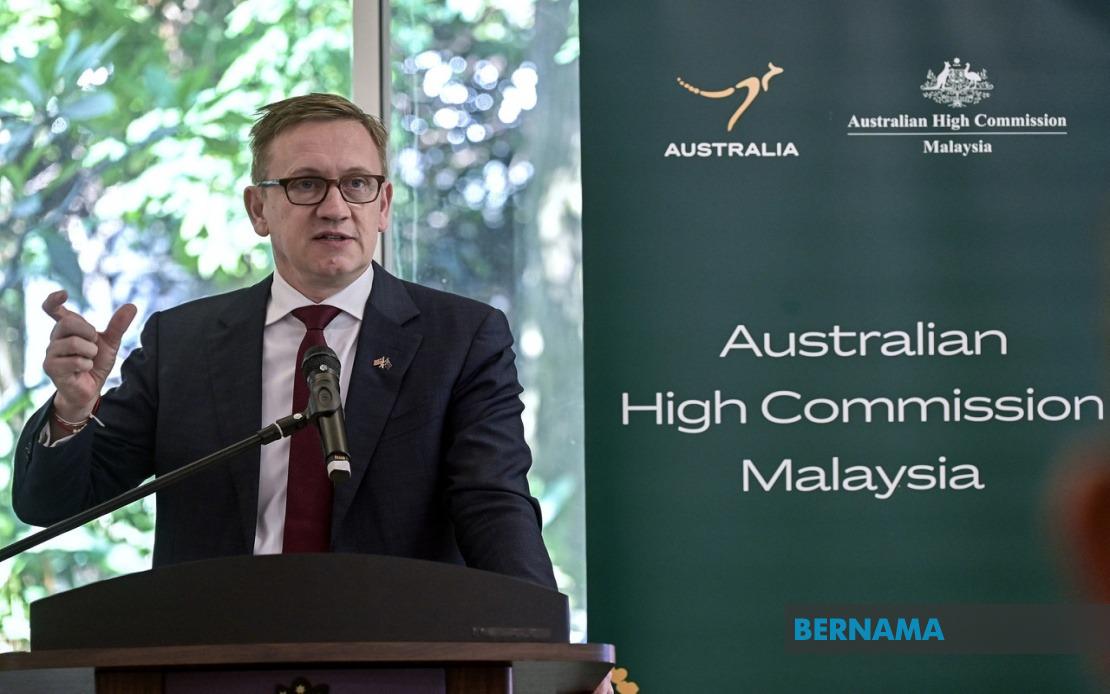
The Australian High Commission in Malaysia has introduced the Australia Awards-Malaysia Semester Programme, a fresh scholarship initiative designed to give Malaysian students greater access to Australian education. The programme was formally launched by Australia's Assistant Minister for International Education Julian Hill, reflecting Canberra's strategic focus on strengthening bilateral engagement with Malaysia through educational exchanges and cultural immersion.
Hill emphasised during the launch event that the initiative underscores Australia's enduring commitment to building deeper connections between Australians and Malaysians. By creating pathways for young Malaysian scholars to experience Australian university life firsthand, the programme aims to forge lasting personal relationships that transcend traditional diplomatic channels. He noted that over half a million Malaysians have previously studied in Australia, many of whom became informal ambassadors carrying Australian values and perspectives back to their communities. These individuals, he suggested, function as human bridges linking the two nations across generations, influencing everything from business networks to cultural understanding.
The scholarship covers comprehensive costs including international airfare, residential accommodation, living allowances, visa processing, insurance premiums and other ancillary expenses. This comprehensive support structure removes major financial barriers that might otherwise deter talented Malaysian students from disadvantaged backgrounds from pursuing international education. The initiative targets both undergraduate and postgraduate students already enrolled at Australian branch campuses operating in Malaysia, allowing them to transition seamlessly to parent campuses in Australia for semester-long study periods.
Currently, three Australian institutions have formally joined the pilot phase: Curtin University Malaysia, Monash University Malaysia and the University of Wollongong Malaysia. Additionally, Swinburne University of Technology Sarawak Campus has received an invitation to participate, expanding the programme's reach across Malaysia's geographic regions. The inaugural cohort of 16 students commenced their Australian studies in July this year, marking the pilot programme's debut intake. This modest starting number allows administrators to refine programme logistics and student support mechanisms before scaling operations.
Australian government funding has been committed for an initial four-year period aligned with Canberra's budget cycle, though Hill expressed optimism that political support would eventually sustain the scheme as a permanent fixture in Australia's educational diplomacy toolkit. The programme represents a strategic investment in Southeast Asian engagement, positioning educational partnerships as foundational to broader regional cooperation on economic and strategic matters.
Hill stressed that Australia views its commitment to regional education as fundamentally reciprocal. He expressed hope that more Australian students would reciprocate by enrolling at Australian university branch campuses located throughout Malaysia, whether through existing mechanisms like the New Colombo Plan or specialised semester exchange programmes. This two-way flow of students ensures that educational diplomacy benefits both populations rather than creating dependency relationships or one-directional knowledge transfer.
Beyond cultural exchange, Hill highlighted the research and innovation potential embedded within Australian university campuses across Malaysia. He characterised these institutions not merely as teaching facilities but as genuine research hubs capable of generating knowledge and fostering collaborative investigations into shared regional challenges. Medical science, renewable energy development, mining sector innovation and agricultural advancement emerged as particular areas where Australia and Malaysia can combine institutional expertise and resources to address pressing environmental and economic questions.
The programme's design reflects sophisticated policy thinking about how educational funding generates multiplier effects throughout bilateral relationships. Hill contended that channelling Australian taxpayer resources toward enabling student mobility represents effective deployment of public funds. Unlike infrastructure investments or direct aid, educational scholarships create networks of skilled professionals with personal stakes in sustained Australia-Malaysia cooperation, potentially influencing private sector investment, research partnerships and policy dialogue for decades.
For Malaysian readers, this initiative carries particular significance within Southeast Asia's intensifying competition for educational excellence and soft power influence. As regional powers increasingly deploy scholarships and educational partnerships as strategic tools, Australia's expanded commitment to Malaysian students demonstrates serious long-term interest in the relationship. The programme also signals confidence in Malaysian talent and potential, positioning Malaysian graduates as valuable participants in global knowledge communities rather than peripheral consumers of Australian education.
The scholarship's emphasis on removing financial obstacles speaks directly to equity concerns within Malaysian higher education. Many capable students cannot afford international education despite possessing academic merit. By eliminating cost barriers, Australia potentially attracts Malaysian scholars from middle-income and lower-income families who might otherwise remain geographically constrained. This democratisation of access to world-class education can shift Malaysia's demographic composition of internationally educated professionals, potentially enhancing social mobility and economic dynamism.
The programme also reflects sophisticated understanding of how educational partnerships build institutional capacity. Malaysian students studying at Australian parent campuses return with knowledge of advanced research methodologies, international academic standards and professional networks that elevate Malaysian universities' capabilities. They become conduits through which Malaysian institutions can upgrade research output and international standing. In this sense, the scholarship programme functions as capacity-building mechanism benefiting both individual scholars and Malaysian higher education institutions broadly.
For Australia, the initiative serves clear strategic objectives within its broader Indo-Pacific engagement strategy. Education-based soft power proves particularly durable and cost-effective compared to military or diplomatic investments. Young Malaysians who develop affinity for Australia through study experiences often maintain professional and personal connections throughout their careers, creating constituencies favouring positive Australia-Malaysia relations across business, government and civil society sectors. These networks prove invaluable when navigating policy disagreements or advancing regional cooperation initiatives.
Looking forward, the programme's success depends on effective student recruitment, rigorous support services ensuring completion rates, and genuine integration of Malaysian scholars into Australian campus communities. The four-year funding commitment provides runway for programme refinement before renewal discussions commence. If initial cohorts demonstrate strong academic outcomes and return to Malaysia with enriched qualifications and expanded networks, political momentum should accumulate for programme expansion and permanent funding endorsement. The initiative thus represents both immediate opportunity for 16 pioneering Malaysian students and potential template for expanded Australia-Malaysia educational cooperation.

