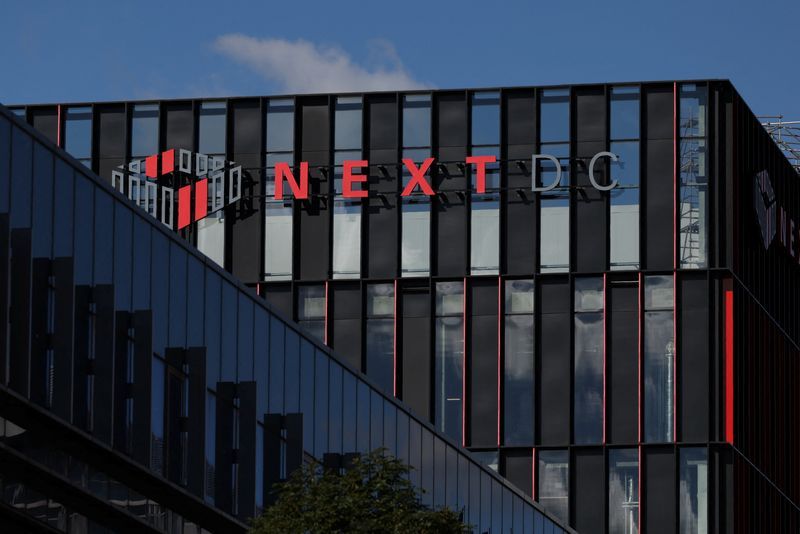
Australian data centre operator NextDC has delivered financial results that mask a mounting environmental challenge facing the region's technology infrastructure boom. While the company swung to a profit of A$82.1 million for the year to June, up sharply from a A$60.5 million loss the prior year, its consumption metrics for critical resources tell a more troubling story about the true cost of artificial intelligence and computing expansion across Asia-Pacific.
The deterioration in both water and energy efficiency represents a significant reversal for an industry that governments and regulators are increasingly scrutinizing. NextDC's water usage effectiveness ratio—a measure of litres consumed per kilowatt-hour of computing output—climbed to 2.40 from 2.25 in the previous twelve months. Simultaneously, its power usage effectiveness ratio, which tracks the overhead electricity required for cooling and supporting infrastructure, rose to 1.49 from 1.44. More concerning to policymakers and environmental advocates is the trajectory: both metrics have deteriorated for three consecutive years, suggesting the problem is systematic rather than temporary.
The company attributed the worsening performance to a combination of factors, though some explanations raise questions about operational discipline. NextDC pointed to newly constructed capacity running cooling systems at elevated levels before computing equipment had been fully deployed and activated—essentially running infrastructure inefficiently during commissioning phases. The company also acknowledged that significant reconciliation work had uncovered previously undetected water leaks and meter anomalies across its portfolio, indicating that actual consumption may have been understated in prior periods.
This environmental deterioration arrives at a critical moment for regional policymaking. Governments across Asia-Pacific and beyond are reconsidering their welcoming stance toward data centre expansion as the true costs of the artificial intelligence revolution become apparent. Water scarcity, electricity grid strain, land use conflicts, and community impacts have prompted regulatory bodies worldwide to impose freezes, construction bans, or strict limitations on new data centre development. The resource consumption question has transcended technical discussion to become a matter of public policy and electoral concern.
Canberra's approach signals where Australian authorities stand. Federal policymakers are actively developing mandatory, nationally consistent standards that would govern how data centres consume energy and water, while also controlling their geographic placement. Even more significant is a recent proposal requiring data centres to develop new renewable energy capacity rather than drawing electricity from the existing national grid—a measure designed to prevent computing infrastructure from competing with household and business consumers for limited power supplies.
NextDC's financial performance, by conventional measures, remains robust. Revenue expanded sixteen percent to undisclosed levels, while underlying earnings before interest, tax, depreciation and amortisation climbed fifteen percent to A$248.8 million, exceeding average analyst expectations tracked by Visible Alpha. The profit recovery was partly achieved through an accounting gain recognised on property valuations rather than operational improvements. Market response proved positive, with the company's share price advancing 3.3 percent by mid-session on the Friday following results release.
Yet this financial success occurs within a widening gap between corporate performance and social licence. The company's sustainability report framing of the water consumption increases—describing a "combination of portfolio growth and increased activity"—glosses over the fundamental inefficiency problem. When data centre operators expand capacity but simultaneously worsen their resource utilisation ratios, they are essentially growing their footprint while degrading their environmental performance per unit of computing output.
For Malaysian and Southeast Asian readers, the NextDC situation carries direct relevance. Several regional economies have positioned themselves as alternative data centre hubs to escape regulatory pressures and land constraints in developed markets. However, the resource consumption challenges that are prompting Australian and European restrictions will eventually confront host nations here, particularly regarding water availability in countries already grappling with seasonal supply challenges and competing agricultural demands.
NextDC operates in a competitive landscape that includes Blackstone-controlled AirTrunk and Infratil-owned CDC, both of which face identical pressure on environmental metrics. The industry-wide nature of these challenges suggests this is not a problem of individual operational excellence but rather structural to how modern data centres function, particularly when built to accommodate peak artificial intelligence workloads that may not yet be fully utilised.
The reconciliation work NextDC conducted—discovering leaks and meter discrepancies—also raises questions about measurement standards and reporting accuracy across the sector. If a major listed company can encounter significant water measurement anomalies upon detailed investigation, other operators may face similar hidden losses that could substantially alter the sector's genuine environmental footprint.
Looking forward, the tension between data centre profitability and resource sustainability will intensify. Governments seeking to support technology investment and artificial intelligence development cannot ignore mounting evidence that current infrastructure approaches consume resources at escalating rates. NextDC's results, celebrated by investors for financial outperformance, may ultimately be remembered as a pivotal moment when the industry's expansion began confronting genuine regulatory and physical limits.
The Australian company's trajectory illustrates that financial success and environmental deterioration can advance simultaneously—a dynamic that will increasingly challenge regional policymakers deciding whether and how to welcome data centre investment.

