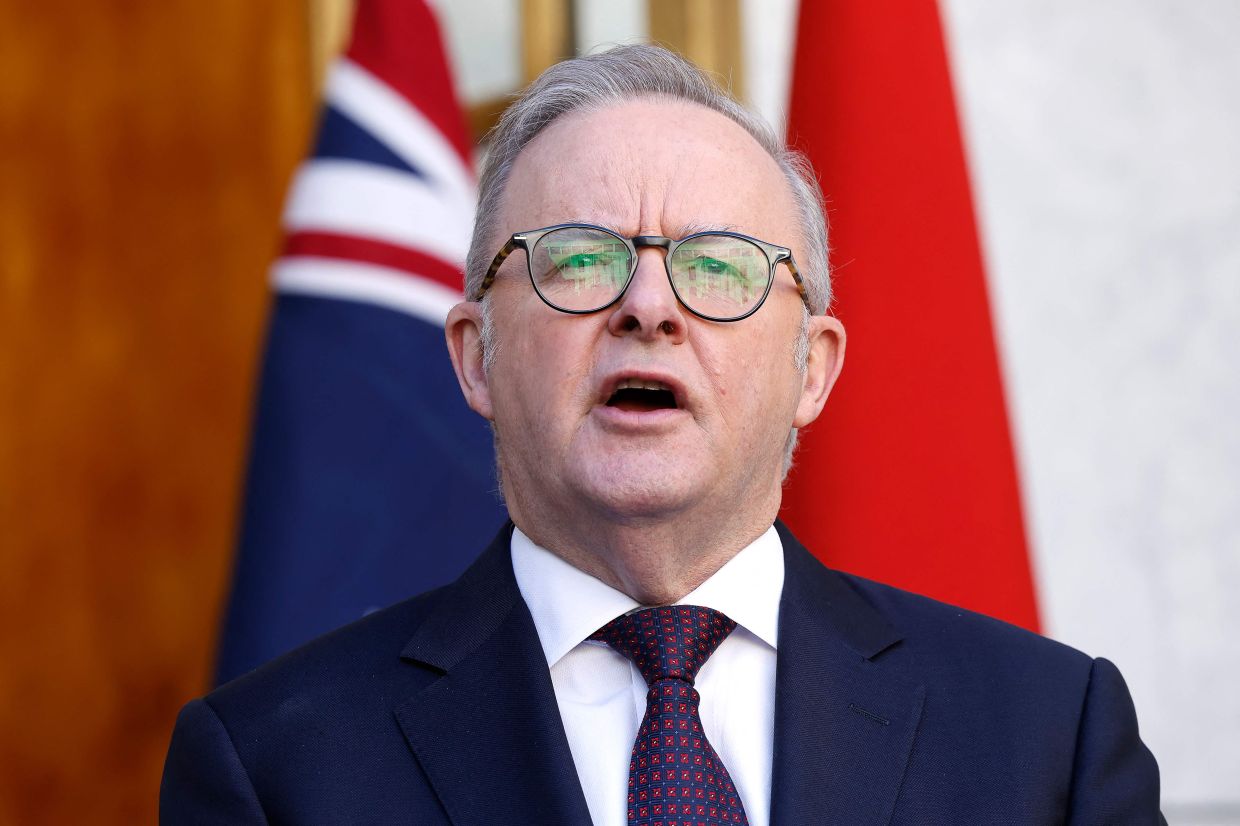
Australian Prime Minister Anthony Albanese has refused to offer an apology for inappropriate comments he made during a recent podcast appearance, where he engaged in crude banter centring on a luxury gift from his Japanese counterpart, Prime Minister Sanae Takaichi. The remarks, which surfaced publicly this week, have drawn sharp criticism from opposition politicians who view them as disrespectful toward the Japanese leader and, by extension, the nation itself. When pressed in parliament on Tuesday to acknowledge that his behaviour had been disrespectful, Albanese flatly rejected the premise, characterising the objections as a misreading of his intent.
During an interview with podcast host Nikki Osborne conducted at his official residence, Albanese described receiving what he termed a "strange" present from Takaichi during her visit to Australia in May—a premium Japanese royal melon. What might ordinarily pass as light-hearted commentary about diplomatic gift-giving took on a more crude dimension when the host made a reference to actress Pamela Anderson, to which Albanese responded with comments that critics have deemed inappropriate. The precise nature of the exchange illustrates how informal settings, particularly podcasts aimed at casual entertainment rather than serious political discussion, can easily veer into territory that damages diplomatic relations.
In Japan's cultural context, premium melons carry significant symbolic weight. These luxury fruits are not casual grocery items but rather prestigious gifts often costing upwards of AUS$270 (US$190), according to Japan's former ambassador to Australia. They represent thoughtfulness and respect in Japanese gift-giving traditions, where the quality and exclusivity of a present reflects the esteem in which the giver holds the recipient. Understanding this cultural dimension is crucial for grasping why Japanese observers and Australian opposition figures have reacted negatively to how Albanese treated Takaichi's offering.
This incident represents the second controversy in as many weeks for the Australian leader. Just weeks earlier, Albanese had already faced significant backlash and issued a formal apology for separate comments made during the same podcast interview, in which he made crude remarks about Australian pop singer Kylie Minogue. The cumulative effect of these missteps has raised questions about Albanese's judgment regarding appropriate conduct for a sitting prime minister and his choice of media platforms for informal discourse. The repeated nature of the incidents suggests less isolated poor judgment and more a troubling pattern of behaviour that requires systemic reconsideration.
When confronted with demands for an apology in parliament, Albanese adopted a defensive posture, stating flatly that he rejected the characterisation of his comments as insulting. Rather than acknowledging how his words might have been perceived or demonstrating contrition, he emphasised his personal regard for Takaichi, framing the controversy as a misunderstanding rather than evidence of genuine disrespect. This approach—emphasising his intentions while dismissing others' interpretations—mirrors the classic non-apology apology that has become increasingly common among politicians attempting to deflect accountability.
Foreign Minister Penny Wong reinforced the Prime Minister's position by suggesting that the opposition had deliberately misinterpreted remarks that carried no insulting intent whatsoever. Wong's defence, while nominally supportive of her colleague, actually underscores a problematic dynamic: government ministers are now arguing that the way others received the comments is the real problem, not the comments themselves. This rhetorical strategy effectively places responsibility for being offended squarely on those who took umbrage, rather than examining whether the comments were genuinely appropriate in a diplomatic context.
For Malaysian and broader Southeast Asian observers, the incident carries particular relevance. It illustrates how senior political figures can inadvertently—or carelessly—damage bilateral relationships through informal media appearances. Malaysia, like Japan, maintains formal diplomatic protocols and cultural expectations around official interactions. The notion that a prime minister's comments about another nation's leader might be treated as mere entertainment fodder rather than matters requiring careful consideration reflects a troubling casualness toward diplomacy in the modern era.
The melon gift itself becomes a metaphor for something larger: the careful, considered nature of diplomatic gestures and the importance of reciprocating that thoughtfulness with appropriate comportment. By treating Takaichi's gift flippantly and using it as fodder for crude humour, Albanese arguably undermined the relationship-building that such exchanges are designed to facilitate. In an era when Australia seeks to deepen regional partnerships and strengthen ties across the Indo-Pacific, such missteps carry consequences beyond mere embarrassment.
The opposition's pushback reflects broader concerns about prime ministerial decorum and the standards to which leaders should be held. In parliamentary democracies, public figures are typically expected to maintain certain standards of conduct that reflect the dignity of their office, particularly when representing their nation internationally or commenting on foreign leaders. The fact that Albanese's initial instinct was to refuse an apology rather than offer one suggests limited recognition of these expectations.
Looking forward, this controversy will likely influence how other regional leaders interact with Albanese, potentially creating awkwardness in future diplomatic engagements. Japan remains a crucial security partner for Australia, and any deterioration in personal rapport between leaders can have tangible consequences for bilateral cooperation. The incident also serves as a cautionary tale for other politicians about the permanence and reach of podcast content in an age where nothing said publicly truly remains private.

