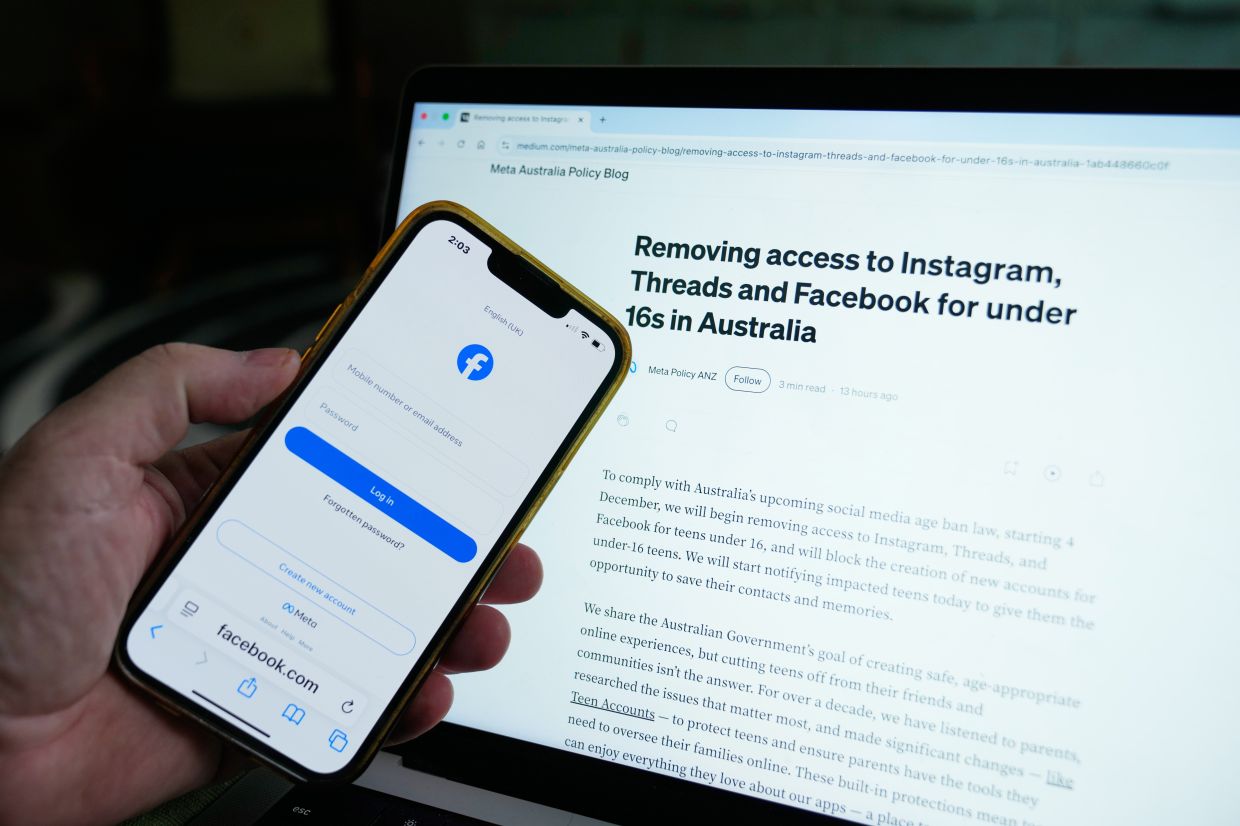
Prime Minister Anthony Albanese has criticised the delay of parliamentary amendments designed to strengthen the hand of Julie Inman Grant, Australia's eSafety Commissioner, in enforcing a ban on users younger than 16 accessing major social media platforms. The proposed legislative changes, which aim to extend Inman Grant's enforcement capabilities beyond her current information-gathering authority, were referred by the opposition Liberal Party and Greens on July 2 to an eight-week Senate inquiry, disrupting what the government hoped would be swift passage through Parliament.
The amendments represent a critical escalation in Australia's attempt to make its social media ban, which took effect in December 2024, more effective. Currently, the eSafety Commissioner can demand information from platforms about their efforts to exclude minors, but cannot compel the production of documents. The proposed changes would grant her authority to obtain both documents and detailed information, enabling her to build stronger cases for enforcement action. More significantly, the amendments would empower her to demand information from third parties, including age verification technology providers, allowing independent verification of claims platforms make about their compliance efforts.
Albanese's frustration reflects genuine operational concerns about the consequences of delay. As he explained to the Australian Broadcasting Corp, postponing the amendments allows platforms to circumvent the regulatory consequences of non-compliance. If the legislation had passed as scheduled, any date from that passage forward would mark the beginning of the period during which the eSafety Commissioner could issue demands and subsequently impose financial penalties. Each week of delay resets this timeline, effectively granting platforms additional time to delete materials, alter records, and obscure evidence of their non-compliance efforts. The government's logic is straightforward: speed in enforcement matters because it closes windows of opportunity for platforms to manage their exposure.
The financial stakes underscore the seriousness of these amendments. The proposed changes would double the maximum fine for platforms failing to take reasonable steps to exclude children from A$99 million, representing a signal that the government intends this enforcement mechanism to carry real consequences. For context, this maximum fine approaches the level of penalties imposed under Australia's consumer protection and competition regimes, indicating that social media compliance is being positioned as equivalent to other fundamental regulatory obligations. The doubling also reflects frustration that previous penalties have never been issued, suggesting current frameworks lack sufficient teeth to motivate platform compliance.
However, the Senate inquiry represents genuine political fragmentation over the social media ban's approach and effectiveness. The Greens, through Senator David Shoebridge, have consistently opposed the ban itself on principle, questioning whether doubling penalties for violations never previously enforced actually improves child safety. This scepticism reflects a broader philosophical objection to blanket age restrictions, with Shoebridge arguing that untested penalty increases are not meaningful safety measures. The opposition Liberal Party, represented by Communications Spokesperson Senator Sarah Henderson, takes a different tack, arguing the amendments do not go far enough. Henderson characterises the entire legislation as hastily implemented, poorly designed, and demonstrably failing, suggesting that tougher measures are required beyond those currently proposed.
The implementation failures Henderson references are substantial and troubling for the Albanese government. When the ban took effect in December, initial reports suggested over 5 million accounts had been removed, deactivated, or restricted. This figure was presented as evidence of platform compliance. However, the eSafety Commissioner's March report revealed a starkly different reality: seven in ten children who held accounts on restricted platforms when the ban took effect in December remained actively using Facebook, Instagram, Snapchat, and TikTok. This indicates either that the initial removal figures were inflated, that children have successfully circumvented the ban through various means, or that platforms have restored or allowed access to previously restricted accounts.
Inman Grant's response has been to threaten legal action, with the eSafety Commissioner signalling in April that she was considering court proceedings against Facebook, Instagram, YouTube, and Snapchat for failing to take reasonable steps to exclude children. This judicial approach represents an escalation from regulatory negotiation to litigation, suggesting frustration with voluntary compliance. By contrast, Inman Grant indicated satisfaction with compliance efforts from X, Kick, Reddit, Threads, and Twitch, creating an unusual situation where some platforms are viewed as responsibly implementing the ban while major global players are perceived as flagrantly non-compliant. This disparity raises questions about enforcement consistency and the mechanisms platforms are using to circumvent the restrictions.
For Malaysian and Southeast Asian observers, Australia's experience carries particular significance as regional governments increasingly consider comparable restrictions. Australia's ban represents the world's most comprehensive age-based social media restriction, serving as a model—or cautionary tale—for other democracies contemplating similar measures. The implementation struggles, where effective circumvention appears widespread despite regulatory authority and public commitment, suggest that purely legislative approaches may be insufficient without complementary technological and commercial cooperation. Moreover, the political fragmentation evident in Australian Parliament—where the government holds no Senate majority—demonstrates how such restrictions can become politicised, with opposition parties criticising not only the amendments but the original legislation itself.
Communications Minister Anika Wells' statement that monthly eSafety updates since March show "no improvements" crystallises the central problem confronting Australian policymakers. Despite the ban's passage with overwhelming parliamentary support in 2024, despite platforms being granted over a year to implement restrictions, and despite initial claims of millions of account removals, the practical reality is stagnation. Children continue accessing banned platforms at scale, platforms appear either unable or unwilling to develop effective age-verification systems, and the regulatory authority responsible for enforcement finds itself impeded by insufficient powers and constrained by court processes. The Senate inquiry, regardless of opposition or Greens motives, arrives at a moment when the entire framework's viability appears questionable.
The eight-week inquiry will examine whether the proposed amendments genuinely address implementation failures or merely increase penalties for non-compliance that remains difficult to detect and prove. This distinction matters enormously: stronger enforcement authority is only valuable if it can identify violations and compel remediation. The central technical challenge remains unresolved—verifying users' ages without creating unacceptable privacy risks or barriers to legitimate users. Until platforms can reliably implement age verification, or until the eSafety Commissioner develops detection methods that definitively identify under-16 users in violation of the ban, the enforcement amendments may prove largely symbolic. The Senate inquiry will ultimately determine whether Australian regulators genuinely believe they can make the ban work with enhanced powers, or whether they are simply raising the penalty stakes in a game they do not yet know how to win.

