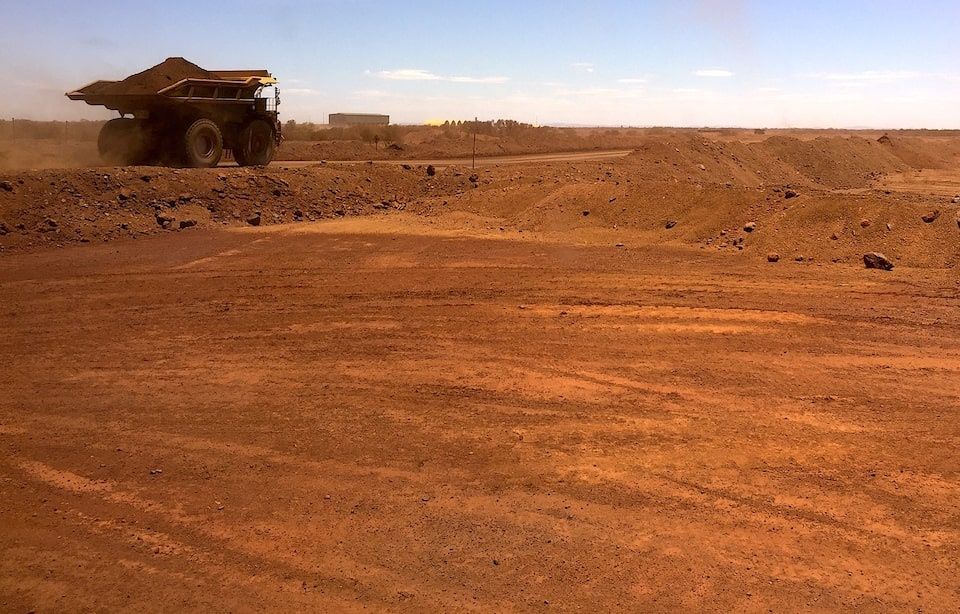
A team of researchers at Edith Cowan University (ECU) in Western Australia has identified a potentially significant source of natural hydrogen within the state's expansive iron ore reserves, opening new possibilities for clean energy extraction in the region. The discovery centres on magnetite, an iron oxide mineral buried beneath Western Australia's distinctive red soil, which can produce hydrogen gas when subjected to specific geological conditions. This finding carries particular relevance for Australia's resource sector and Southeast Asian energy markets seeking alternatives to fossil fuels, given the region's growing focus on transitioning to low-emission energy systems.
The ECU team's research reveals that hydrogen generation occurs when magnetite interacts with superheated water in deep underground environments, suggesting that Western Australia's geological profile naturally supports such reactions. The findings provide crucial understanding of the mechanisms by which hydrogen forms organically beneath the Earth's surface and the particular conditions required to maintain consistent production over time. This knowledge moves beyond theoretical discussion into practical application, offering engineers and geologists concrete pathways for evaluating and potentially harnessing this resource.
Western Australia's competitive advantage in this field is substantial. The state hosts some of the world's largest banded iron formations—geological structures consisting of alternating layers of iron-rich and silica-rich rocks. These formations, which have made Western Australia a global iron ore powerhouse, now present an unexpected opportunity for hydrogen development. The presence of such extensive mineral deposits means that if commercial extraction becomes viable, the state could transition from exporting raw minerals to producing refined energy products, fundamentally reshaping its economic value proposition.
The research methodology employed by ECU's School of Engineering demonstrates the rigour underpinning these findings. Scientists conducted controlled experiments over a 60-day period, exposing magnetite samples to temperatures of 200 degrees Celsius under high pressure conditions designed to replicate the extreme environment found kilometres beneath the surface. This extended testing period allowed researchers to observe sustained hydrogen production under stable conditions, providing evidence that the process could operate reliably rather than as a one-time chemical reaction.
A critical insight from the study concerns the relationship between mineral quantity and water accessibility. The research indicates that hydrogen production rates depend not merely on the abundance of magnetite present, but equally on how readily water can penetrate the mineral structure through natural fractures, pores, and permeable pathways. This discovery suggests that future hydrogen extraction strategies must prioritise understanding and potentially enhancing water circulation through deep rock formations, rather than assuming that proximity to large mineral deposits automatically guarantees productivity.
The team's findings were published in the International Journal of Hydrogen Energy, providing peer-reviewed validation for their research and positioning Western Australia as a contributor to global hydrogen energy science. Publication in a respected international journal enhances the credibility of the discovery and signals to energy companies and research institutions worldwide that natural hydrogen deserves serious commercial consideration.
For Malaysia and the broader Southeast Asian region, this Australian development carries strategic significance. Many countries across Asia are seeking diversified energy sources to reduce reliance on imported fossil fuels and meet climate commitments. If Western Australia successfully commercialises natural hydrogen extraction, it could establish a new export commodity for the region while providing Asian economies with access to clean energy supplies. The technological expertise developed through this process would create opportunities for regional collaboration and knowledge transfer.
The implications extend beyond simple energy production. Natural hydrogen extraction could reduce the environmental impact of iron ore mining, an industry that already dominates Western Australia's economy. By transforming existing mining operations to incorporate hydrogen capture, operators could achieve multiple sustainability objectives simultaneously: maintaining economic productivity while generating renewable energy and potentially reducing the carbon footprint of mining activities themselves.
Commercialising this discovery presents both opportunities and challenges. Moving from laboratory findings to industrial-scale extraction requires substantial capital investment, regulatory approval, and technological development. Companies must design systems capable of injecting solutions into banded iron formations at commercial volumes while safely managing the hydrogen extraction and collection process. The concentration of natural hydrogen in deep formations also necessitates new infrastructure for transportation and distribution, adding complexity to commercialisation timelines.
The economic potential is considerable. If Western Australia can establish itself as a natural hydrogen producer, it would complement the state's existing strengths in iron ore, liquefied natural gas, and other mineral exports. Early movers in developing this technology could secure significant market share in what analysts predict will become a major global energy sector. For regional economies including Malaysia, establishing supply relationships with natural hydrogen producers could become increasingly important as energy policies shift toward decarbonisation.
Research into natural hydrogen remains relatively nascent globally, meaning Western Australia's contributions gain outsized importance in advancing the field. The ECU discoveries provide a roadmap for other regions investigating their own geological potential for hydrogen reserves. Countries and companies seeking to participate in the hydrogen economy can learn from Western Australia's experience regarding how to identify, test, and potentially develop natural hydrogen resources.
The journey from laboratory discovery to commercial reality typically spans years or decades, yet the ECU research establishes a foundation for accelerated development. With sustained investment and regulatory support, Western Australia could transition from producing raw materials to generating sophisticated energy products. For Southeast Asia, maintaining close attention to these developments ensures that the region capitalises on emerging opportunities in the global energy transition, whether through direct participation or strategic partnerships with Australian operators.

