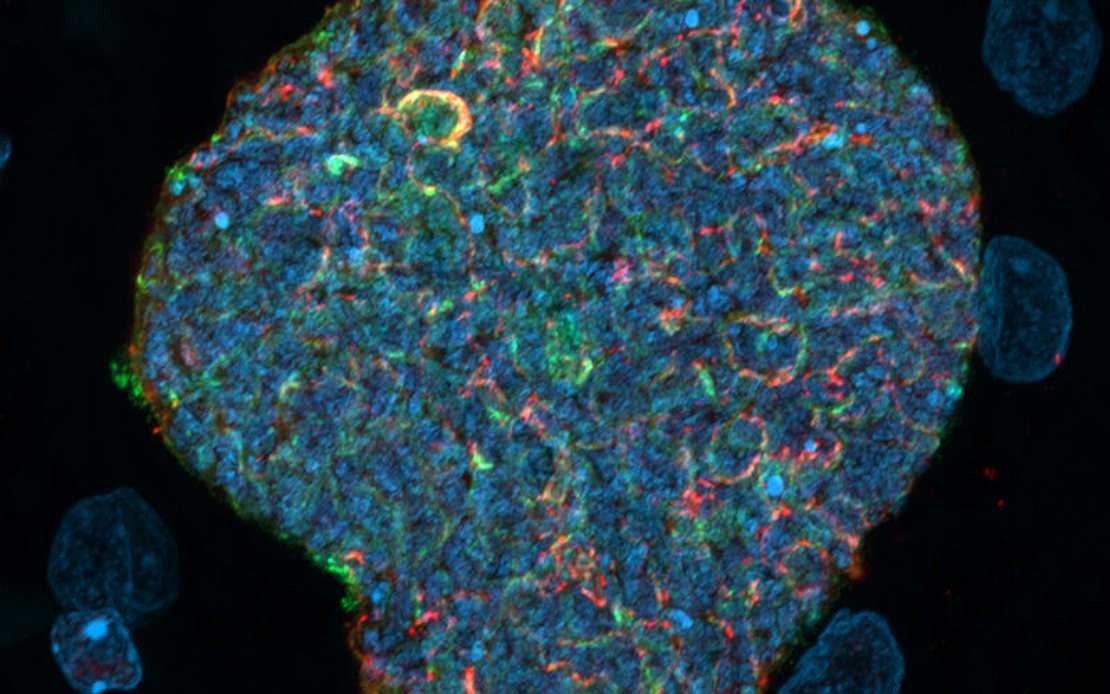
Researchers at Australia's Walter and Eliza Hall Institute of Medical Research have unveiled a groundbreaking approach to malaria prevention that fundamentally reimagines how the disease might be controlled in endemic regions. Rather than viewing mosquito bites as inevitable vectors of infection, the team has developed a strategy to convert them into deliberate immune-strengthening events. This represents a significant conceptual shift in the pursuit of an effective malaria vaccine, addressing a disease that continues to claim hundreds of thousands of lives annually.
The innovation centres on a dual-component strategy combining immunisation with antimalarial drug compounds. Researchers partnered with biopharmaceutical company MSD to develop investigational compounds specifically engineered to intercept malaria parasites at a critical vulnerability point. By targeting parasites at the late liver stage—just as they prepare to enter the bloodstream and establish systemic infection—the compounds prevent disease development while simultaneously triggering a powerful immune response. This timing is crucial, as it allows the body's defences to recognise and remember the parasite without suffering from clinical malaria.
The mechanism works by establishing an initial priming phase through controlled vaccination, which prepares the immune system to recognise malaria parasites. Subsequent exposure through natural mosquito bites then serves a dual purpose: the antimalarial compounds continue to prevent infection progression, while simultaneously acting as booster doses that reinforce and strengthen immunity. This creates what researchers describe as a "vaccinate and boost naturally" framework, potentially enabling communities in malaria-endemic areas to maintain protective immunity through the normal course of mosquito-human contact that occurs throughout the year.
The significance of this approach extends beyond simple disease prevention. Traditional vaccine development has long struggled with malaria, in part because the parasite is remarkably adept at evading immune responses. By using the parasite itself as the immunogenic agent—captured at the precise moment of its vulnerability—researchers may have overcome some of the biological barriers that have hindered previous vaccine candidates. The robust immune response observed in the study suggests that protection could be durable, potentially lasting considerably longer than conventional vaccines.
For Malaysia and the broader Southeast Asian region, where malaria remains a significant public health concern in certain areas, this development carries particular relevance. While urban areas have achieved substantial malaria control, transmission persists in remote endemic zones, particularly in Peninsular Malaysia's forest fringe areas and East Malaysia. The current approach to malaria prevention relies heavily on insecticide-treated bed nets, indoor residual spraying, and antimalarial medication for travellers. A vaccine that harnesses natural exposure patterns could complement and potentially enhance these strategies, particularly in regions where compliance with prevention measures remains challenging.
The global malaria burden underscores the urgency of developing improved prevention tools. The World Health Organisation documented approximately 610,000 deaths worldwide in 2024, with the vast majority occurring in sub-Saharan Africa, though South and Southeast Asia also carry substantial disease burdens. Children under five and pregnant women remain particularly vulnerable, making any advancement in prevention technology of profound importance for maternal and child health outcomes across endemic regions.
The research team is currently advancing a long-acting injectable formulation based on these antimalarial compounds, which suggests that the approach may eventually offer practical implementation pathways. Long-acting injectables present advantages over oral medications in terms of adherence and consistency of protection, particularly in resource-limited settings where regular clinic visits may be challenging. However, considerable preclinical and clinical development work remains before such a formulation could reach populations in need.
The challenge ahead involves moving from laboratory success to real-world application. Clinical trials will be essential to confirm that the immunity generated in controlled studies translates effectively to natural transmission settings. Researchers must also establish the optimal frequency and timing of boosting doses, determine whether immunity wanes over extended periods without mosquito exposure, and assess safety in vulnerable populations including pregnant women and infants. Additionally, the approach requires reliable access to the antimalarial compounds, necessitating manufacturing and supply chain considerations that become increasingly complex in low-income endemic countries.
Integrating such an innovation into existing malaria control programmes would require coordinated effort among health authorities, pharmaceutical manufacturers, and international health organisations. The approach might be particularly valuable in elimination scenarios where malaria transmission has been reduced to very low levels and residual foci represent the primary challenge. However, in areas with ongoing intense transmission, ensuring initial vaccination coverage remains a prerequisite before the "boost naturally" phase can operate effectively.
The development also highlights the evolving sophistication of antimalarial drug discovery and immunology. Rather than pursuing traditional vaccine approaches using inactivated or attenuated parasites, researchers have created a system that allows the parasite itself to serve as the vaccine while simultaneously controlling its pathogenic potential. This biological elegance, if validated in larger clinical studies, could serve as a model for addressing other infectious diseases where conventional vaccine development has proven challenging.
From a regional perspective, the successful translation of this technology could substantially alter malaria epidemiology across Southeast Asia over the coming decade. Countries currently approaching elimination status might reach this goal more reliably and maintain it more sustainably. Nations still grappling with significant transmission could accelerate progress toward control and eventual elimination. The technology also addresses equity considerations, as it leverages the natural biology of endemic regions rather than requiring constant external inputs of preventive medicines or vector control supplies.
Moving forward, the Australian research institution and its industry partner face the significant undertaking of demonstrating safety and efficacy in human populations. International collaboration will likely prove essential, with field trials potentially occurring across multiple endemic countries. Success could eventually provide malaria-endemic nations, including those in Southeast Asia, with a transformative tool that turns one of the region's persistent public health challenges into a manageable, predictable aspect of disease control rather than an ongoing source of mortality and morbidity.

