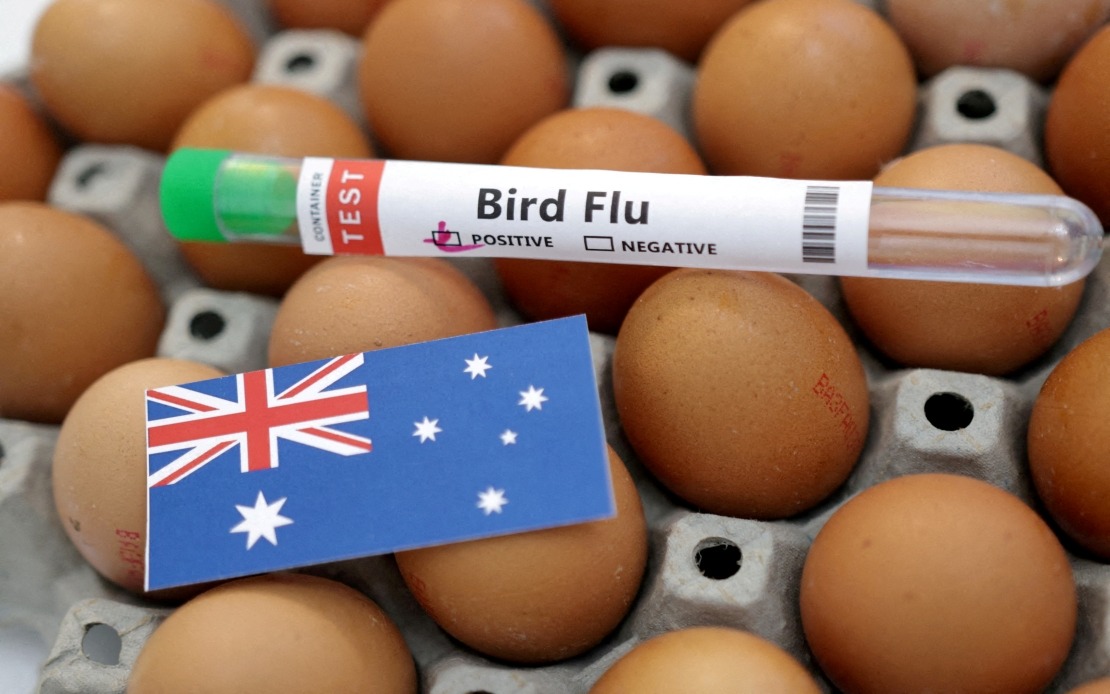
Australia is grappling with a rapidly escalating bird flu crisis as H5N1 cases surged past 200 by mid-August, prompting state governments to introduce stricter biosecurity protocols. The federal Department of Agriculture, Fisheries and Forestry documented 203 confirmed or presumed positive cases of the H5N1 strain, marking a dramatic acceleration in a situation that began moderately at the month's outset.
The trajectory of infections reveals how swiftly the outbreak has spiralled. At the end of July, Australia had recorded just 52 cases. The figure climbed to 203 by early August, representing a 290 per cent jump in less than two weeks. This exponential growth underscores the contagious nature of the H5N1 virus and its capacity to spread through wild bird populations across vast distances, a particularly concerning development for a nation with extensive coastlines and diverse avian ecosystems.
South Australia has emerged as the epicentre of the outbreak, accounting for nearly three-quarters of all detected cases. The state had 147 confirmed infections, including 28 new cases identified on a single day alone. All of these South Australian cases were concentrated in wild seabirds, suggesting that waterbird populations have become the primary vector for viral transmission. This pattern is typical of H5N1 behaviour, which spreads readily through migratory waterbirds and coastal species.
Victoria, Australia's southeastern state, has become the second-most affected jurisdiction with 43 cases despite being further from the initial outbreak epicentre. The state experienced a significant cluster discovery when 36 birds tested positive after being detected in Victoria's western regions near the South Australian border. This geographic spread demonstrates how quickly the virus can traverse state boundaries, particularly through wildlife corridors and shared waterways that birds frequent during seasonal migrations.
Concerned about transmission to domestic poultry operations, Victoria's government announced precautionary measures on Friday targeting commercial farms. The new rules require poultry producers along the state's south coast, including those operating in the Melbourne metropolitan area, to confine their birds indoors if they maintain flocks of at least 50 birds. The initial mandatory confinement period spans 14 days, with Victorian Agriculture Minister Michaela Settle framing the directive as an essential prevention strategy to interrupt transmission chains between wild and domestic birds.
The indoor housing requirement represents a significant operational adjustment for Victoria's poultry industry. Such measures are standard responses when H5N1 threatens commercial food production systems, as the virus's potential to decimate domestic flocks poses serious economic and food security risks. The targeting of farms with 50 or more birds indicates that authorities are focusing on commercially viable operations where concentrated animal populations could amplify viral spread exponentially.
Geographically, the concentration of cases in South Australia and southern Victoria points to transmission corridors along the country's southern coast. Migratory waterbirds moving through coastal wetlands and estuaries during winter months have historically been implicated in H5N1 spread. Australia's isolation as an island continent usually provides some protection against international disease introduction, but once the virus establishes in local bird populations, natural migration patterns and ecological connectivity ensure rapid dissemination across regions.
The distinction between wild bird and domestic poultry cases is critical for understanding the outbreak's trajectory and risk profile. Currently, all detected South Australian cases have been in wild seabirds, while Victoria's cases include both wild birds and potentially exposed domestic flocks. If the virus remains contained to wild populations, the economic impact will be limited primarily to wildlife management and monitoring expenses. However, should H5N1 establish itself in commercial poultry operations, Australia could face substantial export restrictions and domestic supply disruptions, particularly affecting the regional Southeast Asian market where Australian poultry products are significant trade commodities.
For Malaysia and other Southeast Asian nations, Australia's escalating H5N1 situation carries important implications. Australia is a significant supplier of poultry products to regional markets, and any major outbreak in domestic farms could trigger trade restrictions and price volatility. Additionally, the outbreak highlights how migratory bird patterns create transnational disease risks, relevant for countries throughout the Indo-Pacific that share avian migration pathways. The virus's rapid establishment and spread in Australia's wild bird populations suggests that surveillance systems across Southeast Asia should remain vigilant for potential incursions.
The Victorian government's decision to mandate indoor housing represents a measured but firm approach aimed at interrupting the critical interface where wild and domestic birds might contact. Such precautionary measures, while economically disruptive for affected producers, reflect the high stakes involved when addressing zoonotic disease threats. The 14-day confinement period provides time for monitoring while authorities assess whether the precaution requires extension.
As the outbreak continues evolving, Australia's agricultural authorities face mounting pressure to prevent escalation into commercial poultry sectors where the economic and epidemiological consequences would be substantially more severe. The current situation, though serious, remains predominantly a wild bird phenomenon with manageable domestic implications. Sustained vigilance and rapid implementation of containment measures will be essential to preserving that distinction and preventing the outbreak from becoming a broader agricultural crisis.

