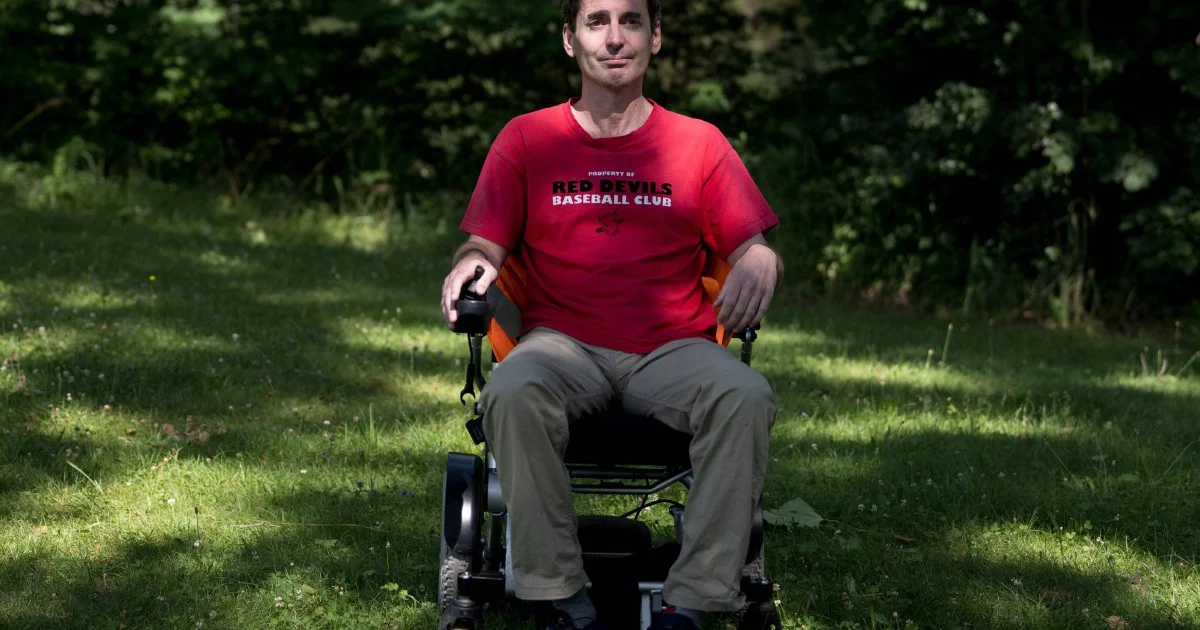
Mex Muellner, an Austrian man confined to a wheelchair, has launched a legal challenge against his nation's climate response at the European Court of Human Rights, contending that governmental inertia on climate mitigation infringes upon his basic rights. His case represents a novel intersection of disability advocacy and environmental action, drawing attention to how climate-related hazards affect vulnerable populations with particular severity.
The lawsuit emerges against a backdrop of intensifying heat events across Europe. Muellner's experience navigating oppressive temperatures while managing mobility constraints has crystallised his conviction that the state bears responsibility for protecting citizens from foreseeable climate-related dangers. For individuals with disabilities, extreme weather presents compounded challenges: wheelchair-bound persons face difficulties accessing cooling shelters, transporting themselves to medical facilities during emergencies, and maintaining physiological equilibrium during prolonged heat exposure. Muellner's case anchors broader environmental justice concerns in the lived reality of a single person's struggle.
The European Court of Human Rights has increasingly recognised connections between environmental degradation and human rights violations. Recent jurisprudence suggests that governments possess positive obligations to safeguard citizens from environmental threats, particularly when those threats endanger life, health, or family integrity. Muellner's legal strategy leverages these precedents, framing climate inaction not merely as a policy failure but as a breach of fundamental protections that transcend traditional environmental law.
Austria, despite its reputation for environmental consciousness, has faced persistent criticism regarding the pace of its climate transition. The nation has committed to achieving carbon neutrality by 2040, yet interim targets and implementation mechanisms have drawn scrutiny from climate advocates and international observers. Energy-intensive sectors, including agriculture and transport, continue to generate substantial emissions. For someone like Muellner, the gap between rhetorical commitment and substantive policy change represents a lived betrayal.
Disability rights organisations have increasingly highlighted climate change as an urgent accessibility issue. Persons with disabilities encounter disproportionate risks during extreme weather events, from power outages disrupting medical equipment to evacuation procedures that overlook mobility aids and personal assistance requirements. Heatwaves pose particular peril for those with conditions affecting temperature regulation or requiring specialised cooling interventions. By foregrounding disability experiences, Muellner's case broadens the constituency demanding accelerated climate action.
The case carries regional implications for Southeast Asia, where climate vulnerability intersects acutely with disability prevalence. Nations across the region face intensifying heat stress, flooding, and weather volatility, yet disability-inclusive climate adaptation remains underdeveloped. A European court ruling affirming that states must actively protect disabled populations from climate hazards could establish jurisprudential benchmarks influencing how Asian governments approach their own adaptation obligations. Malaysian policymakers, in particular, might face heightened scrutiny regarding whether climate transition strategies adequately account for persons with disabilities.
Muellner's legal team has constructed arguments anchoring climate rights within established human rights frameworks rather than relying on novel environmental constitutionalism. This approach grounds the case in interpretive traditions the court has already accepted, potentially increasing likelihood of success. The strategy also demonstrates how climate action can be reframed from a marginal environmental concern into a central human rights imperative—a rhetorical shift with profound implications for policy priority-setting across European democracies.
The Austrian government has characterised its climate efforts as ambitious relative to comparable economies, pointing to renewable energy expansion and sectoral emissions reductions. However, Muellner's case challenges the adequacy of these measures, arguing that intentions divorced from timely implementation fail to discharge governmental duties toward citizens experiencing present-day climate impacts. This distinction between rhetorical commitment and material protection reflects frustrations many climate advocates harbour regarding the gap between announced targets and actual emissions trajectories.
IfSuccessful, Muellner's case could catalyse comparable litigation across Europe and potentially inspire analogous actions in other jurisdictions, including Southeast Asia. The precedent would establish that courts can compel governments to strengthen climate policies on human rights grounds, bypassing political deadlock and legislative obstruction. Such a ruling would represent a significant expansion of judicial authority over climate governance, potentially accelerating policy change beyond what legislative processes might independently achieve.
The case also illuminates how marginalised communities often bear disproportionate climate burdens whilst possessing least political influence to demand responsive government action. Disabled persons frequently occupy peripheral positions within both environmental and disability advocacy ecosystems, rendering their climate vulnerabilities invisible within mainstream discussions. By pursuing this litigation, Muellner amplifies voices typically excluded from climate policy deliberations, insisting that governmental climate responsibility encompasses explicit protection for all inhabitants, particularly those already navigating systemic disadvantage.
As European institutions increasingly recognise climate change as a defining rights challenge of the era, cases like Muellner's establish important precedents regarding the scope of state obligations. The court's judgment will likely influence how other nations conceptualise their climate duties, potentially establishing minimum standards for climate protection that extend beyond voluntary commitments. For Malaysia and neighbouring countries tracking European jurisprudential developments, this case offers both cautionary and inspirational guidance regarding how legal systems can leverage human rights frameworks to accelerate climate action.

